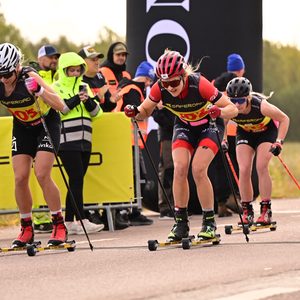
The ABCs of a skier’s summer training – How should you train during the summer?
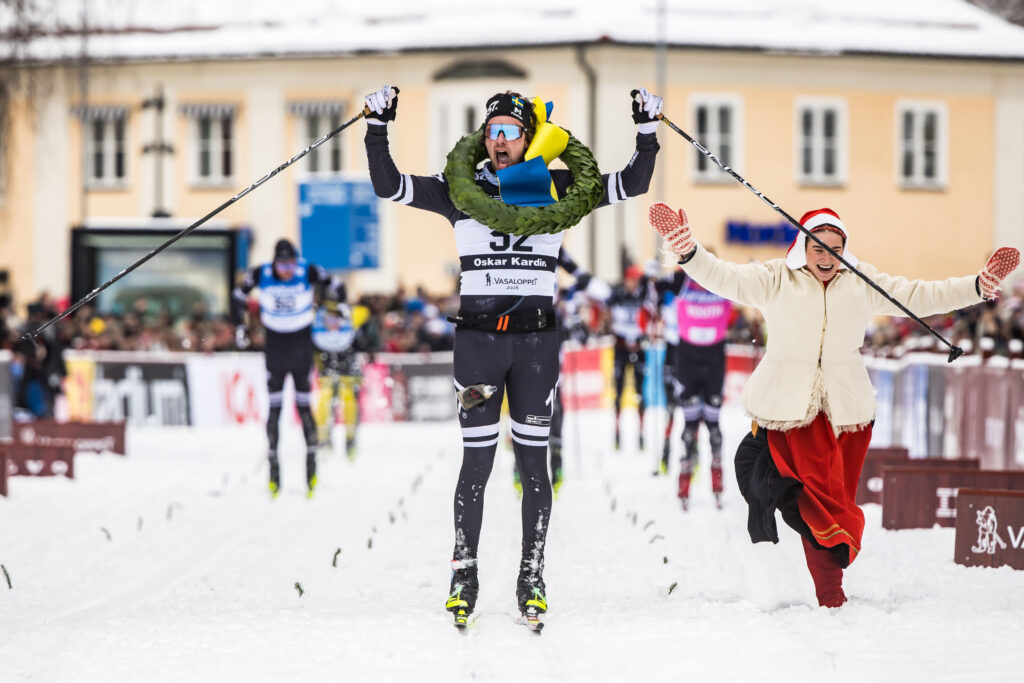
Building a strong aerobic base, balancing intensity with volume, and avoiding the trap of peaking too early—summer training is where a skier’s winter success truly begins.
The basics of a skier’s summer training are built on well-established and time-tested methods. In this article, we take a closer look at what an effective summer training season looks like for a skier. Sharing their insights are Oskar Kardin, an experienced and highly accomplished Ski Classics skier and this year’s Vasaloppet winner; Jørgen Aukland, a pioneer of double poling and current head of Team Ragde Charge; and Petter Eliassen, one of the most successful athletes in Ski Classics history.
For goal-oriented long-distance skiing enthusiasts and active athletes, summer training is naturally the foundation of everything. The top athletes in the Ski Classics series continue skiing on spring snow for as long as possible and then, if needed, take a short break before beginning structured training for the new season. There are many races almost every weekend, and the distances are long, meaning the overall strain is high. To endure this demanding cycle, skiers must be extremely resilient both physically and mentally—the fitness base has to be rock solid.
For recreational competitors or fitness skiers, the winter race calendar is less crowded, making it easier to focus on a few key events during the season. Nevertheless, it is still important for them to build a strong foundation for the challenges of the coming winter. The focus of summer training is naturally on aerobic endurance, and one of the great aspects of skiing is that it can be trained more diversely than almost any other endurance sport. In addition to running and roller skiing, training can include road and mountain biking, paddling and rowing, swimming, strength training, triathlon, hiking with a backpack, and many other endurance activities—the sky’s the limit.
However, for competitive skiers and active, goal-oriented enthusiasts, summer can be quite challenging when it comes to finding the right balance. Many wonder how to train optimally and which areas to prioritize. Everyone has their own strengths and weaknesses, which shape a personal training approach. Long-distance skiing—whether mass-start races or ski marathons—is one of the most versatile sports today, requiring exceptional endurance, high maximal oxygen uptake, strong muscular strength, coordination, efficiency, and solid technique in double poling or skating if freestyle races are on the calendar.
So how can all these qualities be trained during the summer without the training becoming a chaotic mix? Very few people have the time to train for hours every day while focusing on multiple different attributes. In this article, we ask several Ski Classics legends what summer training really is and what it means to them. The aim is not to focus on individual workouts—although examples are given—but to provide an overall picture of the key priorities in summer training.
Also Read: Spring skiing conditions call for all skiers
Article continues below.
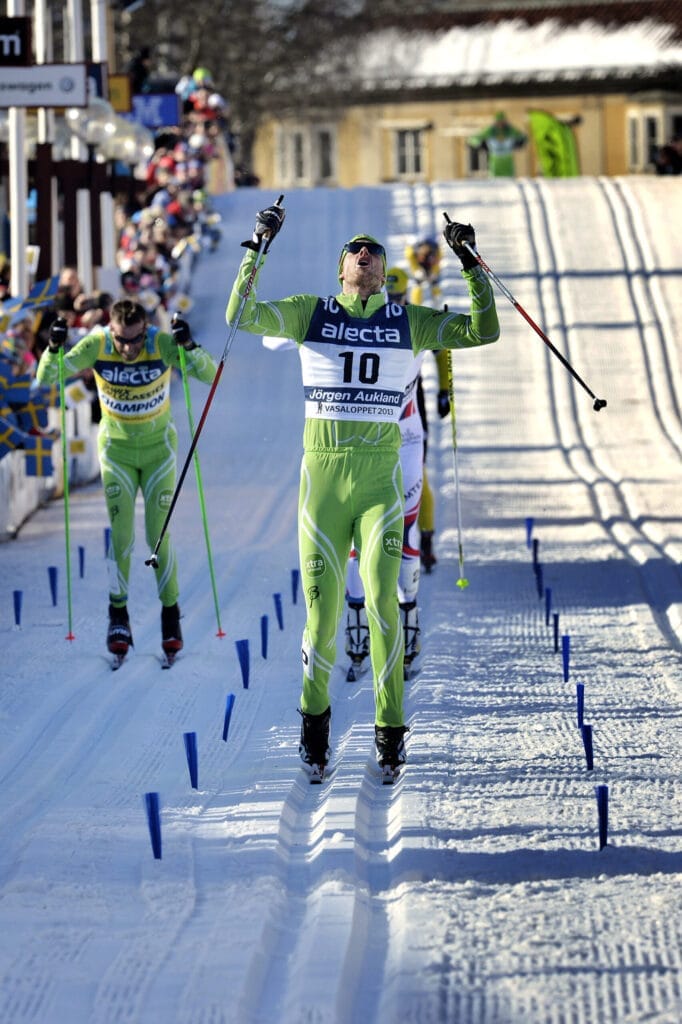
Let’s start with a comment from Jørgen Aukland, the commercial director of Team Ragde Charge and a former professional skier. During his career, he won Vasaloppet twice and Marcialonga four times and is considered one of the pioneers of double poling. He is also the brother of Anders Aukland, whose career continued until the age of 50.
“Summer training is extremely important for a skier. Building a strong fitness base with a high volume of aerobic training, strength work, and two moderately hard sessions per week is a good general formula. I also recommend roller ski races or another sport such as cycling or triathlon to maintain a competitive edge and to ensure that high-intensity sessions get done almost naturally.”
Oskar Kardin, who has enjoyed a long and successful career in Ski Classics—including a victory at the Vasaloppet and the 2024 Nordenskiöldsloppet, along with multiple Pro Tour podium finishes—shares a similar view to Jørgen Aukland.
“To be a good skier, everyone needs a strong aerobic base. It’s not built in a day or two—it requires time and patience. Perfection takes time. Personally, I don’t usually do much traditional strength training if you don’t count sport-specific strength. Of course, this is highly individual.”
What, then, is a good balance between endurance, strength, and interval training? Jørgen provides a personal example.
“70% basic endurance, mainly roller skiing and some running, 20% interval training, and 10% strength.”’
A clear-looking formula, but Petter Eliassen, whose successful career included 13 stage wins and two overall Ski Classics titles, places even greater emphasis on endurance training.
“In my opinion, a suitable balance is 85–90% low-intensity aerobic training, 5–10% high-intensity training or races, and about 5% strength training.”
The core message from all three athletes is quite similar: aerobic training is the foundation of everything. But how does training change in the autumn?
“After the summer, total training volume decreases and intensity increases. Shorter and harder intervals, as well as races or race-like sessions, should be part of the program. Developing speed is important, so long sessions become less frequent,” Jørgen describes his autumn training philosophy.”
Petter agrees with Jørgen’s description and highlights the importance of roller ski races and autumn training camps.
“In August, elite skiers usually have many roller ski races, which serve as excellent high-intensity sessions. During this period, training becomes more intensity-focused, and low-intensity sessions are reduced. Of course, there are often recovery workouts between races. Then in the autumn, team skiers usually have intensive training camps where both intensity and volume increase. Between camps, athletes return home to recover, and training becomes lighter again with lower volume.”
Let’s return to summer training and allow these legends of the sport to suggest some effective individual workouts for readers.
Oskar Kardin highlights two excellent sessions: one is a 4–6 hour long double-poling roller ski workout, and the other is an interval session of 6 × 10 minutes at threshold or 3 × 20 minutes. Short sprints can also be added within the intervals.
“A typical summer session for me was a 60–80 km roller ski workout including short sprints, and for intervals I often did 4 × 15 minutes on roller skis or 6 × 6 minutes of uphill running with poles,” Petter Eliassen summarizes his training during his active career.”
Petter’s strength training consisted of two parts. First, maximal strength work: 3 × 5 repetitions using 2–4 different exercises such as bent-over rows, pull-ups, and dips, followed by 10–20 minutes of core training.
Article continues below.
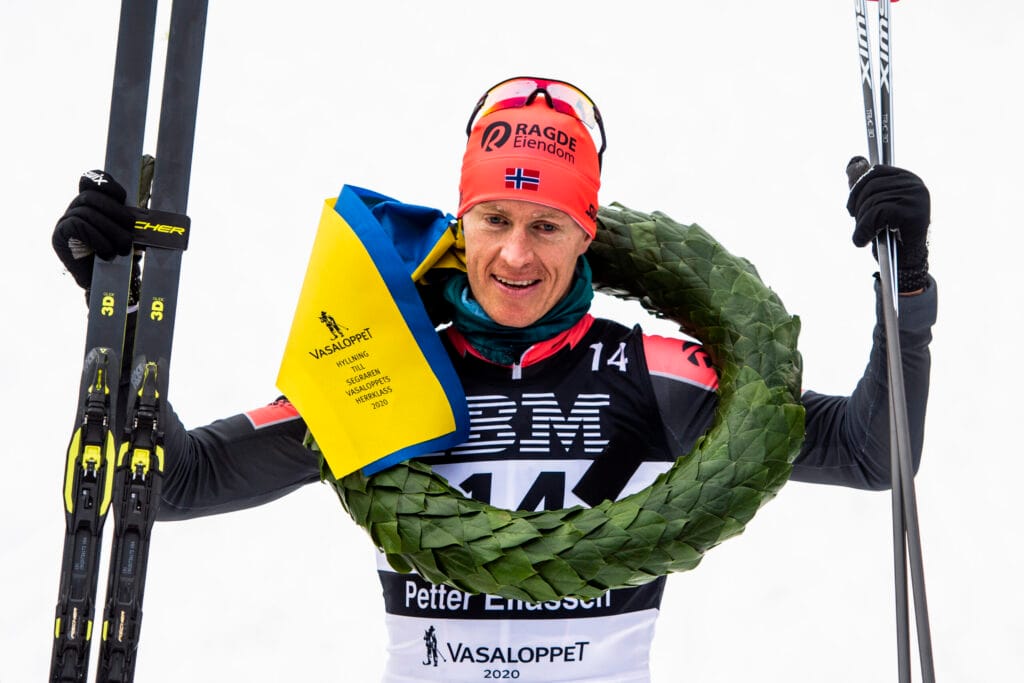
Jørgen Aukland emphasizes higher intensity even during long sessions.
“A good example of a summer workout is three hours of easy roller skiing. On the other hand, if you ask many skiers, our so-called “Aukland method” is slightly different—our pace is higher in intensity and faster than many others, even during long sessions. Back in the day, when Tord Asle Gjerdalen skied for four hours, my brother Anders would cover the same distance in three. Our philosophy is to keep the number of training hours reasonable, maintain high volume, and develop toughness.”
Jørgen gives an example of a solid interval session: start with a 20-minute warm-up, followed by 6 × 8-minute intervals on flat or varied terrain. The goal of the workout is to develop race pace and keep the “engine running.” For strength training, Jørgen highlights a similar structure to Petter: about 20 minutes of core exercises followed by 40 minutes of gym work with heavy weights.
Finally, it’s worth asking our skiing heroes about the biggest risks of summer training. What should athletes avoid during the demanding summer months? According to Jørgen, mental resilience is an athlete’s greatest asset.
“It’s important to build a strong base during the summer while avoiding overtraining. Even many professional skiers are in top shape during the summer and almost unbeatable, but when winter comes, they are already too fatigued. Another key point is focusing on the mental side—many top athletes lose roller ski races in the summer, but when winter arrives, they are able to switch gears and find the mental sharpness and race speed needed for big victories.”
Oskar Kardin continues along the same lines and emphasizes that you should not be in peak condition during the summer.
“Summer is about building the foundation for autumn, and the biggest mistake is being in peak condition too early, which can easily happen if the balance between volume and intensity is wrong. You need to train hard in the summer and feel tired after workouts, but be careful not to bring your body into peak form too soon.”
Petter Eliassen agrees with his former teammates and adds that summer racing can also carry a significant risk.
“One of the most common mistakes is taking roller ski races too seriously. Athletes may use too much mental energy and try to optimize their training specifically to perform well in those races. As a result, they lose valuable training time meant for the winter season.”
In short, the fundamentals of a skier’s summer training come down to high-volume training done intelligently, with occasional bursts of intensity to stay sharp. And one more important factor in training is enjoyment. Workouts can’t always feel painful out in the summer fields—overall, training needs to be driven by passion, so that motivation can withstand a few inevitable setbacks along the way.
Are you interested in training for long-distance, traditional cross-country skiing and biathlon? Click HERE and read more about it.
Subscribe to our newsletter
Most read
-
21.09.2026
-
14.09.2026
-
-
06.08.2026
-
06.03.2026



More Articles
-
Finnish Roller Ski Championships crown their champions in Kuopio
The Finnish Roller Ski Championships ran across three days in Kuopio, from Friday, September 18 to Sunday, September 20, 2026, with titles decided in a hill climb, a freestyle sprint, and a 10km individual skate. Check out the results.22.09.2026