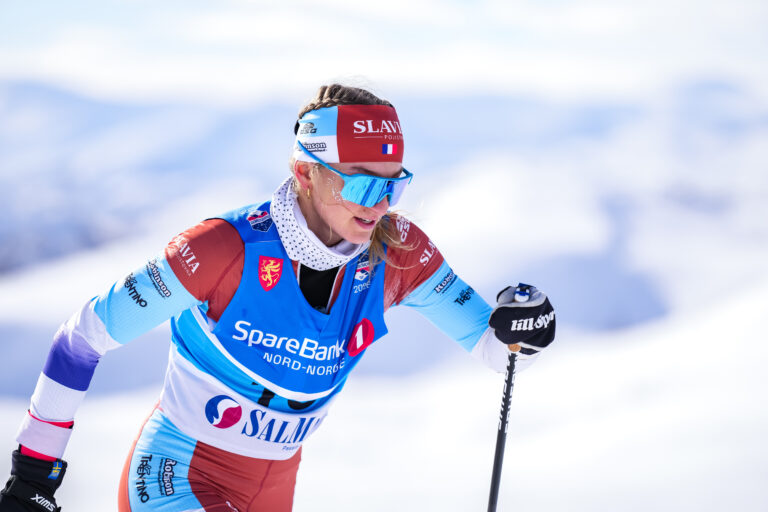
Spring skiing conditions call for all skiers

April is here, and spring should gradually arrive, but winter still holds its grip tightly, and skiing conditions are at their best. Therefore, it’s not time to hang up the skis but rather to take full advantage of the skiing conditions.
Indeed, spring weather truly beckons skiers, and thanks to artificial snow tracks, the skiing season can extend well into April, even in the southern regions. In many places, tracks are groomed even until May, so it’s not yet time to switch to roller skis. Many recreational skiers or competitors stop skiing too early, as April is a good time to build up fitness for the upcoming dryland season.
Maastohiihto.com asked ski coach Mikko Virtanen how to make the most of the excellent spring weather and skiing conditions. Virtanen believes that while taking advantage of the spring conditions for training is beneficial, it’s important to assess one’s situation first.
“From a training perspective, it’s worth taking advantage of these excellent conditions, but not to the point where you’re completely tired of skiing this winter and the last runs and races feel like a total chore. It depends on how intense and demanding the competition season has been and whether there’s still a hunger to compete and ski. For some, the end-of-season races are a total drag, while others immensely enjoy skiing and competing on spring tracks,” Mikko Virtanen says and continues.
“It depends a lot on each skier’s motivation and on what plans they’ve made for the next season. When you have plans for the upcoming training season figured out and how to start the new training season, it’s easier to ski and train during this final part of the season. The coach has to analyze the athletes and get to know them to understand which type of spring and end-of-season suits each athlete best. So, it depends on the individual.”
Ski testing, aerobic base, and technique
There are many benefits and advantages to skiing on spring tracks.
“Spring tracks are also excellent for testing skis. It’s a good opportunity to test skis for wet conditions, which you rarely do during the season.”
“From a training perspective, focusing on basic training is important. During the competition season, aerobic endurance can easily decline, thus lowering aerobic and anaerobic threshold levels. After the competition season, it’s good to further develop endurance by skiing, if possible, before taking a break and starting a new training season”, Virtanen says.
But it’s good to have plans for the upcoming season well in advance so you can better plan the end of the season, too.
“A lot depends on when and how you start the new training season and when the tests are scheduled. Many start the new training season with a strength phase, so it’s good to develop endurance by skiing on spring tracks before starting the new season, as endurance deteriorates further during the strength phase. It’s better to build strength on solid foundations. If thresholds have collapsed, getting the aerobic side in shape is better. This way, you can start the new season in good condition, which is better than just resting all the time”, Virtanen advises.
It’s also essential to remember the technique in spring.
“Technique should always be emphasized, but there’s a great opportunity to work on it in spring. If you’ve had any technical flaws during the winter, now you can try to correct them peacefully on spring tracks. But you must also remember the mental aspect; spring offers excellent recovery from a tough season, also on a mental level.”
Great races available
Virtanen also highlights one important aspect that should be used.
“Especially in the north, excellent races are available during spring and should definitely be used. Some World Cup skiers may feel completely drained after a tough season, and then the warmth of the south may be the better option, but especially juniors should take advantage of these excellent races available. There are many good races available if approached with the right attitude. I give very different instructions to different athletes,” Virtanen also emphasizes individuality in this matter.
“So, it’s also a lot about mindset, and you should sense your feelings to figure out what suits you best. For many, skiing on spring tracks is a great joy, and training in a sport-specific manner is always beneficial.”
Vacation and kilometer accumulation for recreational skiers
And spring brings joy to recreational skiers as well.
“For recreational skiers, it’s also a vacation if you go skiing in spring. And it’s beneficial for them to accumulate as many kilometers as possible on spring tracks.”
When the skiing season finally ends, it’s important to remember to adapt to the new training season and training on dryland.
“Adaptation is important. For example, it’s advisable to gradually include strength training in the spring so you don’t immediately start with an intense strength regimen. The same goes for running and other training on dryland. So, on spring tracks, you can start getting used to running by jogging on cleared roads and bike paths alongside skiing training,” Mikko Virtanen gives tips for the transition period.
When skiing on spring tracks, it’s advisable to aim for morning starts because the snow is fast with possible overnight frosts, making it easy to maintain good and efficient technique. During the day, temperatures rise, and the snow becomes slow and slushy. In such conditions, a long ski trip can become quite demanding, and technique easily suffers. Another option is to ski later in the evening when the weather cools again. Skiing in fast conditions uplifts the mood more than pushing through slow, slushy conditions.”
Modern skiing, especially long-distance skiing, relies heavily on skiing technique, so switching to roller skis is advisable reasonably soon after the skiing season. In previous years, many skiers used to start roller skiing later in the summer, but, for example, Ski Classics skiers transition fairly quickly from snow to roads. Skiing on roller skis is similar to skiing on snow, and it serves as sport-specific training to maintain and increase upper-body and core strength. Hence, it’s advisable to leave a gap between skiing on snow and the roller ski season for only a short time.
Are you interested in training for long-distance, traditional cross-country skiing, and biathlon? Click HERE and read more about it.
Subscribe to our newsletter
Most read
-
28.08.2026
-
-
14.09.2026
-
06.08.2026
-
06.03.2026




More Articles
-
Hanna Fine: “It would be cool to make it into the top 15 in the overall standings”
The Pro Team athlete is one of the few French women who have been competing on the Ski Classics World Championship circuit for several years now. Since her debut on the circuit at the 2024 Engadin La Diagonela, Hanna Fine has continued to improve.20.09.2026