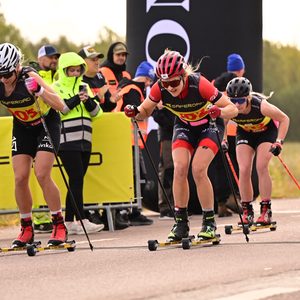
Why strength training is essential for modern cross-country skiing
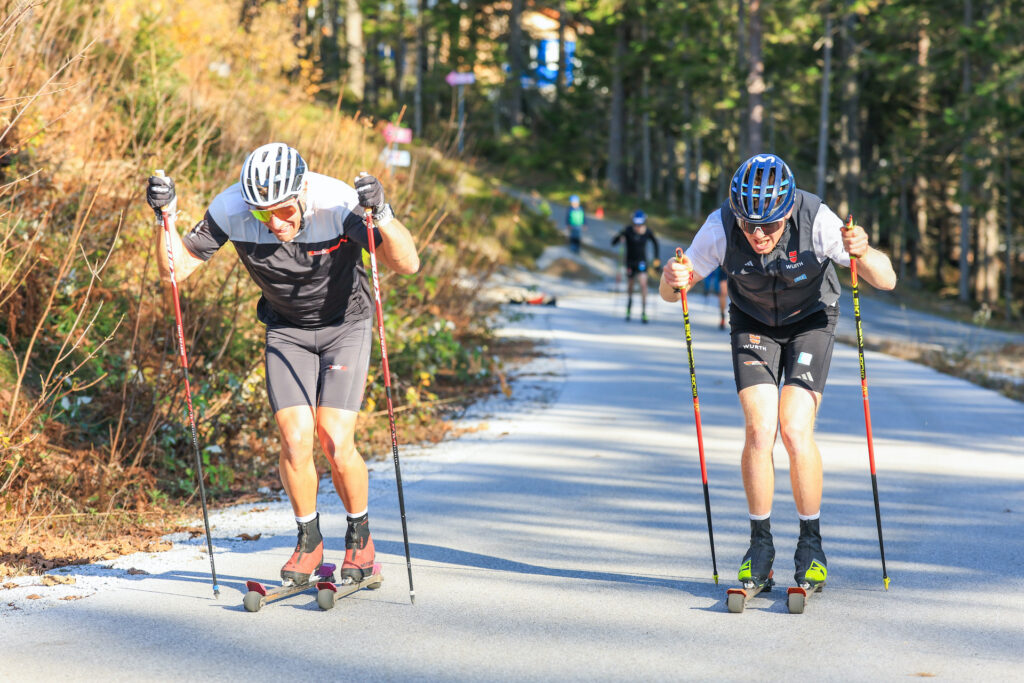
Strength training has become a defining factor in modern cross-country skiing, especially in long-distance events dominated by double poling. By improving power, efficiency, and resilience, it allows skiers of all levels to perform better, stay injury-free, and maintain speed even as physical demands increase.
Strength training has taken on a far greater role in cross-country skiing than it did in the past. As racing formats evolve and techniques like double poling become more dominant, athletes are expected to generate more power with greater efficiency over long distances. This shift has raised the physical demands of the sport, making strength development a key part of any serious training program.
While skiing is still primarily an endurance sport, success depends on more than aerobic capacity alone. Athletes must be able to produce force repeatedly, maintain technical precision under fatigue, and respond to terrain changes with controlled bursts of power. Strength training supports all of these demands by improving how effectively the body produces and uses force.
Read also: Annual training guide for recreational and competitive skiers
Efficiency, economy, and performance
One of the most important effects of strength training is its impact on efficiency. When maximal strength increases, each movement requires a smaller proportion of total capacity. In practical terms, this means that every pole push or stride costs less energy. Over the course of a long race, this improved economy can make a decisive difference.
Strength also plays a critical role in maintaining technique. As fatigue builds, weaker muscles struggle to stabilize movement patterns, leading to breakdowns in posture and coordination. Stronger athletes are better able to preserve their technique deep into a race, which helps sustain speed and reduces unnecessary energy loss.
The importance of strength in double poling
The importance of strength becomes especially clear in double poling. This technique relies heavily on the upper body and core, demanding coordinated force production through the shoulders, back, arms, and torso. With better strength, each pole plant becomes more effective, allowing the skier to glide farther and maintain higher speeds with less effort.
For older athletes, strength training is particularly valuable. While endurance tends to remain relatively stable with age, power and speed decline more rapidly. Maintaining or improving strength helps offset this decline, enabling skiers to stay competitive and move efficiently despite the natural effects of aging.
Building strength for skiing
A well-designed strength program for skiing typically includes several complementary approaches. Heavy resistance training develops maximal strength, which underpins all other physical qualities. Explosive exercises improve the ability to generate force quickly, which is useful in climbs and accelerations. Muscular endurance work supports sustained effort over long distances, while controlled eccentric training strengthens muscles and tendons in ways that help prevent injury.
In addition to gym-based work, sport-specific training is essential. Roller skiing provides a highly effective way to build strength in movements that closely resemble on-snow skiing. By adjusting variables such as terrain, resistance, and intensity, athletes can target strength development while reinforcing technique. Uphill efforts, resisted skiing, and repeated short climbs are particularly useful for this purpose.
Article continues below
Read also: The philosophy of fatigue – What is fatigue and what causes it?
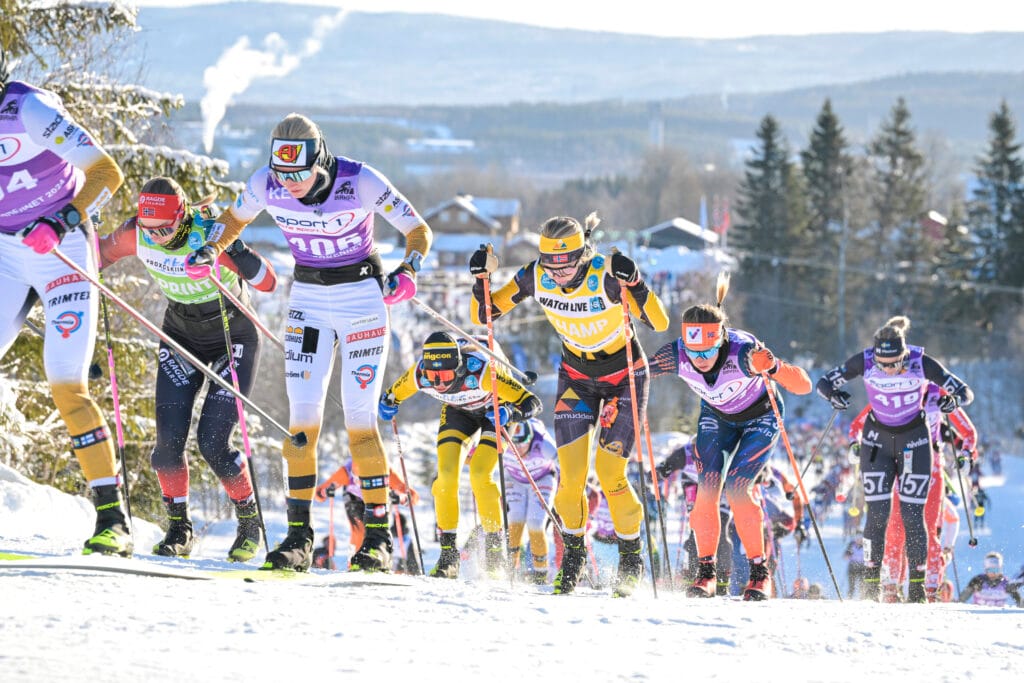
Upper body strength and technique
Upper body and core training deserve special attention due to their role in double poling. Exercises that mimic pulling and stabilization patterns translate well to skiing performance, helping to improve both force production and coordination. Over time, this leads to smoother, more powerful movement on the snow.
Bringing it all together
Of course, strength training is only one part of the larger training picture. Endurance sessions, interval work, speed training, recovery, nutrition, and mental preparation all need to be balanced carefully. Many skiers also face the challenge of fitting training around work and daily responsibilities, which makes planning even more important.
In modern cross-country skiing, strength is no longer just a supplement to endurance—it is a foundation for performance. By developing a stronger, more capable body, skiers can move faster, conserve energy, and handle the demands of long-distance racing with greater confidence and control.
More strength training articles to come on this site.
You can also read training articles on our sister sites in Sweden and Norway.
Subscribe to our newsletter
Most read
-
21.09.2026
-
14.09.2026
-
-
06.08.2026
-
06.03.2026




More Articles
-
Finnish Roller Ski Championships crown their champions in Kuopio
The Finnish Roller Ski Championships ran across three days in Kuopio, from Friday, September 18 to Sunday, September 20, 2026, with titles decided in a hill climb, a freestyle sprint, and a 10km individual skate. Check out the results.22.09.2026