ROLLER SKI TRAINING: Building endurance – how to avoid injuries
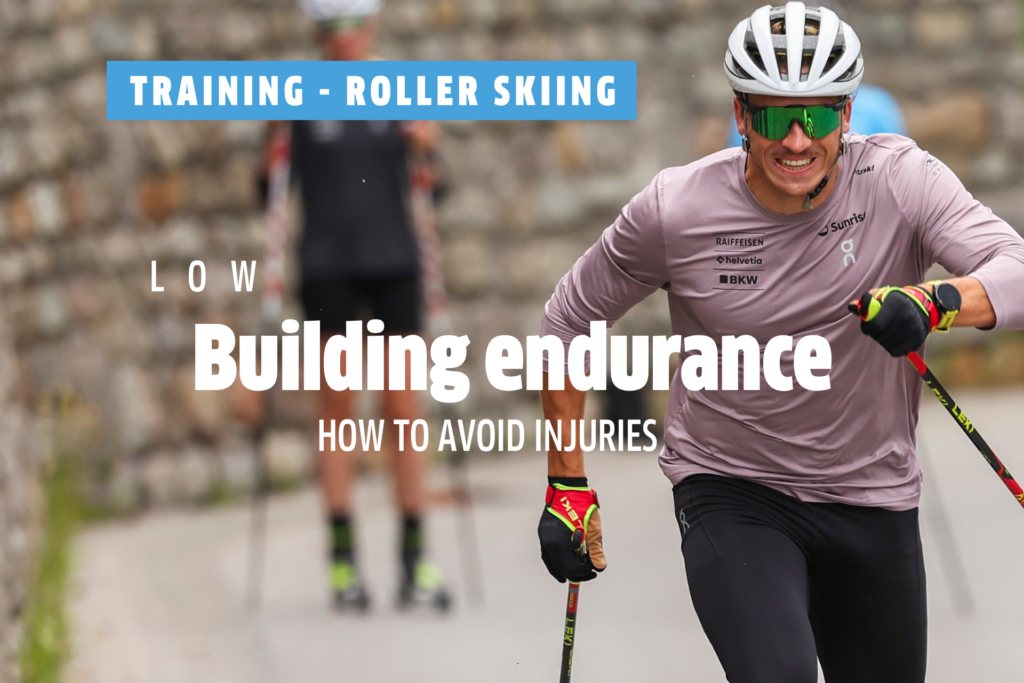
Endurance training is a fundamental pillar upon which physical fitness should be built. However, it often leads to one-sided strain on muscles, ligaments, and sometimes even injuries. What type of endurance training should you incorporate to avoid health issues?
Do you know how to survive a long training session lasting four hours or more? Mix up your activities! Alternating sports will help you manage several hours of performance, as your body engages different muscle groups with varying types of exertion.
Spend the first two hours on classic rollerskis, the next two hours on skate rollerskis, and for the last two hours, you can either run (with or without poles) or ride a bike. If you don’t own skate rollerskis, you can do two hours of diagonal stride, followed by two hours of classic technique, or incorporate other endurance-building sports such as running, cycling, kayaking, swimming, etc.
If you’re not at that performance level and doubt your ability to handle a multi-hour training session, start cautiously. Try a three-hour training session with two or three different activities for the first time and gradually increase the duration in subsequent sessions.
The essence of training is to stay below the so-called aerobic threshold. Exceeding this threshold leads to lactate production and the body’s acidification, which, while manageable, is not desirable in this type of training. Treat your training like an outing, and even during the activity, you should be able to converse with your training partner. If you can talk without gasping for breath, you know you’re in the right zone—if not, slow down.
Session facts
| Type | Endurance |
| Duration | 4 – 6 hours |
| Intensity | Low |
| Training Effect | Building foundational endurance |
| Terrain | Flat to slightly hilly |
| Structure | Warm-up and cooldown can be omitted |
| Frequency | 1–2 times per month |
Variety in Endurance
Endurance training increases the number of mitochondria in cells, which are responsible for energy production. It also enhances the density of capillaries within muscle tissue, allowing oxygen and glucose to reach working fibers more efficiently while waste products are removed more quickly.
The volume of the left ventricle of the heart also increases, leading to a lower resting heart rate and a higher stroke volume. As a result, VO₂max improves—this parameter of aerobic fitness indicates the maximum volume of oxygen the body can utilize per minute per kilogram of body weight. You also raise your lactate threshold: an athlete can handle more intense exertion without lactate accumulating in the blood to the point of fatigue. Additionally, your ability to oxidize fats as fuel improves, conserving glycogen stores for peak performance moments.
This type of training builds foundational endurance. If you focus on long-distance skiing races lasting over two hours, endurance training sessions exceeding three hours are essential. Changing sports allows you to engage different muscle groups, preventing muscle overload and imbalances or injuries that could arise from repetitive, one-sided training.
Also Read – CYCLING TRAINING: Easy aerobic ride – building your base one hour at a time
Are you interested in training for Ski Classics, long-distance, traditional cross-country skiing, and biathlon? Click HERE and read more about it.
Subscribe to our newsletter
Most read
-
-
14.09.2026
-
06.03.2026
-
-
16.09.2026



More Articles
-
Swedish and Norwegian cross-country ski tracks open: Early snow guarantee for 2026
This weekend, several traditional Swedish and Norwegian destinations are launching their early snow offers. Here is an overview of destinations with snow guarantees.22.10.2026