Eating disorders in athletes: What we know and how to recognize
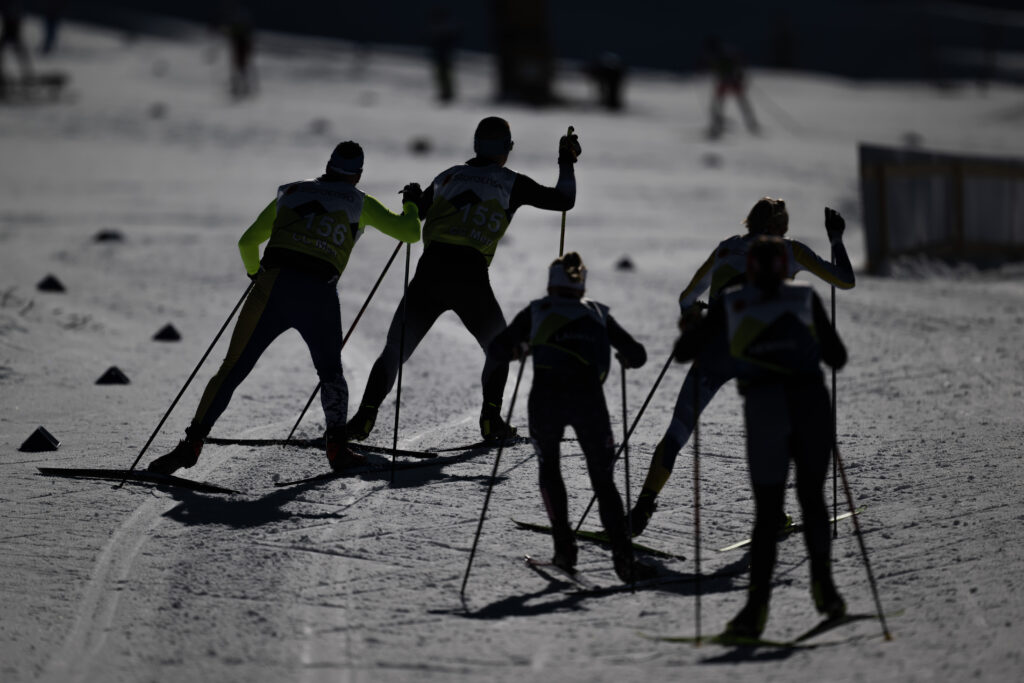
Cross-country skiing is one of the endurance disciplines where performance is significantly influenced by the athlete’s weight. Eating disorders are prevalent not only among professional skiers and biathletes but also affect the younger generation.
We don’t see it. We don’t talk about it, and we know little about it. When we hear about eating disorders in athletes, it often feels like sensational news for journalists to write about.
Worse still, the so-called “disordered relationship with food” occurs in more than 60% of active girls aged 14-18 (boys are less affected, which is why they are not studied as much). The prevalence of eating disorders (ED) varies across different sports; aesthetic sports like gymnastics, figure skating, and diving are the most affected, followed by weight-class sports and then endurance sports, primarily due to the growing belief that the leaner an endurance athlete is, the better they will perform.
Data on recreational athletes in older age groups is lacking, but researchers might be surprised. You can test yourself. The first table lists the criteria for diagnosing a “disordered relationship with food.” If you answer yes to 3 of the questions, you have a problem. It may not be anorexia or bulimia, but it’s certainly not healthy.
1. Do you regularly restrict your food intake?
2. Do you often skip meals?
3. Do you frequently diet?
4. Do you count calories and weigh your food?
5. Are you afraid of certain types of food?
6. Do you turn to food to relieve stress or suppress anxiety?
7. Do you deny being hungry or claim to feel full after eating a small amount?
8. Do you avoid eating in the company of others?
9. Do you feel worse (anxious, guilty) after eating?
10. Do you think about food and your weight more often than you would like?
Does our sport contribute to this? Do we irrationally want to resemble a thirty-year-old Olympic champion? Do we carry something from our athletic past, or are we simply succumbing to societal pressure and the widely accepted ideal of thinness until death, controlling everything we put into our mouths (to avoid anything unhealthy)? And what about the upcoming generation? Will they fare worse, the same, or can we manage to change this?
What do we know about eating disorders in athletes?
The two most severe eating disorders are anorexia and bulimia.
Anorexia is a psychological disorder in which an individual refuses to maintain a normal weight and has an intense fear of gaining weight, even when they are clearly underweight. In women, it is associated with the absence of at least three consecutive menstrual cycles or delayed onset of menstruation. Anorexia can be potentially fatal (it has the highest mortality rate among all mental disorders), leading to starvation or severe heart conditions (reduced heart rate and serious rhythm disorders, even heart failure), kidney issues (kidney stones), and osteoporosis. It affects approximately 1.5% of women and 0.5% of men in the population, most commonly emerging in teenagers.
Bulimia is characterized by episodes of uncontrollable binge eating (at least twice a week for three months) followed by self-induced vomiting or other methods to prevent weight gain (using laxatives and diuretics, strict dieting, or complete fasting, excessive exercise). The individual is aware that their behavior is not normal but feels unable to control it. This disorder is typically accompanied by depressive symptoms and severe self-blame, significantly increasing the risk of suicide. It occurs in about 3.5% of women and 2% of men, most commonly emerging between the ages of 18-25. The table summarizes the symptoms of eating disorders.
Also Read – Diggins opens up about challenging summer: “Struggling with my eating disorder”
Physical symptoms
- Significantly low weight (15% below the norm for age category)
- Sudden weight loss or extreme fluctuations in weight
- Irregular or absent menstruation, delayed onset of menstruation (or associated inability to conceive)
- Swelling of salivary glands, bloating, carotenemia (yellowing of palms and soles)
- Scars or redness on the backs of hands from self-induced vomiting
- Hypoglycemia, muscle cramps, gastrointestinal issues
- Headaches, dizziness, weakness, numbness, and tingling in extremities due to electrolyte imbalances
- Stress fractures
Psychological and behavioral symptoms
- Extreme dieting
- Extreme binge eating without weight gain
- Excessive exercise beyond training
- Feelings of guilt after eating
- Frequent mentions/beliefs of feeling fat, even when reassured otherwise
- Constant preoccupation with food
- Avoiding eating with others and denying hunger
- Hoarding food
- Odd behaviors around food (poking at food, pushing food around the plate, cutting food into tiny pieces, eating only tiny portions of low-calorie foods…)
- Disappearing after meals
- Frequent weighing
- Binge eating episodes
- Inducing vomiting after meals
- Using diet pills, laxatives, or diuretics to control weight; in athletes, this often includes the misuse of sports supplements or replacing meals with these supplements.
Athletes often exhibit various states of disordered eating and risky eating habits that do not meet the diagnostic criteria for eating disorders but pose significant health risks. Data on the prevalence of EDs is likely also quite inaccurate, as it is risky for athletes to admit any problem. For example, one study showed that the prevalence of eating disorders among active gymnasts is significantly lower (3% ED and 18% disordered eating) than among those who have ended their active careers (20% and 73%).
What can eating disorders cause?
Various factors can increase the likelihood of developing an eating disorder. In the sports environment, typical risks include weight categories in sports like wrestling or weight limits set by coaches (or doctors or nutritionists). Athletes may begin to employ various extreme weight-loss strategies, triggering the problem.
In endurance sports, there seems to be a relationship between body fat and performance, which is unfortunately often misinterpreted, ignoring standard deviations in data, differences between men and women, and among individuals of different ages and performance categories. Sadly, most coaches assess their athletes literally by eye.
The second factor is pressure from coaches or parents, accompanied by unrefined comments about “chubby” athletes. Studies show that women who recall and notice more serious critical comments experience more severe disordered eating and more intense negative emotions (shame and anxiety regarding their bodies). Such critical comments are very common in the sports environment; even in American studies, 45% of athletes report them. Additionally, significantly negative relationships within a team and/or with a coach can lead to decreased self-esteem and increased self-critical perfectionism and depressive symptoms, which can culminate in an eating disorder.
The third major group of factors includes cultural pressures for perfect thinness and the widespread dissatisfaction with one’s body. Even five-year-old girls worry about their figures, nine-year-old girls go on diets, and 60% of high school students consider dieting a normal part of life. There are likely also biological and genetic predispositions for eating disorders, but unfortunately, we still know little about them. EDs also occur more frequently among athletes with personality traits of asceticism, submissiveness, and conformity.
How do eating disorders develop?
When researchers asked athletes what preceded the onset of their eating disorders, they mentioned the following:
a) Depressive symptoms (My grandfather died, and I became depressed.)
b) Low self-esteem (When I looked in the mirror, I thought: “That’s disgusting.” I hated myself.)
c) Perfectionism (I was obsessed with how I looked and how I had to look. Even though it was absolutely impossible, I wanted to look like a supermodel and accepted nothing less.)
d) Desire for control (It was mainly a way to have control over something, as I had completely lost control over my emotions.)
e) Negative comments (My mom hinted that I was getting a bit too round.)
f) Hurtful experiences in relationships (I absolutely stopped getting along with the girls in the dorm. I liked that boy, but he didn’t like me; he preferred the skinny one.)
g) Bad examples in the environment (I watched that successful girl eat; she definitely had a problem, but I didn’t notice it back then. I started doing what she did and even increased my training doses as she did.)
h) Desire to improve performance (I started training more, adjusted my diet according to magazine advice… I just wanted to be better.)
What to do if you suspect someone is suffering from an eating disorder
The person who has the best relationship with the athlete should sit down and talk to them about their concerns. It’s better to discuss feelings and suggest contacting a professional, perhaps just to rule out any potential eating disorder. It is recommended not to threaten exclusion from the team or anything else but to talk about the health risks and performance consequences that arise from EDs.
EDs take a long time to treat, averaging three years. Typically, a combination of individual and family therapy is used, and medications for anxiety and depression may be prescribed. In more severe cases of malnutrition, hospitalization is the first priority. The goal is to achieve a normal weight, change the relationship with one’s body, and learn to eat normally without the constant fear of gaining weight. The earlier the affected individual starts treatment, the better their chances of recovery; unfortunately, those around them often only notice the disorder when the suffering becomes glaringly obvious.
Preventing eating disorders in athletes
What can we do as coaches, parents, or friends? Coaches should know as much as possible about sports nutrition (from quality sources, based on scientific foundations) and teach it to their athletes. We should focus on fitness or performance, not body weight (and not link these two in comments).
It should be widely recognized that people differ in their somatotypes and metabolic types. That people with more body fat are not lazy, but simply have a different fat metabolism, and if they are not overweight, they are perfectly healthy in this regard (many people find it hard to believe this).
Coaches and parents should be educated that it is completely normal and physiological for a girl to gain weight before the onset of her first menstruation (without which she would not start menstruating). We should refrain from any comments regarding weight or body proportions and avoid insensitive practices like regularly weighing the entire team, especially among young girls.
Why do we need fat tissue?
Fat tissue is now considered an endocrine organ with many functions. The so-called white fat tissue stores energy from consumed food and releases it when needed. Without it, our bloodstream would become clogged with circulating sugars and fats. The fat tissue of obese individuals becomes dysfunctional in this regard, undergoing harmful inflammatory processes – which is why obesity is a risk factor for circulatory diseases. However, very low amounts of subcutaneous fat are equally problematic.
The so-called brown fat, which we have in our necks, backs, and around our hearts, burns energy – because it keeps us warm. Adults have more so-called beige fat – and this can be converted into brown fat through exercise or exposure to cold (cross-country skiers).
For a woman to menstruate regularly and conceive, she needs to have at least 22% fat. Endurance athletes often become infertile for this reason. Fat tissue maintains pregnancy and initiates childbirth. Men also need fat tissue for sexual maturation.
Estrogen produced by fat tissue initiates the transformation of stem cells in the bone marrow into bone cells. Insufficient fat tissue leads to brittle bones (especially significant after menopause). The bodies of overly thin individuals preferentially convert stem cells in the bone marrow into fat cells, resulting in fragile, thin bones filled with fat.
The weight of the brain is related to the amount of fat tissue. People with low weight have less brain tissue and a one-third higher risk of developing dementia (with a BMI below 20).
Leptin produced by fat tissue is essential for healing injuries (for building new blood vessels supplying the injured tissue). People with low amounts of fat tissue heal injuries poorly.
This article has been updated. It was first published on Bezky.net in October 2021.
Subscribe to our newsletter
Most read
-
10.05.2026
-
01.05.2026
-
16.05.2025
-
14.05.2026
-
06.05.2026



More Articles
-
De Fabiani hangs up his skis
Italian cross-country skier Francesco De Fabiani has retired from the sport. The 33-year-old announced the news on social media.16.06.2026