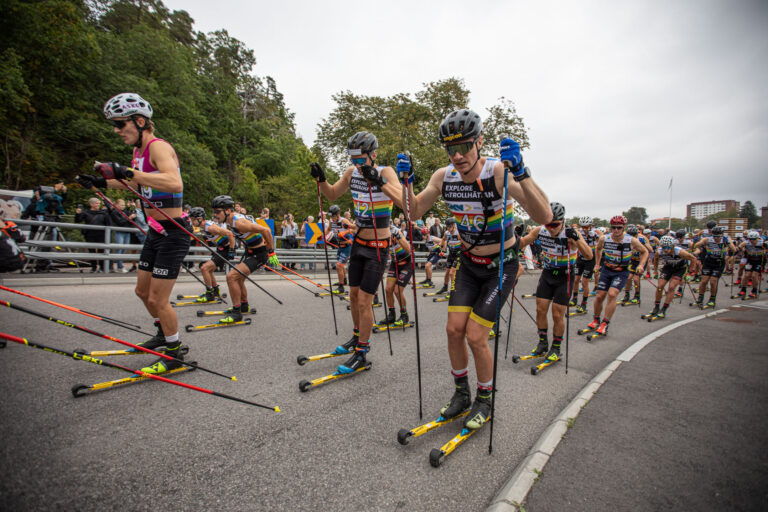
Music in sport: A psychological perspective

Music has long played a significant role in sport and exercise, influencing motivation, mood, and performance.
Research suggests that both synchronized and background music can have psychological and physiological effects on athletes. Synchronous music, where movement aligns with the rhythm, has been shown to improve performance by enabling athletes to sustain effort for more extended periods. Meanwhile, background (asynchronous) music has a less consistent impact but can still provide benefits when applied strategically.
The Psychological Foundations of Music in Sport
Karageorghis, Terry, and Lane (1999) identified four key factors that influence the motivational qualities of music in sport:
- Rhythm Response – The body’s natural inclination to match movement with a beat.
- Musicality – The structure of melody and harmony that contributes to emotional engagement.
- Cultural Impact – The significance of music within a specific cultural or sporting context. For example, Olympic triumph is popularly associated with the song, Chariots of Fire by Vangelis, from the iconic film Chariots of Fire.
- Association – The personal or collective meaning linked to a piece of music, such as its use in historic sporting moments. For example, the Engadin Ski Marathon’s pre-start song, Conquest of Paradise by Vangelis
Music can enhance focus, regulate emotions, and promote rhythmic movement, making it a valuable tool in both training and competition.
Applications in Elite Sports
Several case studies highlight the use of music in elite sports performance. At the 1998 Olympic Winter Games in Nagano, Japan, the Great Britain bobsleigh team used Whitney Houston’s One Moment in Time as part of their pre-race mental preparation, helping them concentrate on the importance of their performance and leading to a historic medal win. Similarly, Olympic shooter Richard Faulds relied on the same song at the Sydney 2000 Olympics to reinforce his focus before competing.
Superheavyweight boxer Audley Harrison used Japanese classical music before fights to calm his nerves and maintain composure. This demonstrates how music can be customized to help athletes either boost energy levels or induce relaxation, depending on their needs.
The powerful association between music and sporting moments is exemplified by Gonna Fly Now, the theme from Rocky. This song has become synonymous with perseverance, training, and the underdog spirit, inspiring countless athletes during workouts and competition. Its fast tempo and triumphant melody make it an ideal example of how music can instill motivation and reinforce positive associations with hard work and success.
Synchronous music has also been used effectively in endurance sports like running, cycling, and rowing. Matching music tempo to an athlete’s movement rhythm can enhance performance, but this requires careful and individualized selection.
Read More: Understanding the Endurance Athlete’s Heart
Preparation is Key: Practical Applications in Biathlon
In biathlon, athletes must adapt to unpredictable competitive shooting environments. One effective training method involves playing crowd noises—such as cheers and gasps from past World Cup and Olympic events—during shooting practice and range drills. By exposing athletes to these auditory distractions in training, they become accustomed to competition-like conditions, reducing the likelihood of performance disruptions.
The familiar and controlled environment of training rarely mirrors the chaotic atmosphere of competition. Introducing elements like background noise ensures that athletes develop psychological resilience and maintain focus under pressure. This principle aligns with the broader findings on music and sound in sport—strategically using auditory stimuli can improve concentration, manage arousal levels, and enhance overall performance.
Read More: Learn to train smart: How to avoid training stagnation
Asynchronous Music and Mood Regulation
Studies on background music show that tempo is a key factor in its effectiveness. Faster-tempo music is generally preferred during high-intensity activities, while slower-paced music can improve efficiency and endurance (Copeland & Franks, 1991). Szabo, Small, and Leigh (1999) found that shifting from slow to fast music during cycling led to improved performance.
Karageorghis and Terry (1999) found that background music primarily influences an athlete’s mood rather than their perception of effort. Their research indicates that while motivational music may not directly change how hard an activity feels, it can enhance an athlete’s emotional state, which could indirectly improve performance in high-intensity tasks like a VO2 Max test.
Tenenbaum et al. (2004) further confirmed that while music may not reduce fatigue, it can influence how athletes interpret physical strain, making it feel more manageable.
Reference: Terry, P.C., & Karageorghis, C.I. (2006). Psychophysical effects of music in sport and exercise: An update on theory, research, and application. In M. Katsikitis (Ed.), Psychology bridging the Tasman: Science, culture and practice – Proceedings of the 2006 Joint Conference of the Australian Psychological Society and the New Zealand Psychological Society (pp. 415-419). Melbourne, VIC: Australian Psychological Society.
Do you have a favorite training, race hype song, or a song that invokes a sporting memory?
This article was originally published on ProXCskiing.com on 02.02.2025 and updated on 18.10.2025.
Are you interested in training for long-distance, traditional cross-country skiing, and biathlon? Click HERE and read more about it.
Subscribe to our newsletter
Most read
-
08.08.2026
-
17.07.2026
-
10.07.2026
-
-
08.07.2026




More Articles
-
Ski Classics Challengers Alliansloppet 2026 this Saturday in Sweden
The Ski Classics Challengers event, Alliansloppet, is a 48km long-distance roller ski race in classic technique taking place this Saturday, August 29, in Trollhättan, Sweden.25.08.2026