Threshold training explained: The science behind ski endurance
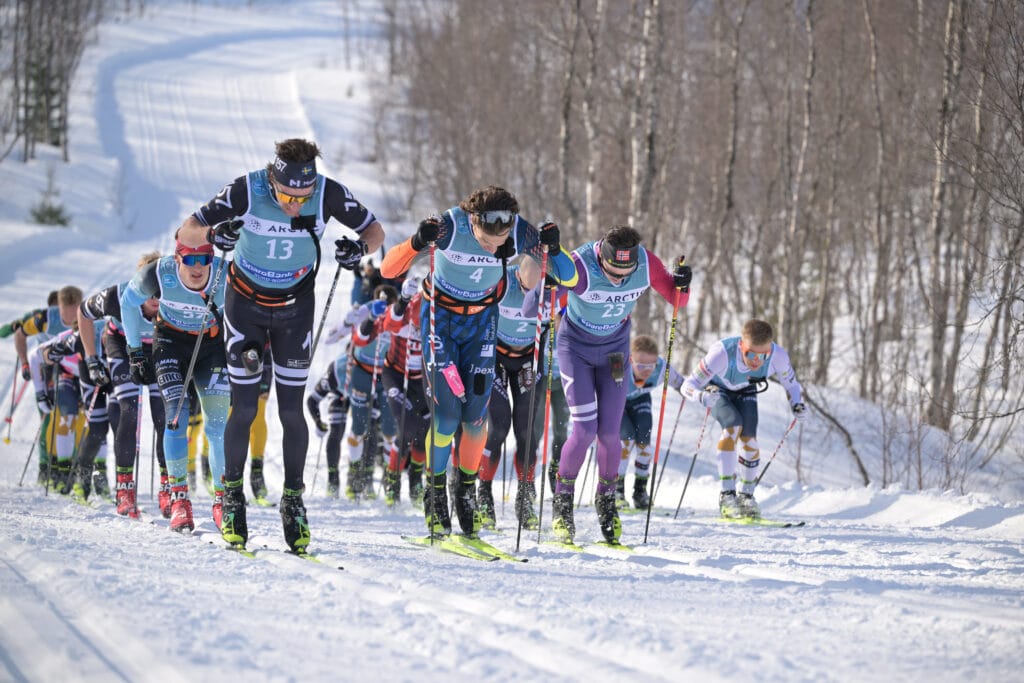
In endurance sports such as cross-country skiing, aerobic and anaerobic threshold training are cornerstones of endurance fitness and familiar terms to anyone seriously engaged in endurance sports. But what are these thresholds in practice? In this article, we’ll delve into them a bit more.
Threshold training involves exercising either at or near the aerobic or anaerobic threshold. Let’s first define both thresholds and what happens in the body when the heart rate is at or near these thresholds.
According to Maastohiihto.com, a performance done at the aerobic threshold is one that can practically be sustained for hours. In this range, athletes should feel that they can continue their exercise for a long time without feeling breathless. Scientifically speaking, the aerobic threshold is the individual exertion level at which muscle and blood lactate concentration begin to rise from their normal levels during increasing muscular activity. For endurance athletes, a high aerobic threshold is key to sustaining performance for longer durations and distances.
Also Read – Speed training: Get faster on skis
During aerobic metabolism, the body produces energy by burning carbohydrates and fat with the influence of inhaled oxygen, and produces carbon dioxide and water as by-products (breathing and sweating). Most of our daily activities are fueled by aerobic metabolism.
On the other hand, the anaerobic threshold (AT) is the highest intensity or speed at which the body’s lactate production and removal are balanced. At this threshold, the body shifts from aerobic to anaerobic metabolism. Anaerobic metabolism kicks in when exercise intensity increases significantly, and the aerobic system can no longer keep up with the body’s energy demands.
During anaerobic metabolism, the body burns stored sugars to provide additional energy, and lactic acid is produced faster than it can be metabolized. Muscle soreness, burning, and fatigue make sustaining anaerobic energy expenditure difficult for longer than a few minutes.
One can train the anaerobic threshold with various intervals and high-intensity exercises, while the aerobic threshold must be trained with long, low-intensity exercises. When considering these thresholds and related training from the perspective of long-distance skiing, it’s good to highlight three main categories of training: interval training (intensity), fartlek (speed play), and aerobic and anaerobic training.
Read More: Are fitness tests worth it for recreational skiers?
Interval Training
This form of training involves different work and rest periods to temporarily exceed the lactate threshold with high intensity and then recover (lower blood lactate levels). This type of training uses the ATP-PC and lactic acid systems, providing the most energy in short, explosive high-intensity exercises, followed by a recovery period. Interval training can consist of various exercises and should closely mimic sport-specific movements, such as skiing.
Fartlek Training
Fartlek, a Swedish term also used commonly in English, is very similar to interval training. The main difference lies in the structure of the exercise. This type of training combines continuous (usually aerobic) and interval (usually anaerobic) training, including steady fluctuations in speed and intensity throughout the exercise. Fartlek may be slightly mentally easier as the intervals are not as regular as in proper interval training. Fartlek training is well suited for young skiers and active enthusiasts for whom formal interval training may be too challenging or unpleasant.
Aerobic and Anaerobic Threshold Training
To build aerobic fitness, a lot of long-duration training at low intensity is required. Similarly, to increase anaerobic capacity, hard sprints at maximum speed or near it are necessary. It’s important to understand the difference between the lactate threshold and lactic acid. Aerobic training doesn’t help lactate tolerance but increases the lactate threshold. Over time and with training, the body develops better tolerance to the effects of lactic acid. Anaerobic training improves muscle alkaline stores, allowing muscles to function in the presence of increased lactic acid. Training at this level or slightly above it enhances an athlete’s lactate threshold.
In addition to the above, it’s worth mentioning speed endurance training, which is training between the aerobic and anaerobic thresholds, crucial in skiing and especially in long-distance skiing. Maximal endurance training is a form of training where the intensity exceeds anaerobic endurance. Threshold training raises both thresholds for skiers, thus increasing speed and endurance in longer distances.
*This article was originally published on Maastohiihto.com and updated on ProXCskiing.com today.
Read More: What makes Pogačar unstoppable? The key figures behind a Tour legend
Are you interested in training for long-distance and traditional cross-country skiing? Click HERE and read more about it.
Subscribe to our newsletter
Most read
-
16.05.2025
-
02.06.2026
-
05.07.2026
-
24.06.2026
-
04.06.2026




More Articles
-
Myhlback shines once again at the Trysil Sprint
For the third consecutive year, Norway's Olympic and World Championship stars are no match for the Swedish prodigy in the prestigious sprint in Trysil.25.07.2026