Are fitness tests worth it for recreational skiers?
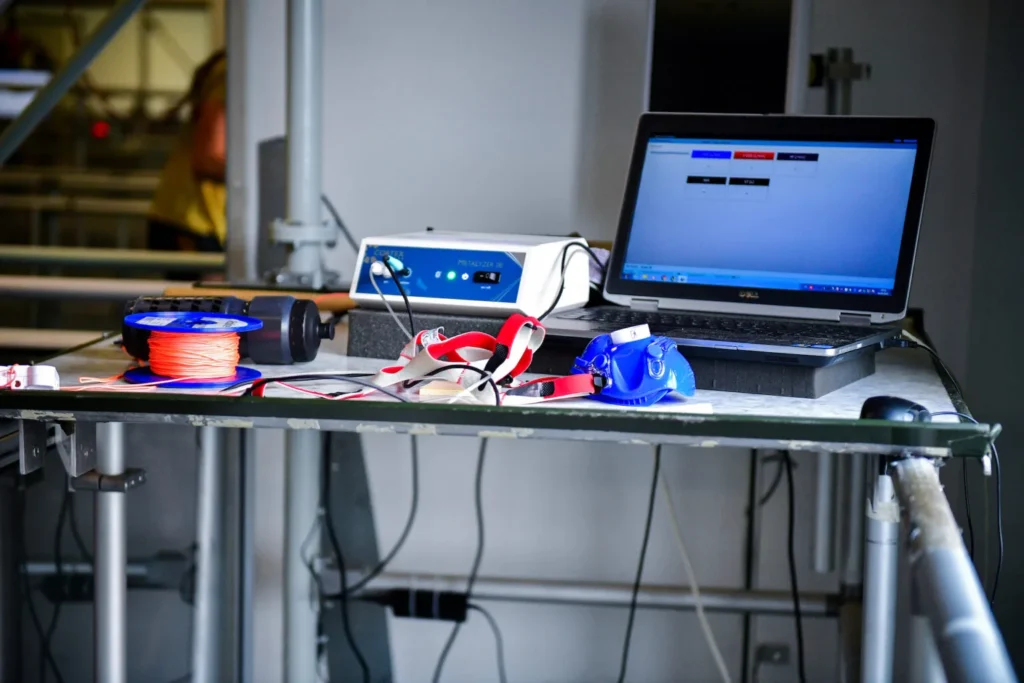
Nowadays, various wrist-worn devices provide a wide range of data to support training, so is it still worthwhile for recreational skiers to undergo formal fitness tests, such as treadmill testing?
The fitness tests for recreational skiers differ from the specialized assessments tailored for elite athletes, but various tests can still be beneficial for ski enthusiasts. According to Mikko Virtanen from Vuokatti Sport, today’s wrist computers provide threshold data “fairly well,” but accurately identifying those thresholds still requires lab conditions and proper testing.
“The most important purpose of a test is to define your training thresholds and, in addition, receive guidance on what needs to be done. In my opinion, that is the essential value of testing. Sport-specificity should be utilized, but I wouldn’t start with roller ski testing immediately, as it requires prior experience on skis. I’d recommend doing it with ski walking uphill, Nordic walking, running, or on a trainer bike,” says Virtanen to ProXCskiing.com’s sister site Maastohiihto.com.
The test can be performed as a step test, where the load is increased at specific intervals, and heart rate and lactate are measured. Based on this, thresholds can be defined with considerable accuracy.
“If even more precision is needed, a mask can be used in a full treadmill test, where actual oxygen uptake is measured. From respiratory variables, you get additional info for defining thresholds—so it’s not just lactate anymore, but several variables come into play. I consider that the most accurate method available, and elite athletes and serious fitness enthusiasts use it.”
Repetition is often beneficial in sports, and the same applies to fitness tests. The actual value of testing emerges after the first one.
“It becomes a form of automatic monitoring. The second and third tests reveal even more than the first. The first one gives you your baseline, your thresholds, and general fitness level. The next test allows comparison: this or that area has improved, here’s what still needs work. Sometimes, even if you’ve trained in a certain area, it hasn’t improved, but another one has. That’s valuable information,” Virtanen explains.
Also Read:
Build your personalized training plan – Part 1: Train smart with limited time
Build your personalized training plan – Part 2: How to train when you have more time
Vuokatti Sport is strongly associated with elite sports, but Virtanen notes that recreational athletes are also increasingly utilizing its testing services. In fact, Vuokatti Sport now tests three times as many recreational athletes annually as elite-level athletes, indicating that fitness testing among amateur skiers is becoming increasingly popular.
Still, for many recreational skiers, the idea of a treadmill or lab test sounds like something only pros would do.
“The problem is the word’ test.’ It would be better to call it a ‘measurement.’ It’s not a matter of life and death—the most important thing is the information the test gives you.”
Feedback from the test also includes training advice:
“People ask how to train this or that area. That’s when coaching insight comes in—we start giving instructions like: focus on easy endurance sessions, develop your tempo zone, or your thresholds are in good shape, but you haven’t done enough high-intensity training, so add some hard intervals. The thresholds are the most important information. But in addition, we learn what’s good, what’s not, what needs developing, and how to develop it,” Virtanen says.
This article was originally published on Maastohiihto.com and updated today for ProXCskiing.com.
Also Read: Lab and field tests: When, where, and how to get tested?
Are you interested in long-distance or traditional cross-country skiing? Click HERE and read more about it.
Subscribe to our newsletter
Most read
-
16.05.2025
-
02.06.2026
-
05.07.2026
-
24.06.2026
-
04.06.2026


More Articles
-
Myhlback shines once again at the Trysil Sprint
For the third consecutive year, Norway's Olympic and World Championship stars are no match for the Swedish prodigy in the prestigious sprint in Trysil.25.07.2026