Speed training: Get faster on skis
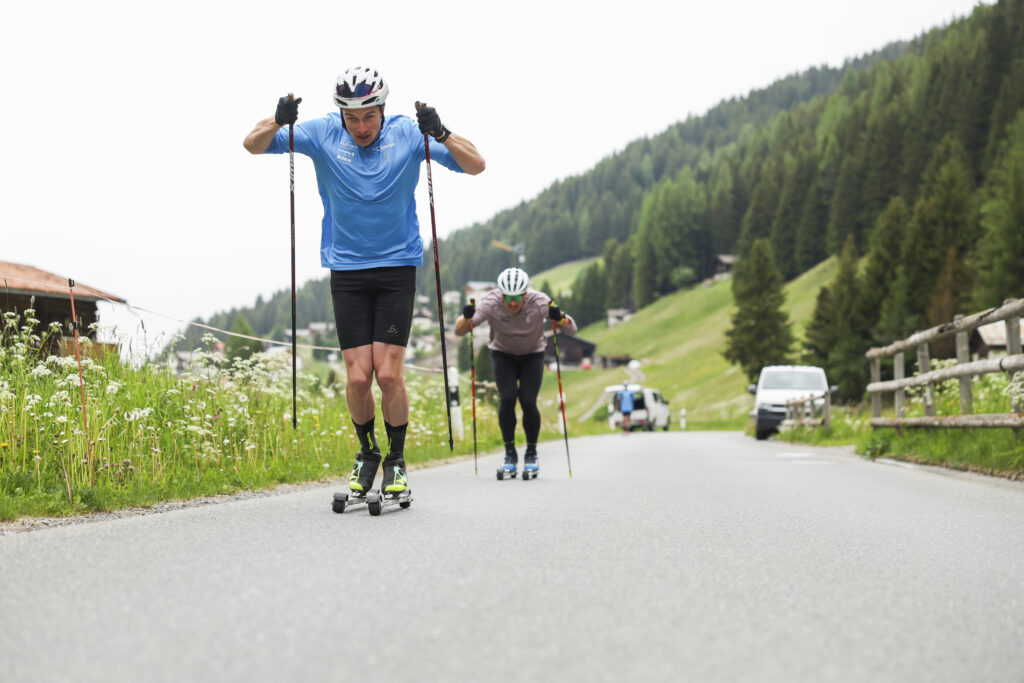
Every athlete wants to develop their speed abilities and become faster. But do you know which types of workouts to include and how often to incorporate them to improve your performance?
The goal of ski training is to master technique and tactics through the development of motor abilities and skills. Each motor ability has a “sensitive period” during which it develops most rapidly, typically between the ages of 10 and 15. However, that doesn’t mean we should stop developing these skills once we leave the youth categories.
Why focus on speed?
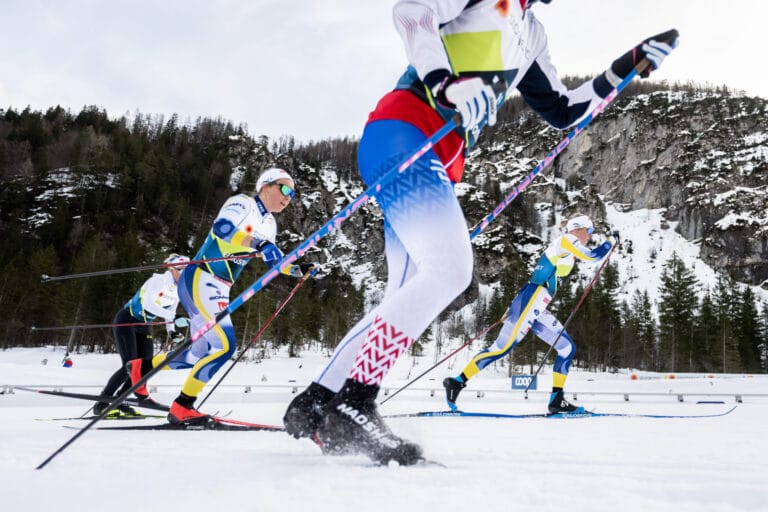
Among motor abilities, speed plays an increasingly important role in cross-country skiing performance. This is evident not only in the rise of sprint events but also in ski marathons, where speed-oriented athletes are increasingly standing out.
Developing speed is valuable not only for the final sprint but also for the race start, where athletes aim to secure an advantageous position. Often, the course narrows shortly after the start, and those not near the front are at a disadvantage. Speed is also crucial during the race, as pace frequently changes and the skier must respond promptly to stay in contact with the group. And of course, speed is key in the final sprint, whether you’re fighting for the podium or just trying to beat your training partner.
The physiology of fast muscles
Developing speed relies on energy from ATP (adenosine triphosphate) and CP (creatine phosphate). At high intensity, lactate (lactic acid) builds up, and in excess, it impairs movement mainly by reducing coordination. A skier who doesn’t train for speed won’t be able to change pace effectively during a race or sustain high speeds.
Speed ability is influenced by muscle fiber composition. While an endurance athlete typically has 10–20% fast-twitch muscle fibers, a natural sprinter may have up to 80%. Their speed potential is thus incomparable.
Speed refers to performing movement at maximum velocity for a short time under specific conditions.
Also read: Get stronger for winter: Why strength training matters in long-distance skiing
Types of speed
Speed is typically categorized into:
- Reaction speed, important at the start signal,
- Single-movement speed, and
- Cyclic speed, which is most relevant in cross-country skiing, refers to the speed of repeated cyclic movements.
Cyclic speed includes movement frequency, changes in direction, and acceleration. Given race length, this is the key speed type to focus on.
For speed development:
- Effort duration should be up to 20 seconds,
- Repetitions should be up to 10,
- Rest intervals should be 2–4 minutes and active (to allow gradual lactate removal) while also long enough for full recovery before the next effort.
Speed training should follow proper training principles and be included year-round, both in general preparation (e.g., running, cycling) and sports-specific sessions (on snow or roller skis). General speed refers to any fast movement, while specific speed should mimic the technique used in skiing.
What does this mean in practice?
In summer training, speed should only be introduced after a solid base of lower-intensity training. A varied summer program is key, with running and roller skiing as the foundation, supplemented by strength training, cycling, and other activities.
Running is especially effective for ski training, as it engages the same muscle groups in a similar motion. The kick technique and leg movement cycle are very similar to the diagonal stride in classical skiing. Speed sessions also develop explosive strength, so they should always be followed by proper rest.
An excellent group training method is to use relay-style intervals or paired sprints, where athletes take turns leading and changing pace.
Examples of speed training exercises
- Starts from various positions
- Starts with different auditory signals
- Running with wind assistance
- Downhill running
- Running with resistance (e.g., dragging a load)
- Flying sprints after a rolling start
- Stationary high-frequency running
- Stationary arm movements at maximum frequency
The story continues below.
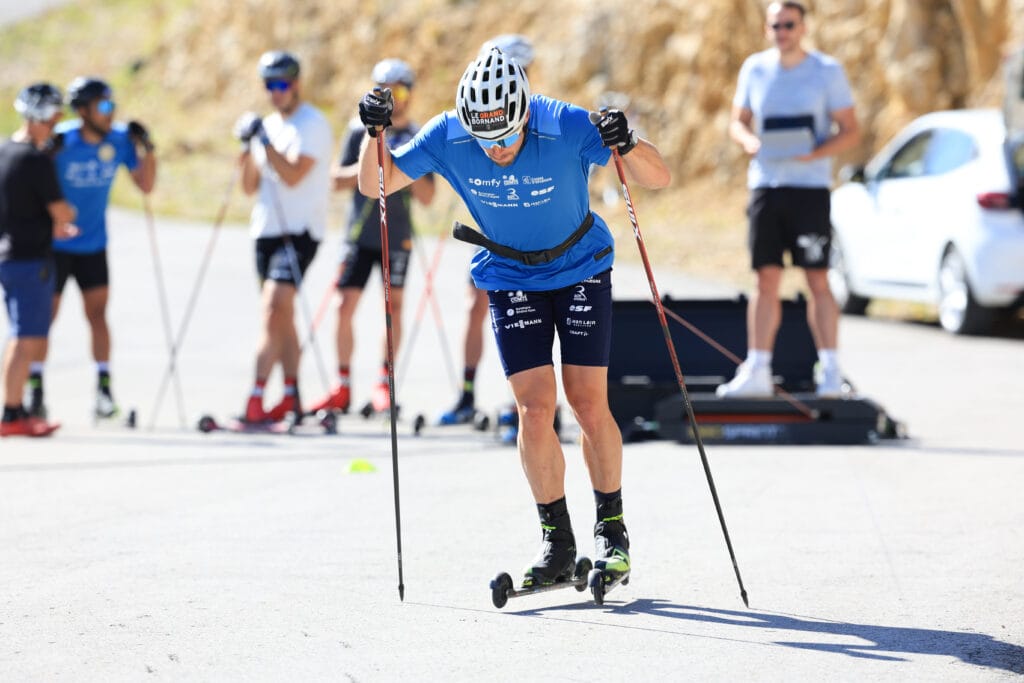
Sprint lengths should match intensity and training goals
- Short sprints (up to 10m): for reaction and acceleration development
- Medium sprints (up to 60–100m): for full-movement expression
- Longer sprints: target speed endurance development
Also read: Gjerdalen’s “cowboy training” changed everything
Fast – but with proper technique
Speed development in skiing is closely tied to technique, which can be a limiting factor. Approximately 80% of the body’s muscle groups are engaged in skiing movements, and coordinating them at high speeds is a challenging task. Speed training must always maintain proper technique to avoid energy loss from inefficient movements.
Compared to endurance techniques, fast movements are shorter, allowing force to be applied in the most efficient phase. Speed training on snow is more complex due to the different skiing styles (classic and skating), each requiring a specific approach. Training should include both techniques and combinations.
How long and how often?
In summer, specific speed training should be done on roller skis. Movement technique on roller skis closely matches that of snow skiing, although there’s a slightly reduced upper-body range in poling. It’s also important to be cautious at high speeds to avoid painful asphalt crashes.
Speed efforts can range from 10 to 60–100 meters, both on snow and roller skis. After each sprint, recovery can be achieved through slow gliding, which minimizes active muscle use.
For speed endurance, intensity should be lower, and efforts should be extended up to 1 km. Speed training is ideally performed 2-3 times per week.
The original version of this article was published on bezky.net in February 2020.
Are you interested in training for long-distance and traditional cross-country skiing? Click HERE and read more about it.
Subscribe to our newsletter
Most read
-
-
14.09.2026
-
06.03.2026
-
16.09.2026
-
02.09.2026



More Articles
-
How to train properly: Understand training intensities
Some athletes have a coach who writes their training plans and guides their preparation. Others rely on their smartwatch, while some acquire knowledge through trial and error, often taking years to figure out how to train effectively. To manage your training, it's crucial to differentiate between the various training intensities.10.10.2026