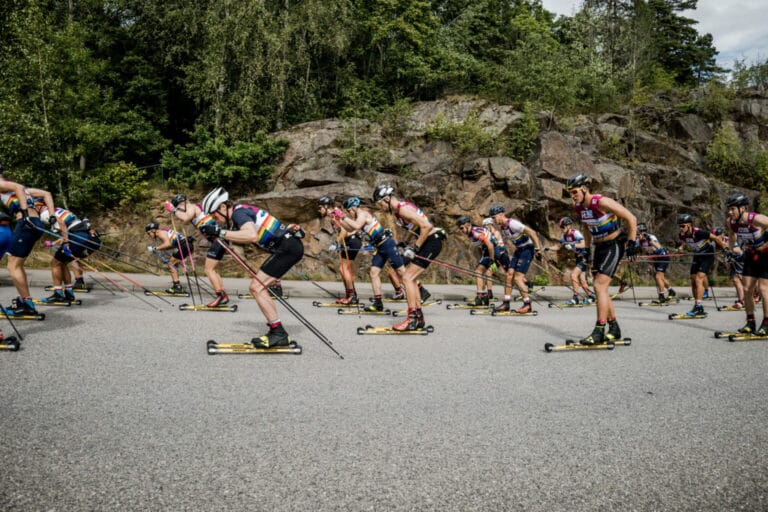
Endurance in sports: Key insights for cross-country skiing

Cross-country skiing is undoubtedly an endurance sport, and long-distance skiing is one of its extremes. For skiers, endurance is a term we all know well—or do we? Have we ever taken the time to think about what endurance actually means? Don’t worry, this article will explain what endurance means physiologically.
What is “Endurance” in Endurance Sports?
Endurance in sports is the ability to sustain a certain activity for a long time, such as running, cycling, swimming, rowing, and cross-country skiing, which means maintaining a submaximal pace for as long as possible. Naturally, psychology plays a crucial role in endurance sports success.
The primary factor limiting endurance exercise is fatigue. When fatigue reaches a certain point, the athlete’s pace decreases. The exact point where fatigue limits performance (tolerance level) varies, and some athletes can endure much more fatigue than others. While genetics and mental toughness contribute to fatigue tolerance, it can be trained.
Key Factors Influencing Endurance in Sports
Several factors influence fatigue, including cardiovascular endurance (heart and vascular system efficiency), muscle endurance, aerobic endurance, anaerobic endurance, muscle strength, and mental toughness. These factors are certainly not foreign concepts to those who engage in endurance sports and skiing.
Cardiovascular endurance refers to our lungs, heart, and circulatory system’s ability to deliver oxygen during prolonged exercise. Muscle endurance is a muscle or muscle group’s ability to exert force for a long time. An athlete with good muscle endurance can repeat muscle contractions without getting tired. These two basic endurance characteristics are the main components of an endurance athlete.
Anaerobic vs. Aerobic Endurance in Sports
Muscles produce energy through aerobic (requiring oxygen) and anaerobic (not requiring oxygen) metabolism. During endurance sports, we meet most of our energy needs through aerobic metabolism. However, as exercise intensity increases (such as during races or high-intensity interval training), anaerobic metabolism becomes relatively more important. At low intensities, we primarily recruit slow-twitch muscle fibers. As exercise intensity increases, the activation of fast-twitch muscle fibers accelerates.
Aerobic endurance refers to the ability to produce energy through aerobic metabolism. The limiting factor here is the ability to absorb, transport, and utilize oxygen for energy production. Aerobic capacity can be measured by the lungs’ efficiency in inhaling oxygen and absorbing it, muscles’ efficiency, especially mitochondria’s efficiency in producing energy through aerobic metabolism, and the efficient transportation of oxygenated blood throughout our body via the heart and circulatory system, and muscles’ ability to absorb oxygen from the blood.
Read More: Interval Training or Endurance Training – Which works better?
The article continues after the image.

Anaerobic endurance is our ability to perform when anaerobic energy systems dominate. Anaerobic means “without oxygen.” As exercise intensity rises, fast-twitch muscle fibers meet the extra energy demand, boosting anaerobic metabolism.
Although anaerobic metabolism produces energy quickly, it has downsides. It raises hydrogen ions, increasing muscle acidity and potentially impairing performance. It also depletes muscle glycogen rapidly. Despite these challenges, building anaerobic endurance is vital for endurance sports like skiing, as it helps maximize race performance, even though aerobic metabolism remains the primary energy system.
Muscle strength is the ability to exert force in a single maximal effort, unlike muscle endurance, which involves sustained force over time. Athletes with greater strength can handle high-intensity efforts more easily in endurance sports. The goal is to develop strength without excessive weight gain, which could hinder performance.
Endurance Sports and the Finnish “Sisu”
Mental toughness, which can be described as “sisu” in Finnish, is a key component affecting overall performance. Endurance athletes have the ability to resist the sensation of fatigue, which demands us to slow down or stop during tough races or challenging training sessions. Mental toughness develops over time as we repeatedly expose ourselves to fatigue during training, though it is also partly an innate trait.
Building Endurance in Sports: Training Insights
All athletes need some level of aerobic endurance. They also need to develop sport-specific endurance. A sufficient endurance base is essential for long-term development, regardless of the sport. This includes training all components affecting performance. Sport-specific endurance refers to developing specific aspects required by the athlete’s chosen sport.
It goes without saying that base endurance training for skiers, especially during summer, includes a lot of low-intensity, aerobic training for many hours to develop capillary networks and muscle endurance. As fitness improves and the aerobic base is solid, the pace during basic sessions can also be increased and varied to avoid excessive monotony—especially in sport-specific training with roller skis.
You can also read articles related to skiing and its training on ProXCskiing.com.
This article was published on our site last fall and updated today.
Subscribe to our newsletter
Most read
-
28.08.2026
-
-
06.08.2026
-
06.03.2026
-
05.08.2026




More Articles
-
Core strength: the game-changer for skiers
As winter approaches, traditional cross-country skiers, long-distance athletes, and biathletes should pay close attention to one often-overlooked element: the core. A strong core not only supports better skiing techniques but also helps maintain form when fatigue begins to set in.09.09.2026