CYCLING TRAINING: Recovery spin – active recovery that keeps you moving forward
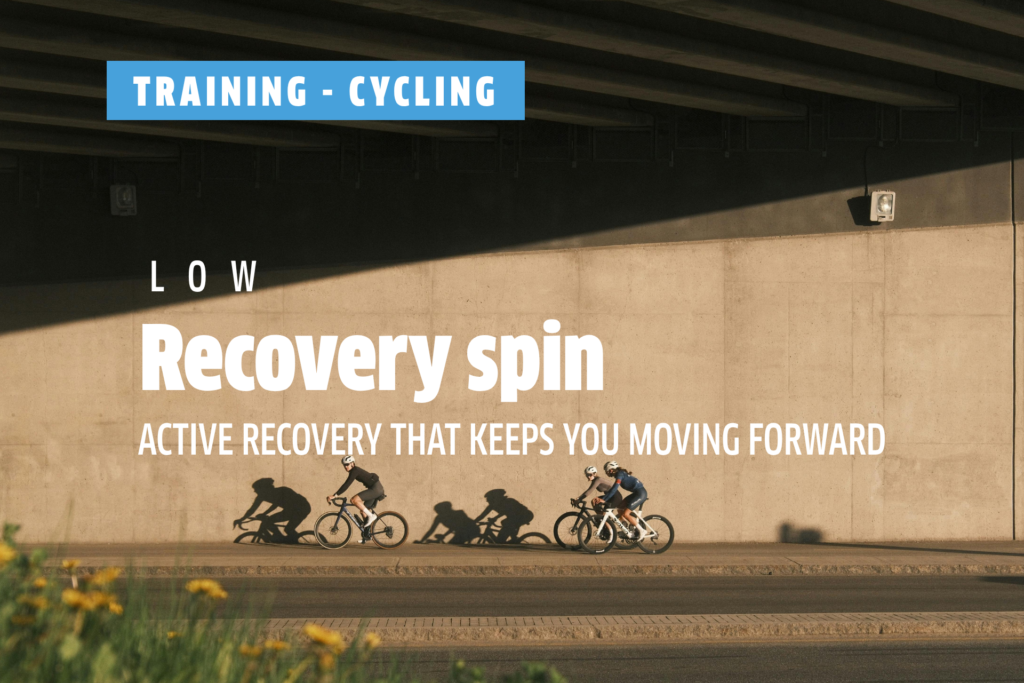
Not every session should push your limits. This short, easy ride is designed to promote blood flow, flush out fatigue, and keep your legs moving without adding stress, so you come back stronger for your next hard session.
Session facts
| Type | Recovery |
| Duration | 30–45 min |
| Intensity | Very low (Z1) |
| RPE | 1–2 out of 10 |
| Terrain | Flat |
| Structure | Warm-up / Main session / Cooldown |
| Frequency | 1–2 times per week, after hard sessions |
Training effect
Active recovery rides accelerate the body’s natural repair process by increasing blood flow to fatigued muscles without adding meaningful training stress. Gentle movement helps clear metabolic byproducts, reduces muscle stiffness, and supports the nervous system’s return to a rested state. For cross-country skiers carrying a high training load through the off-season, this kind of deliberate low-intensity work is just as important as the hard sessions; it is what allows you to train consistently day after day.
Warm-up — 5 min
- Roll out gently from the first pedal stroke — there is no warm-up needed as such
- Simply start easy and stay easy
- If your legs feel heavy at the start, that is normal and exactly why you are here
Main session — 20–30 min
- Ride at a very gentle, relaxed pace entirely in Z1 — well below any sensation of effort
- Keep cadence light and comfortable, around 80–90 rpm if possible
- Flat terrain only — avoid hills that would force your heart rate up even momentarily
- If you find yourself pushing even slightly, shift to an easier gear and slow down
- This is not the session to make up for missed training — the only goal is gentle movement
Cooldown — 5 min
- Gradually come to a stop over the final 5 minutes
- Finish with 5–10 minutes of gentle stretching: quads, hamstrings, calves and hip flexors — hold each stretch longer than usual, as the muscles will be warm and receptive
Note: The recovery ride is one of the most underused tools in an endurance athlete’s toolkit. Many athletes either rest completely or train too hard on recovery days, missing the window where easy movement can actually support adaptation. That said, complete rest is sometimes the right choice, particularly when overall training load is high, accumulated fatigue is significant, or life stress outside of sport is elevated. If you are unsure whether to ride or rest, ask yourself: can I do this entire session without once feeling like I am training? If the answer is yes, ride. If not, rest.
Also Read – CYCLING TRAINING: Easy aerobic ride – building your base one hour at a time
Are you interested in training for Ski Classics, long-distance, traditional cross-country skiing, and biathlon? Click HERE and read more about it.
Subscribe to our newsletter
Most read
-
-
14.09.2026
-
06.03.2026
-
16.09.2026
-



More Articles
-
Frida Karlsson prepares for home World Championships: “I hope to put on a show”
In 2015, she stood in the sea of spectators in Falun. Now the World Championships are returning – and double Olympic champion Frida Karlsson has one goal. She wants to put on a show.15.10.2026