Biggest summer training mistakes recreational skiers make
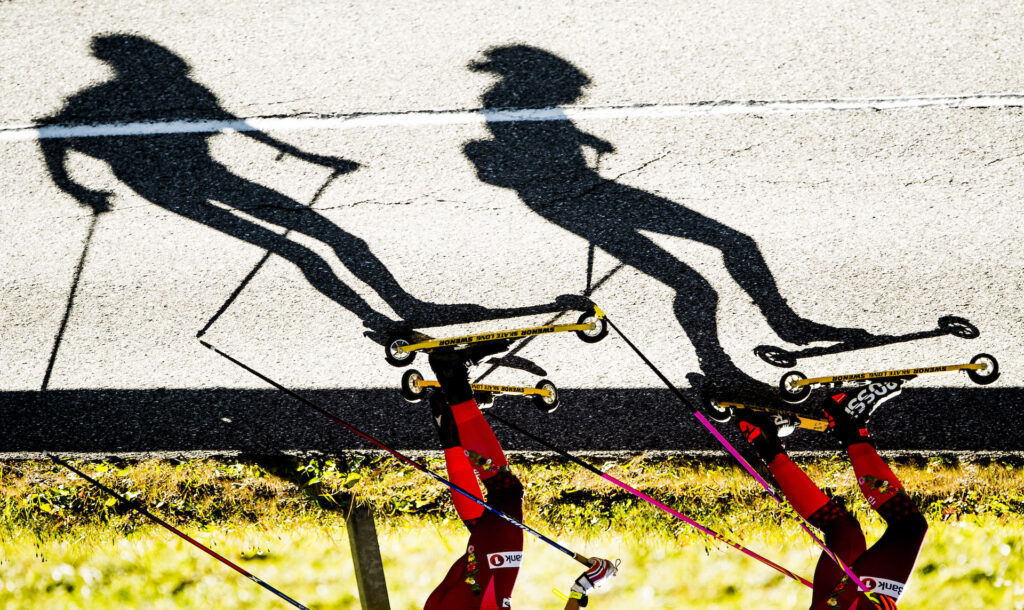
Summer is where winter performance is built—but many recreational skiers unknowingly hold themselves back. From training too hard to skipping structure and technique, these mistakes can limit progress. Here’s how to train smarter and get more out of your summer.
For many cross-country skiers, summer feels like a distant off-season—a time to “stay in shape” before real training begins in the fall. But in reality, the work you do between May and September often determines how you’ll perform once the snow arrives.
Recreational skiers, in particular, tend to fall into predictable traps during this period. These mistakes are not about lack of motivation—they’re usually the result of doing too much of the wrong things or not enough of the right ones.
Here’s what to watch out for—and how to train smarter.
Read also: A recreational skier’s smart transition period in April and May
Doing every session too hard
One of the most common mistakes is training at a moderate-to-hard intensity almost every time. It feels productive: you’re sweating, breathing hard, and finishing workouts tired. But this approach quickly leads to stagnation.
Endurance performance is built on a large foundation of low-intensity training. Elite skiers spend the majority of their time in easy zones, even during summer—and for good reason.
That said, recreational skiers should not fall into the opposite trap either. Doing only easy training without any variation can limit progress over time.
The key is that low-intensity endurance work should form the foundation, while occasional higher-intensity sessions—such as intervals or hill efforts—provide an important stimulus for improvement. The mistake is not intensity itself, but doing too much of it, too often.
Keep most sessions easy, but include one or two controlled harder workouts per week. Think balance, not extremes.
Training without structure
Summer training can easily become random: a run here, a bike ride there, maybe some roller skiing when time allows. While any activity is better than none, randomness rarely leads to progress.
Improvement requires consistency and progression—and that starts with some level of structure.
Without structure, there’s no clear overload, no progression, and no measurable development.
You don’t need a complex training plan. Even a loose weekly structure makes a big difference. Write down your sessions, track what you do, and plan your upcoming week in advance. This simple habit creates awareness, consistency, and direction in your training.
Ignoring technique until winter
Many recreational skiers think technique can only be improved on snow. As a result, they delay technical work until the first ski sessions of the season—when habits are already ingrained.
In reality, summer is the best time to improve technique.
Roller skiing plays a key role here. For many recreational skiers, it may seem intimidating or even dangerous at first—and that hesitation is understandable. But avoiding roller skiing altogether means missing one of the most effective tools for ski-specific development.
With the right environment—flat, quiet roads or dedicated tracks—and proper progression, roller skiing is both safe and extremely valuable.
Poor technique limits efficiency and wastes energy, especially in long races.
Include regular technique-focused sessions. Start simple, build confidence on roller skis, and use drills to improve balance, timing, and coordination. Small improvements now pay off massively in winter.
Neglecting strength training
Strength training is often overlooked, especially among recreational skiers who prefer to “just train endurance.” Others do strength work inconsistently, without progression or purpose.
Yet modern cross-country skiing—especially double poling—demands significant upper-body and core strength.
Weakness in key muscle groups leads to early fatigue and reduced power output.
Incorporate one to two structured strength sessions per week. And remember: going to the gym is not always necessary. You can build effective strength using your own body weight—pull-ups, push-ups, core exercises, and ski-specific movements can go a long way when done consistently.
Doing too much, too soon
Motivation is often high in spring. After a short break, many skiers jump straight into higher training volumes or frequent sessions, trying to “get ahead” early.
This is where problems begin.
The body needs time to adapt—not just to volume, but also to new movement patterns like running or roller skiing after a winter on snow. A sudden increase in training load often leads to overuse injuries, lingering fatigue, or a loss of motivation just when consistency matters most.
Progress should be gradual. Increase duration, frequency, or intensity step by step over several weeks. It’s better to feel like you could do more than to constantly feel exhausted. Sustainable progress always beats short bursts followed by setbacks.
Skipping recovery
Recovery is where adaptation happens, yet it’s often treated as optional. However, this mistake looks a bit different for recreational skiers compared to elite athletes.
Many recreational skiers don’t train extremely high volumes, but they balance training with work, family, and daily responsibilities. These life factors can be just as demanding as training itself.
Even with moderate training volume, accumulated life stress can reduce recovery capacity.
Pay attention to your overall load—not just training hours. Prioritize sleep, listen to your body, and adjust when needed. At the same time, recognize that your training load is manageable—so consistency is usually more beneficial than excessive rest.
Comparing yourself to elite athletes
It’s tempting to replicate the training of elite skiers—high volumes, double sessions, and long roller ski workouts. Their routines are inspiring and can offer valuable insight into what it takes to reach the highest level.
However, context matters. Elite athletes are professionals whose daily lives are structured entirely around training, recovery, nutrition, and rest. What may look like a manageable training load on paper is, in reality, supported by years of adaptation, expert guidance, and the ability to recover fully between sessions.
For recreational skiers, trying to copy these programs too closely often leads to overload, fatigue, and frustration rather than improvement.
That doesn’t mean elite training has no value. On the contrary, it can be very useful to observe how top skiers structure their year, balance intensity, and prioritize certain types of training. The key is to take inspiration from the principles behind their training—not the exact volume or daily schedule.
In practice, this means adapting what you see to fit your own life. Focus on what you can sustain consistently alongside work, family, and other responsibilities. A well-balanced, realistic training routine will always be more effective than an ambitious plan that cannot be maintained.
The bottom line
Summer training doesn’t need to be perfect—but it does need to be purposeful.
Avoiding these common mistakes can make the difference between arriving at winter feeling prepared—or starting from scratch. Build your training around a strong aerobic base, add structure to your weeks, and use this period to improve both technique and strength.
Train with intention, but also with patience. Progress in cross-country skiing is cumulative—it comes from weeks and months of consistent, well-balanced work.
Stay healthy, stay motivated, and focus on what you can sustain over time. If you do that, you’re already ahead of most recreational skiers—and when the snow finally comes, you’ll feel the difference.
You can also read training articles on langd.se and langrenn.com.
Subscribe to our newsletter
Most read
-
-
14.09.2026
-
06.03.2026
-
16.09.2026
-



More Articles
-
Training at altitude: a double-edged sword, but effective – how to maximize its benefits
Are you looking to improve your physical fitness by training at higher altitudes, or planning to log your first kilometers on skis this season in one of the Alpine resorts? If so, do you understand the changes happening in your body, how to properly plan your training, and what mistakes to avoid?16.10.2026