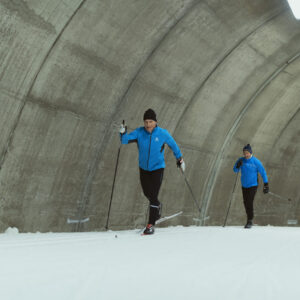
Searching for snow from Mísečky to China: “I did a 40 km training session with almost 2,000 meters of elevation gain”

Training improvisation, racing with one waxed ski, a new team with big stars, and its own chef. What has changed for the Czech long-distance skiing number one, and how did he fill the month-long snowless break between Ski Classics races?
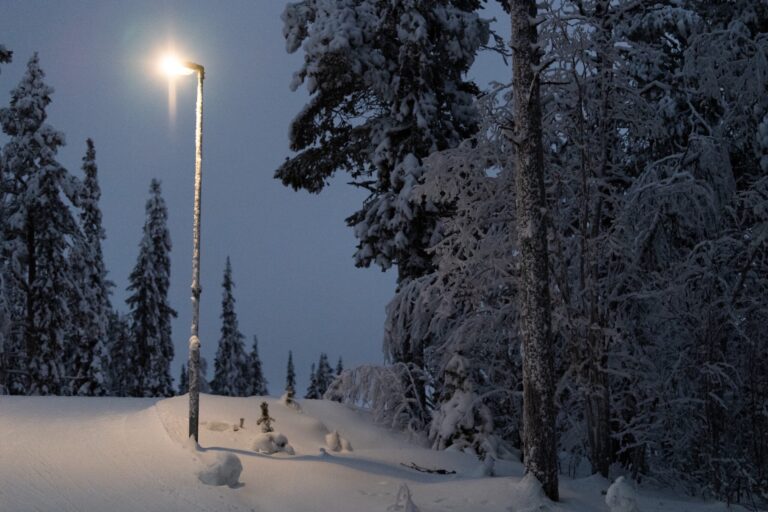
While many people slow down and switch off during the holidays, Fabián Štoček was searching for just one thing – snow. He was not necessarily looking for perfectly groomed tracks, but any snow he could train on. His goal was to stay at home with his family and avoid traveling abroad to find snow.
He often headed out on mountaineering skis, most frequently to Horní Mísečky. “A lot of ski mountaineering, usually in the afternoons and evenings,” he describes to Bezky.net. And the mornings? Those were dedicated to searching. “I tried to find as much snow as possible,” he adds.
When conditions are not ideal, improvisation is needed – and sometimes it is tough. In the end, Fabián trained a lot on a section of a downhill ski slope that was closed to alpine skiers but still open to cross-country skiing and sledding. “For example, I did a training session where I skied 40 kilometers with almost 2,000 meters of elevation gain,” he says, adding: “It was quite a brutal workout, but it was the only option.” In addition to ski mountaineering, he also ran and occasionally used roller skis.
A racing experiment
Before Christmas, he competed in races in Planica and Sankt Ulrich, aiming to move closer to Olympic qualification through the FESA Cup. This time, however, things did not go as planned. Fabián even attempted to change the race dynamics with a bold experiment.
“I tried a new technique – I had one ski for classic and one for double poling, and tried to combine them. It worked, except that the race was supposed to be a mass start, but in the end, it was an individual start. The groups still came together, and I always lost my group at the top of the climb. That was disappointing for me.”
The holidays, which were supposed to be a break, eventually brought another disappointment, just of a different kind. That was also why he stayed at home, trained in Czech conditions, and tried to get the most out of them.
Hall of Fame ambitions
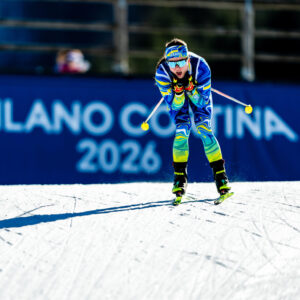
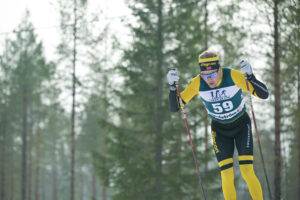
At the same time, there was a long break in the Ski Classics series. Fabián used it to line up for the Vasaloppet China for the fifth time. A race that may sound exotic to many had a clear goal for him: he wanted to enter the Hall of Fame. Among its members is also Stanislav Řezáč, who won the race three times. Fabián also carried a special position – bib number 1 as the defending champion from last year.
In the race itself, he did not hold back tactically. “I set the pace a lot because I wanted us to form a smaller group,” he explains. The course consisted of two laps, with a hilly first part and a second part across a lake – and it was precisely this combination of profiles that dictated the tactics. Already in the first lap, it was clear the group would be large, partly because skiers were racing the shorter 25 km distance. So, on the lake, he eased off for a moment.
“I dropped back to around 20th place and waited to see if someone would make a move,” he describes. When part of the field turned off toward the finish of the shorter course, his moment came.
“After about seven guys from the group finished the 25 km, I went for it,” he says. In the hilly section, he finally managed what he had planned from the start – breaking up the field. Over the biggest climb, only three remained: him and two Italians. But behind them, a Chinese skier was closing in, and Fabián knew that if they wanted to succeed, they had to keep pushing. He went full gas over the second climb as well, until only two remained.
He had a plan in mind: to break away on the lake. But it did not work out. So, a final solution followed. “I tried a final sprint, but I lacked the energy I had spent setting the pace earlier,” he says honestly. On top of that, the last 100 meters were on new, slower snow, and Fabián started sprinting too early. Still, he does not see second place as a defeat.
“I am still quite satisfied with second place and with a beautiful race and an amazing experience in China.”
Also Read: Armellini and Shuang winners at Vasaloppet China 2026
Further preparation
After returning from China, it was time for recovery – and also for the joy of finally having snow at home. “I want to enjoy the snow in the Czech Republic while it lasts,” he says, continuing: “Right now, the skiing is great in Jilemnice as well, and actually across the whole country it’s perfect. I’m happy that thanks to the break I can use the natural snow we have and really enjoy why I ski.”
He did not slow down competitively either. He originally planned to race the Dachsteinlauf, but it was canceled, so he entered the domestic Night Light Marathon in Bedřichov instead. In Saturday’s classic race, he finished behind Václav Sedláček, who had faster skis, but on Sunday, over 30 km freestyle, he secured the victory.
Season goals
So, what results would satisfy Fabián this winter? “I would definitely like to break into the elite top 20 again,” he says about his goals. This year, it is also important because of the team.
“We have a very strong team this year, so it’s important for me to bring in points and feel like a valuable member.”
His main highlights are clearly set: Jizerská50 and Marcialonga. February, which could have been an Olympic month, will instead be filled with long-distance races – the Orlický Marathon and then Worldloppet events.
“I will fly to the USA and Estonia for Tartu and the American Birkebeiner,” he plans.
This year, he will skip Vasaloppet, which does not suit him particularly well, and instead plans to race the Ganghoferlauf in Seefeld. He will also not miss his favorite Engadin Skimarathon, which means he will also skip Orsa Grönklitt, a Ski Classics race weekend.
“I want to include some freestyle races as well, to have some variety and be able to stay in Central Europe,” he explains. For the rest of the season, he will then move to Norway.
New Pro Team and even a chef
After last season, the Vltava Fund Ski Team, which Fabián had been part of for several years, came to an end. He therefore moved to the Czech-Italian team Slavia Pojišťovna Robinson Trentino, led by former Italian skier Bruno Debertolis.
“I’m happy in the new team,” he says. The international lineup works very well together. According to him, the team service is excellent, and his skis were really fast in the first race in Bad Gastein. At races, the team even has its own Italian chef, which is a big bonus during a long racing season.
“Having an Italian chef at races helps a lot, everything runs more smoothly,” he smiles.
However, new responsibilities have also been added. “For example, we scrape our own skis for testing and then have to cover them again with wax, which I didn’t have to do as much in my previous team. On the other hand, things like cooking are handled here. The team shops in advance, and Bruno is a fun leader,” Fabián explains.
Communication in several languages can sometimes be a challenge, and he adds a story from the first race. “In our team time trial, we wanted the first skier to slow down, but he understood that he should go faster. A good experience that shows we still need to work on communication. Otherwise, though, the atmosphere in the team is great. Everyone wants to succeed, everyone has put enormous effort into training, and it’s great to see that reflected in results and people’s joy.”
And what would the current best Czech long-distance skier like to add in conclusion?
“Being part of such a team fulfills me enormously. I think Bruno also sees it as a great opportunity to connect with the Czech part of the team. Legends like Tord Asle Gjerdalen and Standa Řezáč share their experience in long-distance skiing, which is incredibly valuable to the rest of the team. It really is a connection across generations and disciplines, grounded in the diverse experiences of individual skiers. That way, we can help each other a lot.”
Are you interested in Ski Classics and long-distance skiing? Click HERE and read more about it.
Subscribe to our newsletter
Most read
-
11.05.2026
-
19.09.2026
-
24.09.2026
-
01.03.2026
-
26.08.2026

More Articles
-
Swedish and Norwegian cross-country ski tracks open: Early snow guarantee for 2026
This weekend, several traditional Swedish and Norwegian destinations are launching their early snow offers. Here is an overview of destinations with snow guarantees.22.10.2026