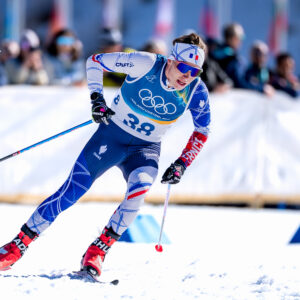
Czech voices on the new Ski Classics calendar

In early June, the Ski Classics World Championship series released the calendar for the upcoming season. What do leading Czech athletes and a Pro Team Director have to say about it?
The new season of the Ski Classics World Championship brings several changes for the upcoming winter. A trio of representatives from Czech long-distance skiing — the top Czech female and male competitors from Ski Classics and the eD system RSJ Team Pro Team Director — share their thoughts on the released calendar.
Also Read: Ski Classics World Championship Season XVIII
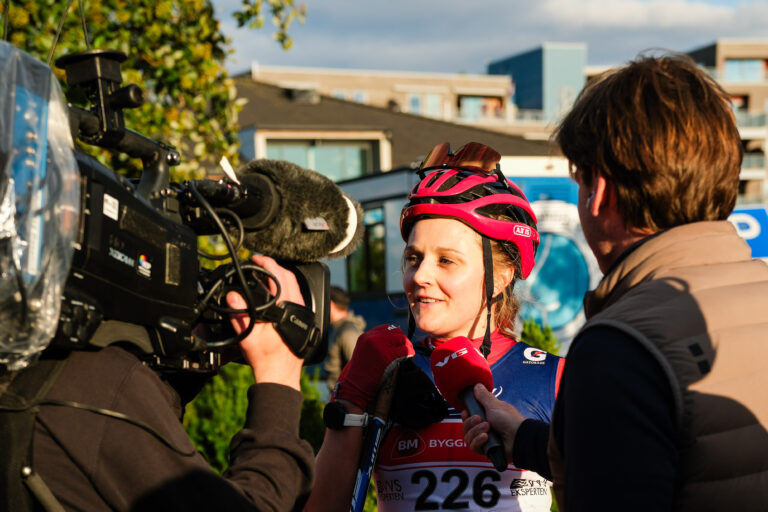
Sandra Schützová: “Tjejvasan in Vasaloppet suits me“
Sandra Schützová approaches the new program with high expectations, particularly appreciating the ease at the start of the season.
“It will definitely be an easier start to the season in terms of travel and logistics. The first two weekends are in the same location in Gastein, and after Jizerká in the new year, there aren’t many changes in travel.”
An interesting detail in the new calendar is that the first three weekends of the season take place at altitude. For athletes who regularly incorporate altitude training into their preparation, this is an advantage.
“For me, this is definitely good because I include altitude training in my preparation every year. But I’m very curious about the weekend in Switzerland, as that double combination seems really challenging,” Schützová says to Bezky.net.
The opening prologue surprised her, but the Czech athlete approaches it the same way she does all other races.
“I don’t really see the point in adding a 1km race. I still perceive Ski Classics as a long-distance series. However, personally, I don’t care how long the race is. They all have a starting and finishing line.”
She welcomes the addition of Tjejvasan unequivocally — she has performed well in this race before, finishing sixth years ago. The final block of the season doesn’t surprise her much — it’s familiar and tested.
“Adding Tjejvasan to the schedule is great because I was planning to race it anyway. Years ago, I finished sixth, and just like Vasaloppet, this race suits me.”
However, one thing genuinely surprised Schützová: the number of double-event weekends.
“I’m surprised by the large number of double races because in previous years, it was only during the opening and closing weekends. So this trend is going in a different direction.”
Fabián Štoček: “The free weekends work well for me.”
Fabián Štoček assesses the new program in generally positive terms and from a practical angle. His opening thought is straightforward: “In December, it is definitely better to have more than one race weekend because of training and preparation.”
He sees the one-kilometer prologue as a media opportunity rather than a fully-fledged race. “It will probably be more of an evening show, so that the athletes and teams can show themselves off. It will help the teams media-wise, and the 30km races will be good for points.”
He appreciates the double race at La Diagonela for an entirely practical reason: athletes have a month since the last races to train and then go straight into two races back to back. He did note that it is a shame the calendar does not include, for example, the Pustertal Skimarathon, which was held in Italy a week before Marcialonga, when preparing for high-altitude races. All those races took place at higher elevations, and athletes directed their preparation accordingly.
He would prefer the sprint at Jizerská to be held on Saturday rather than Friday. “I would rather have the sprint at Jizerská on Saturday than Friday, two days before is not entirely ideal for me from a training load perspective.”
Štoček has a personal story with Birkebeinerrennet. The race with the backpack did not appeal to him much in the past, but after several years, he returned: “Birken never really suited me before, I did not like having a backpack on my back. But last year I raced it for the first time in five years. I was in a good position behind Myhlbäck, but the strap on one shoulder of my backpack came loose, so I had to stop and adjust it. I enjoyed it more than I expected.”
The overall layout of the season gives him something he values: free weekends that allow him to slot in Worldloppet races. “It works out quite well for me that there are quite a few free weekends, so I can fit in a Worldloppet here and there. Nine weekends, fifteen races, so the spread of race weekends works pretty well for me.”
Marek Pazderský: “The best calendar ever”
Marek Pazderský, Pro Team Director with many years of experience in the Ski Classics environment, rates the structure of the new season unusually highly.
“In general, the calendar is probably the best there has ever been. It is not all crammed together in a way that forces you to spend five weeks in Scandinavia, which is basically unrealistic for small or semi-professional teams.”
He particularly appreciates the two consecutive weekends in Bad Gastein and the natural breaks between blocks of races, which allow for a return home. He views the double race at Engadin La Diagonela as a logical step.
“I welcome the double race at La Diagonela, I like it. It is demanding for the service crew and the athletes, but on the other hand it saves a lot of money on travel.”
He also has a positive view of Marcialonga. The combination of the sprint and the fifty at Jizerská proved successful last year, and the final block of the season suits him logistically as well.
However, he evaluated the kilometer prologue that opens the season in Bad Gastein: “Complete nonsense. Moving there on Wednesday for just one kilometer, when we will be there for a week and a half? It could have at least been longer, or it could have been held on Saturday.”
His most serious objection concerns Birkebeinerrennet, where the race organizers have reduced the mandatory backpack weight from the traditional 3.5kg to just 2kg. For Pazderský, this is a symbolic attack on the very character of the race.
“I’m really upset about Birkebeiner. The 3.5kg weight was meant to symbolize a child — the race has its enormous tradition, its history, its times, and suddenly they reduce the backpack to two kilos. It is a degradation of the race, and I no longer want to race it myself.” He adds: “So next year we will start on the first hill, because the hill is too steep, and the year after that, the second hill will be bypassed on the flat, through a tunnel, so that nobody suffers. I do not understand where the world is heading, because we are just making everything easier and easier.”
Read More: Birkebeinerrennet reduces backpack weight requirement to 2kg
His deepest concern, however, is the entire structure of the new changes and adjustments in the calendar. Pazderský sees a systemic trend that troubles him.
“Whenever a race drops out, and a new one is added, it is always races of up to 30km or sprints. Of the long races, only Vasaloppet and Marcialonga remain. I miss those long races. It is starting to resemble the World Cup. We will see which direction things go from here.”
Ski Classics World Championship Season XVIII (2026/2027)
• Event 1: December 11, 2026 – Bad Gastein Prologue – Austria – 1km
• Event 2: December 13, 2026 – Sportgastein Criterium – Austria – 30km
• Event 3: December 19, 2026 – Bad Gastein ITT – Austria – 7km
• Event 4: December 20, 2026 – Bad Gastein Criterium – Austria – 36km
• Event 5: January 16, 2027 – Engadin La Diagonela – Switzerland – 55km
• Event 6: January 17, 2027 – Zuoz–St. Moritz Sprint – Switzerland – 30km
• Event 7: January 31, 2027 – Marcialonga – Italy – 70km
• Event 8: February 12, 2027 – Bedřichov Heat Sprint – Czech Republic – 1.5km
• Event 9: February 14, 2027 – Jizerská50 – Czech Republic – 50km
• Event 10: February 27, 2027 – Oxberg–Mora Sprint Women – Sweden – 30km
• Event 11: February 28, 2027 – Oxberg–Mora Sprint Men – Sweden – 30km
• Event 12: March 7, 2027 – Vasaloppet – Sweden – 90km
• Event 13: March 20, 2027 – Birkebeinerrennet – Norway – 53km
• Event 14: April 3, 2027 – Reistadløpet – Norway – 35km
• Event 15: April 4, 2027 – Grand Finale Summit 2 Senja – Norway – 60km
For more updates and detailed information about the Ski Classics World Championship, visit skiclassics.com.
Are you interested in Ski Classics and long-distance skiing? Click HERE and read more about it.
As a member of ProXCskiing.com, you get full access to all content on the site and live streaming of Ski Classics Pro Tour events with English commentary.
When you become part of one of the world’s leading XC ski communities, you will receive many exclusive offers all year round.

Subscribe to our newsletter
Most read
-
11.05.2026
-
23.08.2022
-
09.07.2026
-
03.08.2026
-
05.08.2026
More Articles
-
Stina Nilsson wins opening event at Toppidrettsveka 2026
Toppidrettsveka 2026 opened on Friday with a 32km mass-start roller ski race in classic technique for women in Hitra, Norway. Stina Nilsson, Team Ragde Charge, claimed victory with a strong performance.21.08.2026