Lactate, thresholds, acidosis: What skiers need to know about their bodies
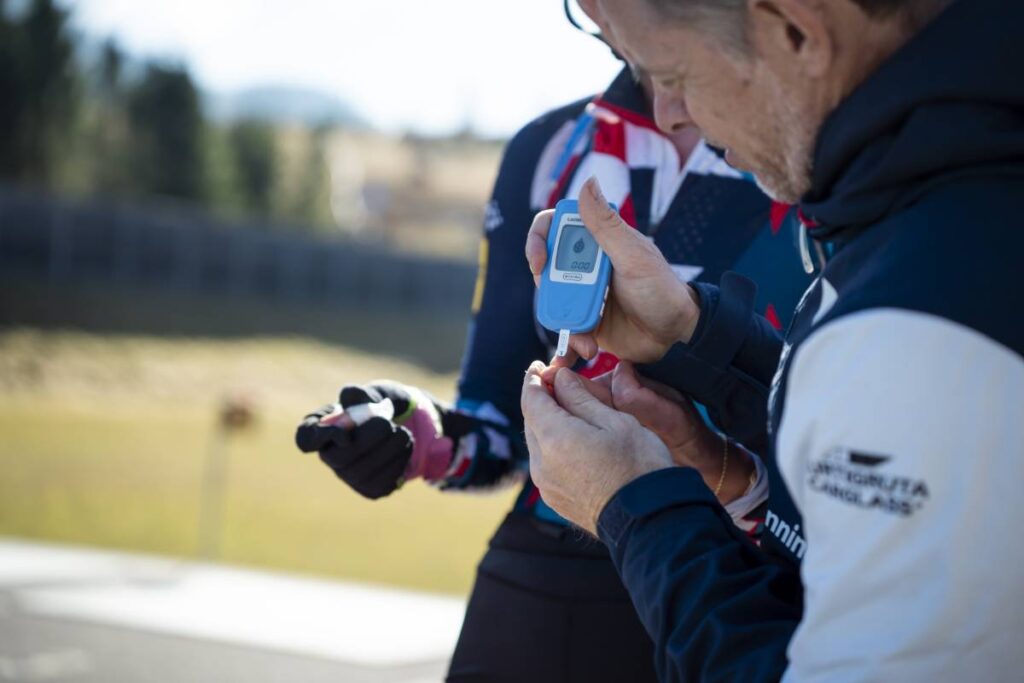
After a race, elite athletes mention that they were so “acidified” that they had to slow down. What is happening in the body at that moment — and, more importantly, how can we prevent it?
Summer training is essential for preparing athletes for the winter competition season. You need to not only build a solid endurance base and improve your physical condition by pushing your training thresholds, but also understand how your body functions. All the training insights can then be applied during races.
Lactate is often considered the enemy of every athlete, or at least that’s the common belief. Below, we will uncover the truth. To understand this and some training insights, we first need to discuss the basic physiological principles that allow our bodies to function.
Energy systems
The body utilizes two primary methods to generate energy during movement.
1) Aerobic system
This system operates in the presence of oxygen. It becomes fully engaged from the 2nd to 3rd minute of exertion and can function for hours. It is the foundation for all skiing disciplines from a distance of 10km and beyond. The better trained you are, the faster you can go at the same level of exertion.
2) Anaerobic system
This system kicks in during high-intensity exertion when oxygen intake is insufficient. Energy is released quickly but only for a short duration — serving as a backup during climbs, finishes, or sprints. A byproduct of this process is lactate and hydrogen ions, which accumulate and cause pain, ultimately forcing the body to slow down.
According to the duration of exertion, the following applies:
| Duration of Exertion | Predominant System | Example in Skiing |
|---|---|---|
| 30 s – 2 min | Anaerobic | Short sprint (finish or short-term acceleration on the course) |
| 2 – 8 min | A combination of both | Sprint up to 2km |
| 8 min and more | Aerobic (90 %+) | 10km and more |
What lactate does (and doesn’t do)
During intense exertion above the anaerobic threshold, hydrogen ions (H⁺) accumulate in the body, lowering the pH in the muscles. This is what causes the burning sensation and gradual stiffness in the muscles — not lactate itself, as was previously thought.
In fact, lactate is a protective response from the body: it is transported to the liver and brain, where it is converted back into glucose and serves as an energy source. Lactate is even produced at rest (0.5–2 mmol/l), and its level in the blood is one of the best indicators of your endurance fitness.
Lactate clearance continues for about 30 minutes after exertion, which is why it makes sense to jog or move lightly after a race or intense training session instead of stopping immediately.
Thresholds as training indicators
Lactate thresholds are crucial for competitive skiers — they define where individual training zones begin and end. These can be accurately measured in a laboratory during a stress test. You can then use these thresholds to guide your training or racing. Monitoring your exertion can be done either with smartwatches or by taking a drop of blood from your finger or earlobe and evaluating the lactate level, which is a precise indicator.
Aerobic threshold
The intensity at which lactate begins to rise above resting levels, which is approximately at a lactate concentration of 2–3 mmol/l. Below this threshold, you train purely aerobically, and the body adapts best to prolonged exertion.
A well-trained athlete can have their aerobic threshold pushed up to 80–85% of their maximum heart rate — and this is the goal of basic endurance training.
During training, you can recognize the aerobic threshold when you can still speak fluently, but it is no longer entirely comfortable, and the pace is sustainable over the long term.
Anaerobic threshold
The highest intensity at which the body can still clear lactate (and hydrogen ions). Above this threshold (approximately 3–8 mmol/l of lactate), acidosis rapidly deepens, and performance cannot be sustained for more than a few minutes.
Training just below the anaerobic threshold and occasionally exceeding it gradually raises the threshold, allowing the skier to go faster without entering an energy deficit.
In the course, you can recognize the anaerobic threshold when your muscles start to burn, forcing you to ease off the pace, and you definitely cannot speak fluently.
How to recognize your limits
A heart rate monitor or sports watch is an essential tool for competitive skiers, but what if the technology fails or you are in a race where you don’t have time to check your watch? In training, learn to listen to simple signals from your body.
| What You Feel | What It Means | What to Do – Strategy |
|---|---|---|
| Comfortable breathing, steady pace | You are below the aerobic threshold | If racing, you can speed up |
| Increased breathing, slightly uncomfortable | You are at the aerobic threshold | Ideal basic racing pace for long distances |
| Cannot speak fluently, muscles slightly ache | You are approaching the anaerobic threshold | Can you maintain this pace to the finish? |
| Muscles burn, forcing you to slow down | You are above the anaerobic threshold | Consciously reduce intensity, or your body will slow down on its own |
| Muscles stiffen, pace drops quickly | Significant acidosis | Reduce intensity and try to keep moving — stopping won’t improve the situation |
Also Read – How to train properly: Understand training intensities
Tactics
Climbs are the most critical points in terms of acidosis. Inexperienced or overly excited skiers typically start at a high pace at the beginning of a hill, become acidic, and lose valuable time for the rest of the race. A seasoned athlete approaches climbs below the anaerobic threshold, saving energy for the finish or challenging sections ahead.
Short-term overload during a climb will slow you down more in the next section than the gain you made on that hill. Even distribution of effort almost always pays off more than going all out.
Reserve your anaerobic system for the last 1–2 km before the finish, where transitioning into acidosis is acceptable as the race will soon end.
Glycogen – Fuel that runs out
Glycogen stores are limited — the average athlete has access to 250–400 g (trained athletes up to 800 g), but at racing pace, these can be depleted in 30–90 minutes. In long-distance skiing races, this means that without energy replenishment (gels, bananas, electrolyte drinks on the course), performance will inevitably decline.
Training on an empty stomach in low- exertion zones can improve the body’s ability to manage glycogen, but racing units always require sufficient carbohydrate replenishment both beforehand and during the event.
Summary
- Basic fitness is built in Zone 1 — long, easy kilometers are more important than “moderately hard” training at a monotonous pace.
- Push your anaerobic threshold through intense interval training — the higher your lactate threshold concentration, the faster you can go without acidosis.
- Lactate is not the enemy — it is an indicator of intensity and available energy sources. The discomfort comes from acidosis caused by hydrogen ions that are produced alongside it.
- During a race, “save yourself” on climbs — going all out is not worth it if you lose time on the flats.
- Keep moving after the race — light movement speeds up lactate clearance and recovery.
Also Read: Annual training guide for recreational and competitive skiers
Are you interested in training for long-distance, traditional cross-country skiing and biathlon? Click HERE and read more about it.
Subscribe to our newsletter
Most read
-
-
14.09.2026
-
06.03.2026
-
16.09.2026
-



More Articles
-
France warns Botn: “It will be a hell of a show”
The French arch-rivals have set their sights on Norway's new superstar Johan-Olav Botn. Now the Norwegian responds to the challenge.15.10.2026