15 types of pasta and 80 desserts: how they fuel the Tour favorite
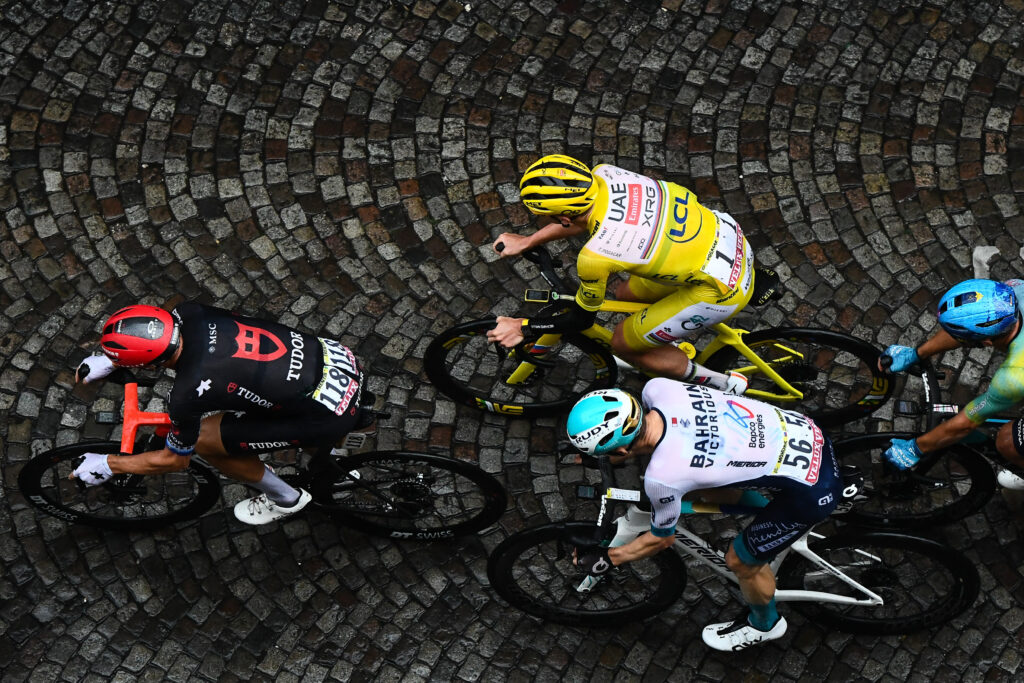
The meals for Tour riders are meticulously planned. This is what Tadej Pogačar eats to perform over three weeks in the world’s toughest cycling race.
The Tour de France kicked off in Barcelona on Saturday, July 4. Tadej Pogačar is chasing his fifth overall victory – his third in a row – in what will be his seventh Tour. Over the next three weeks, the Slovenian and 183 other riders will cover 3,321 kilometers across 21 stages, with a total elevation gain of 54,459 meters.
Also Read: Nutrition guide for active recreational cross-country skiers
So what does the top favorite for the yellow jersey eat to get through the course?
Nutritionist Gorka Prieto-Bellver from Pogačar’s team, UAE Team Emirates, provides insight into the menu. Every meal is carefully calculated based on each rider’s individual needs.
“(Pogačar) sends me a lot of suggestions for things we just can’t serve, like brownies with lots of butter and chocolate, and that sort of thing,” Prieto-Bellver tells Olympics.com.
That type of food is not on the menu during the season, but the cycling star has some favorites among the dishes prepared by the team’s chefs.
“Pogačar really enjoys cheesecake and beetroot risotto,” reveals Prieto-Bellver.
“But he is very disciplined, you know.”
The classics and mountain stages demand the most
Prieto-Bellver explains that riders often need to eat more in preparation for one-day classics than for the easier Tour stages.
“One-day races are often over 200 kilometers and can be harder and more demanding than, for example, a flat Tour stage,” he says.
Mountain stages in the Tour de France, on the other hand, are something entirely different. These are often the stages that determine the outcome of the Tour. In addition to the nutrition riders consume during the race, which they often need to be reminded to take in via team radio, Prieto-Bellver also serves a meal before the stage starts.
“On the toughest mountain stages, such as stages 18 and 19 of this year’s Tour (the last Alpine stages, editor’s note), riders consume a meal with about 3.5 grams of carbohydrates per kilogram of body weight approximately four hours before the start,” he says.
“They can take in these carbohydrates in whatever format they prefer – riders have different tastes,” Prieto-Bellver adds.
Breakfast and pre-race meals
Riders have breakfast about four hours before the stage starts and have a wide variety of food to choose from.
“What each rider eats depends on the recommendations I give them. We have a mobile app where they have their individual goals, and for breakfast, they choose foods that contribute to this goal. Depending on the type of stage ahead, it might be to consume 250 grams of carbohydrates throughout the day. So they choose foods they like to reach that goal,” explains Prieto-Bellver.
250 grams of carbohydrates is roughly equivalent to eight to nine slices of bread or about one kilogram of cooked rice.
Breakfast includes:
- Oatmeal
- Rice porridge
- Bread of all kinds – with olives, raisins, sun-dried tomatoes, turmeric
- Pancakes and waffles – including chocolate pancakes and apple pancakes
- Chocolate cookies
During the race
“All riders have their individual recommendations on what they need to consume during the race and how much salt they require. This also depends on the weather and temperature. We conduct salt tests to see how much salt each rider loses per hour. Some lose one gram per hour, while others lose 300 milligrams. Therefore, it varies greatly what they need to take in,” says Prieto-Bellver.
What about carbohydrates during the race: How do riders manage to adapt to the standard of 100 to 120 grams per hour?
“This has become very popular, and only the pros do it. I cycle a lot myself but would never try to take in 120 grams an hour. I would have stomach issues. But the riders manage it because they train daily,” says Prieto-Bellver.
“The amount of carbohydrates they consume varies from week to week. Some weeks they get a lot to build up their tolerance, from 100-120 grams up to 130 grams. Some can tolerate even more, but this is something they train for, and it is very individual. How often they train for this also varies. Some do it once a week, others a couple of times a week,” he says.
120 grams of carbohydrates per hour is roughly equivalent to four sports drinks or six to seven energy gels.
Prieto-Bellver also emphasizes that it is important to do this correctly, and that the composition of the carbohydrates in the products they use must be right.
“Previously, there was a lot of confusion because bars and gels did not come in the right format. They need to have a ratio of glucose to fructose of 2:1 or 1:0.8. And there are different gels. If you only take glucose (maltodextrin), for example, the intestines cannot absorb everything. Then carbohydrates remain in the stomach, leading to stomach pain, cramps, and diarrhea,” says Prieto-Bellver.
Post-race meals and dinner
Typically, riders receive three meals after a stage. The first is a liquid meal, followed by two solid meals. Sometimes certain riders receive even more or a bit less, depending on individual needs and energy expenditure.
“After the race, all athletes receive the same meal to simplify things for the chefs. How much each rider eats is individual, but if we prepare chicken, everyone eats chicken. If we prepare salmon, everyone eats salmon, regardless of their favorite dishes. Dinner is tailored based on how many watts were pedaled that day and how long they rode,” says Prieto-Bellver, adding:
“That said, we usually have 15 types of pasta, 10 different salads, and 80 different desserts… There are many recipes, but we have limited options from day to day.”
Sides for a typical dinner include:
- Two types of vegetables
- Three types of carbohydrates: One with sauce, one without, and a third variant. The first could be pasta with tomato sauce, the second plain rice or plain pasta, and the third, pizza.
- Bread
- Dessert such as cheesecake and tiramisu
Are you interested in training for long-distance, traditional cross-country skiing, and biathlon? Click HERE and read more about it.
Subscribe to our newsletter
Most read
-
-
14.09.2026
-
06.03.2026
-
16.09.2026
-




More Articles
-
Training at altitude: a double-edged sword, but effective – how to maximize its benefits
Are you looking to improve your physical fitness by training at higher altitudes, or planning to log your first kilometers on skis this season in one of the Alpine resorts? If so, do you understand the changes happening in your body, how to properly plan your training, and what mistakes to avoid?16.10.2026