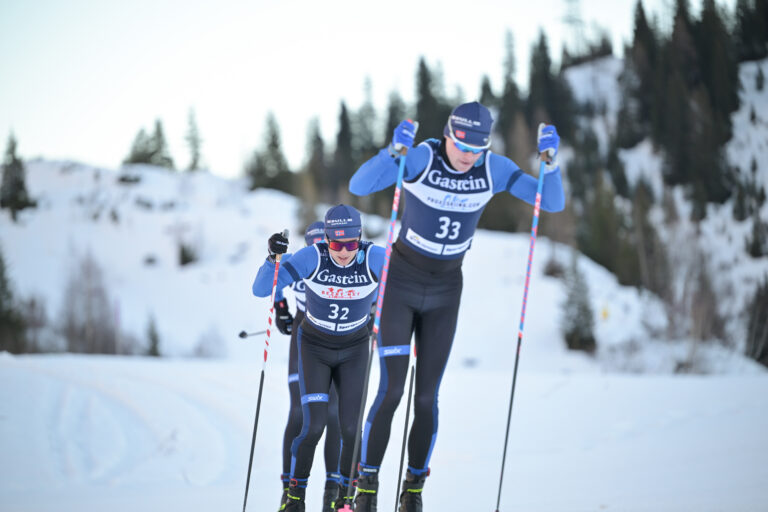
How Hedegart trained his way to Olympic gold
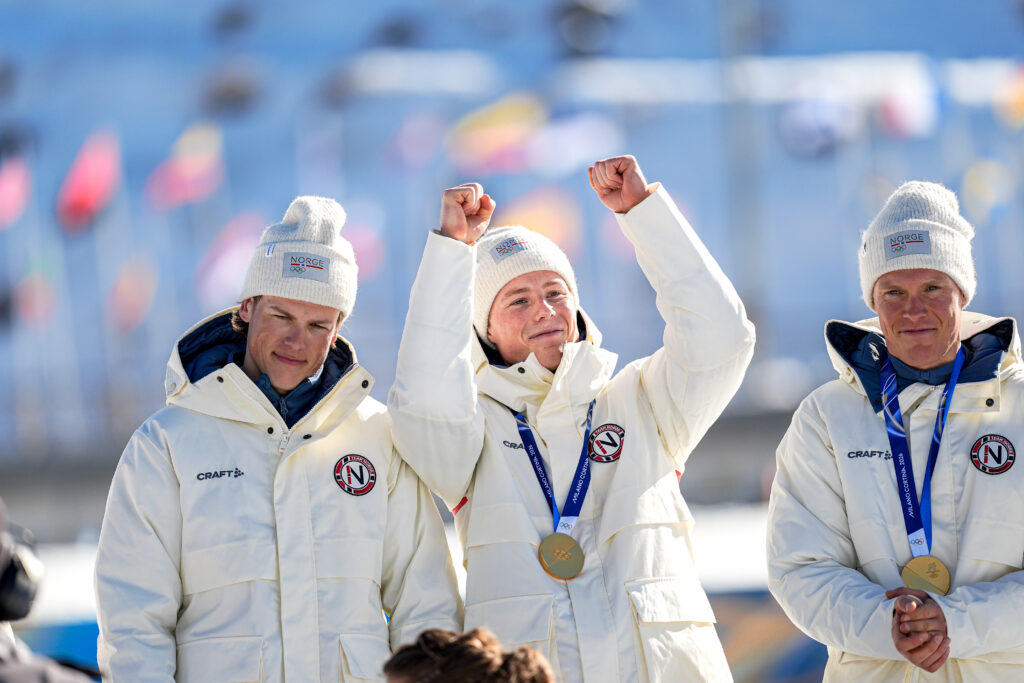
On Sunday, the 24-year-old from Norway won Olympic gold in the relay in Val di Fiemme. Two days earlier, Hedegart took bronze in the 10km. Now the Olympic debutant reveals the details behind his training program.
“It’s so big, and it hasn’t really sunk in. I would never have believed it when I was younger. I always had hopes of World Championships and World Cup, but the Olympics — then you’re superhuman. And now I’m standing here myself,” Einar Hedegart said live after winning Olympic relay gold on Sunday afternoon.
Originally, he was only supposed to race the 10km. But after winning bronze there, he also got the chance to compete in the relay and later in the team sprint.
Behind the achievement lie countless hours of training. Now the former biathlete reveals the details behind the program that led to success.
Also Read – Norway powers to men’s 4×7.5km Relay gold at Milano-Cortina 2026
The devil is in the details
The program that has brought Hedegart gold and bronze at the Olympics is largely the same as for the entire team. Karoline Simpson-Larsen, who won gold in the women’s relay, this winter’s breakthrough name Karoline Grøtting, and the two rising talents Kasper Herland and Oline Vestad all follow essentially the same structure.
Read More: Norway powers to 4×7.5km Relay gold at Milano-Cortina 2026
Both Hedegart and the rest of the team emphasize that what they do does not differ dramatically from what many others do. They point out that it is not what they do, but how they do it, that makes the real difference.
Unlike many traditional programs, the team does very little periodization. Most weeks look similar throughout the year and rarely drop below 25 training hours. In the summer, it is often 30 hours or more.
Trial and error
Hedegart has settled on a structure of six training days and one rest day per week.
“I realized that I had more energy in training during the winter when I included a rest day. The number of hours is still the same, but now I train hard for six days and then have one rest day. That’s new this season, and it has worked very well,” Hedegart told Trønder-Avisa.
A typical training week for Hedegart looks like this:
- Monday: Two sessions, both double threshold workouts. The second session can sometimes be harder.
- Tuesday: Volume. Two sessions totaling 5–6 hours.
- Wednesday: Volume. Two sessions totaling 5–6 hours.
- Thursday: Reduced volume to 3–3.5 hours to have more energy for Friday.
- Friday: Double high-intensity session.
- Saturday: One long session, around 5–6 hours.
- Sunday: Rest, with some strength training.
“I could give my training plan to anyone, but it’s the details that determine whether you actually benefit from the program.”
Full-scale altitude program
In addition to daily group sessions and close follow-up, the team, Team Anlegg Øst Entreprenør, runs an extensive altitude program with around 100 days at altitude spread across three altitude camps — two in the fall and one in the summer.
Hedegart, Simpson-Larsen, and the other athletes all describe this altitude program as decisive.
Langrenn.com spoke with coach Emil Hosøy about his training philosophy after Hedegart was selected for the Olympics.
What is your training philosophy and approach?
“In short, it’s about volume, specificity, execution, and nutrition combined in the right balance,” Hosøy told Langrenn.com, continuing:
“We train a lot. We train many hours, but we also do large amounts of high-intensity work and maximize threshold volume at a load that allows us to maintain continuity and train specifically. There’s a consistent thread throughout the entire year.”
Read More: “What we’re doing definitely isn’t found in any training textbook”
Gradual shift from biathlon
When Hedegart won the Norwegian Cup opener in cross-country skiing at Gålå last fall, he told Langrenn.com that the victory came with mixed feelings, even though it also secured him a spot on Norway’s World Cup team for Lillehammer.
“The reason I started here (at Gålå) is that I didn’t succeed in my main goal with my investment,” Hedegart said after the Norwegian Cup win.
Similarly, after winning Norwegian Championship gold at home in Stiklestad in March, Hedegart said that victory had saved his biathlon career.
A week and a half later, Hedegart signed with the private cross-country team Team Anlegg Øst Entreprenør.
“Plan A is that Einar will race biathlon next winter. But the path is made while walking it,” team coach Emil Hosøy told Langrenn.com at the time of signing.
But when the national biathlon season opener went poorly for Hedegart, and the corresponding cross-country opener the following week went exceptionally well, he went all in on cross-country skiing. So far, he has not looked back — though he says he is not completely closing the door on a return to biathlon.
FACTS 2026 Milano-Cortina Winter Olympic Games – Cross-Country Skiing
- When: Saturday 7, to Sunday, February 22, 2026
- Who: Elite national skiers – women and men
- Where: Val di Fiemme, Italy
- What: Milano-Cortina 2026
Saturday, February 7: 20km Skiathlon C/F Women (More information can be found HERE)
- 13:00 CET: 20km Skiathlon C/F, Women
Sunday, February 8: 20km Skiathlon C/F Men (More information can be found HERE)
- 12:30 CET: 20km Skiathlon C/F, Men
Tuesday, February 10: Sprint C Women and Men (More information can be found HERE)
- 9:15 CET: Sprint Quali C, Women
- 9:55 CET: Sprint Quali C, Men
- 11:45 CET: Sprint Final C, Women
- 12:15 CET: Sprint Final C, Men
Thursday, February 12: 10km Interval Start F Women (More information can be found HERE)
- 13:00 CET: 10km Interval F, Women
Friday, February 13: 10km Interval Start F Men (More information can be found HERE)
- 11:45 CET: 10km Interval F, Men
Saturday, February 14: 4×7.5km Relay C/F Women (More information can be found HERE)
- 12:00 CET: 4×7.5km Relay C/F, Women
Sunday, February 15: 4×7.5km Relay C/F Men (More information can be found HERE)
- 12:00 CET: 4×7.5km Relay C/F, Men
Wednesday, February 18: Team Sprint Women and Men (More information can be found HERE)
- 9:45 CET: Team Sprint F Quali, Women
- 9:45 CET: Team Sprint F Quali, Men
- 11:45 CET: Team Sprint F, Women
- 11:45 CET: Team Sprint F, Men
Saturday, February 21: 50km Mass Start C Men (More information can be found HERE)
- 11:00 CET: 50km Mass Start C, Men
Sunday, February 22: 50km Mass Start C Women (More information can be found HERE)
- 10:00 CET: 50km Mass Start C, Women
Complete program for the Winter Olympic Games can be found HERE
Val di Fiemme, a classic Nordic skiing venue, promises thrilling racing on courses steeped in Olympic history. Fans around the World will have the chance to cheer on athletes across all distances, from explosive sprints to grueling marathons.
Are you interested in traditional cross-country skiing? Click HERE and read more about it.
Subscribe to our newsletter
Most read
-
16.02.2026
-
03.12.2021
-
07.02.2026
-
05.06.2026
-
19.02.2026




More Articles
-
Team Aktiv mot kreft reveals Season XVIII squad
Team Aktiv mot kreft has presented its Pro Team squad for the Ski Classics World Championship Season XVIII.14.07.2026