“What we’re doing definitely isn’t found in any training textbook”
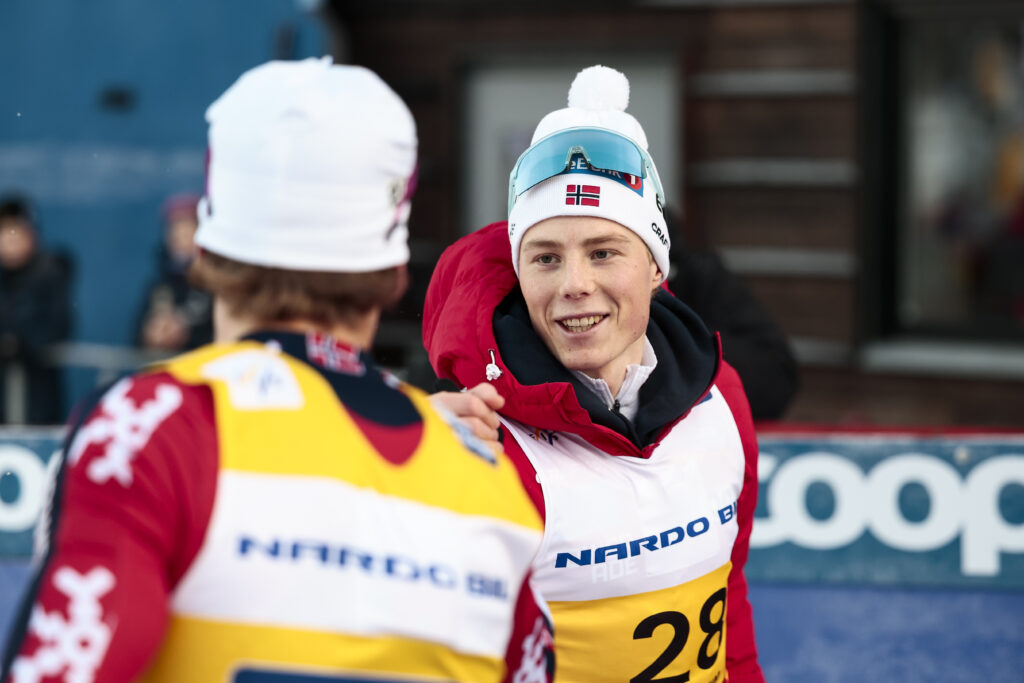
An altitude regime far outside traditional frameworks has propelled Einar Hedegart and Karoline Simpson-Larsen straight into the world elite. Now, their coach reveals the details behind the approach.
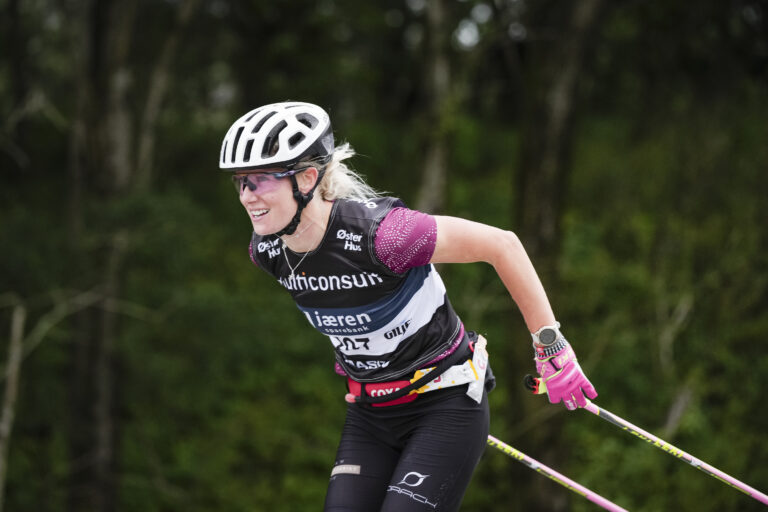
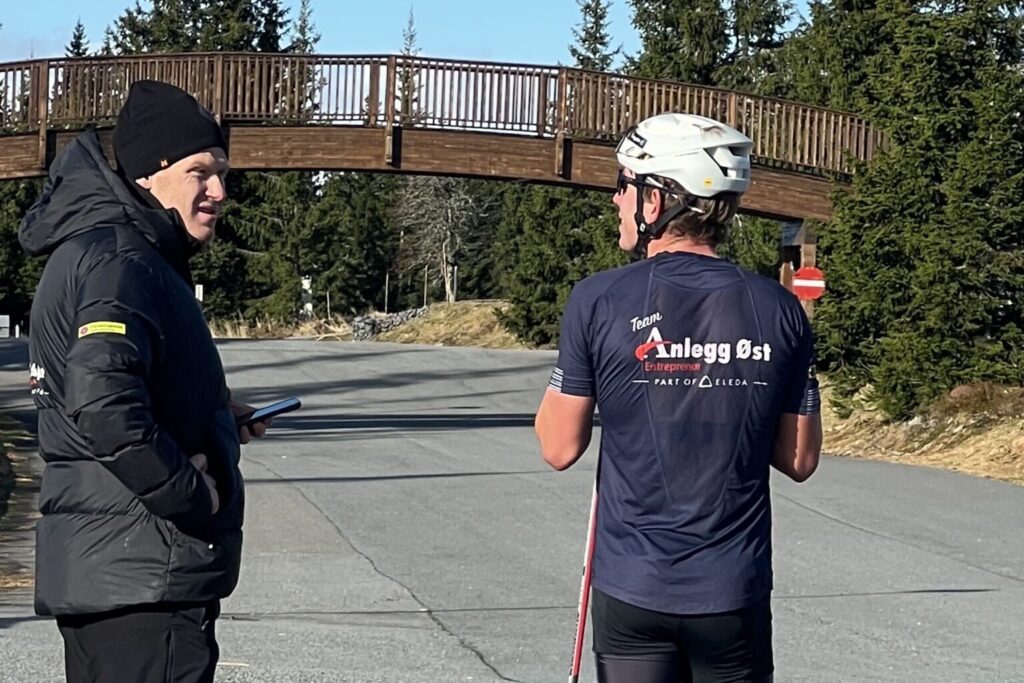
The private team Team Anlegg Øst Entreprenør has taken the traditional cross-country skiing scene, and not least the Norwegian national team, by storm. In just half a year, Einar Hedegart and Karoline Simpson-Larsen have gone from promising talents to members of the world elite, and both point to an altitude regime well outside traditional norms as the key to their success.
Coach Emil Hosøy himself says that his setup “definitely isn’t found in any training textbook.” Here, he explains how the team dares to break with convention, how they plan their altitude camps, and why volume, intensity, and nutrition have been fine-tuned to perfection.
What is your training philosophy and approach?
“In short, it’s about volume, specificity, execution, and nutrition working together,” Hosøy tells Langrenn.com, and continues:
“We train a lot. We train many hours, but we also do many hard sessions and as much threshold volume as possible, at a load that allows us to maintain continuity and train specifically. That’s the common thread we follow throughout the year.”
The story continues below.
Solid performances
The results speak for themselves.
Einar Hedegart has won all three 10km freestyle races this season and finished second at the World Cup opener in Ruka. He has now been selected for the Olympics.
Also Read: Eight Norwegian cross-country skiers confirmed for the Winter Olympics 2026
Karoline Simpson-Larsen is well on her way to securing an Olympic ticket. She has delivered career-best performances time and again, won the 10km in Davos, is now the top Norwegian in the distance World Cup standings, and is set to compete in the Tour de Ski.
Read More: Norwegian national team for Tour de Ski 2025/2026
Both point to an “out-of-the-textbook” altitude regime as the key to success.
So does coach Hosøy.
“This was our third year at altitude, and I’ve gained some experience. What we’re doing now is completely different from what I did the first year we trained at altitude,” he says.
Surprisingly little interest
Despite the huge results, the national team coaches have not been in touch.
“Uh… no, not with me.”
Have they asked what you’re doing?
“No, they haven’t.”
How do they structure altitude training?
Team Anlegg Øst Entreprenør completes three altitude camps of three weeks each in the build-up to the season. The first camp is in summer in Font Romeu, France, where they live at 1,800 meters and train up to 2,000 meters. The following two camps take place in Livigno, Italy, in the autumn. There, the team spends the first week at 1,850 meters before moving up to 2,100–2,150 meters.
“Moving higher for the last two weeks gives the body a boost that we believe is positive,” says Hosøy.
He explains that the approach has been shaped through trial and error.
“I used to have a lot of respect for altitude. But I’ve used these camps to learn what actually works,” he says.
Hosøy still respects altitude but has discovered that the athletes can tolerate far more than traditional programs allow.
“We’ve evaluated continuously, seen what really works, and dared to push it. This year, we’ve done several weeks at altitude with more than 30 hours of training. The results show that it works,” he says.
According to Hosøy, the key is continuity and careful execution.
“If you’re precise, you can train quite similarly to how you do at home. That consistency has paid off hugely this year.”
Solid progression
The numbers confirm what is visible on skis. The athletes have seen substantial increases in both hemoglobin levels and oxygen uptake, key parameters in altitude training. Hosøy stresses, however, that the numbers are only part of the story:
“The most important thing isn’t the numbers but skiing fast in races. Everyone skis faster after altitude training. You can have the highest hemoglobin levels and VO₂ max in the world, but if you don’t ski fast, it doesn’t help.”
Hedegart has recently revealed that his VO₂ max is among the highest in the World and has increased dramatically since joining Team Anlegg Øst Entreprenør in April.
Read More: Hedegart reveals insane VO2 numbers
Iron discipline and team culture
Hosøy reveals that the team follows a strict regime at altitude:
“We’re extremely careful with intensity and nutrition before, during, and after sessions. It’s crucial that they get enough fuel to handle the load. We also spend a lot of time together and limit contact with people outside the team. That helps avoid illness,” he explains.
The coach also praises the team’s dedication and culture:
“The dedication they show is world-class. The whole team pulls in the same direction, and that creates incredible momentum. When we came home from the last altitude camp, everyone knew the work was done. Even though there was some nervousness, they raced with confidence.”
And then they delivered.
Christmas at altitude
Both Einar Hedegart and Karoline Simpson-Larsen stayed in Central Europe after the World Cup in Davos. There, they will train and celebrate Christmas together with their partners, biathletes Hanna Børve and Johan-Olav Botn.
Their coach will also join them. Emil Hosøy traveled down to the team on Saturday, December 20, and will stay almost all the way until the Tour de Ski begins on December 28.
Are you interested in training for long-distance, traditional cross-country skiing and biathlon? Click HERE and read more about it.
Subscribe to our newsletter
Most read
-
21.09.2026
-
14.09.2026
-
-
06.08.2026
-
06.03.2026


More Articles
-
Months of uncertainty: Sandra Schützová took the risk and it paid off!
Long-distance skier Sandra Schützová has endured exceptionally challenging months filled with uncertainty and stress. After two years with the Norwegian team, Team Kaffebryggeriet DRIV, she had to confront her future almost overnight. The Czech skier ultimately decided to go all in on one option.22.09.2026