EPO in the fridge: “It stood next to milk and butter”

Was open with his wife about doping: Reveals how EPO became as everyday as bread and butter in the household.
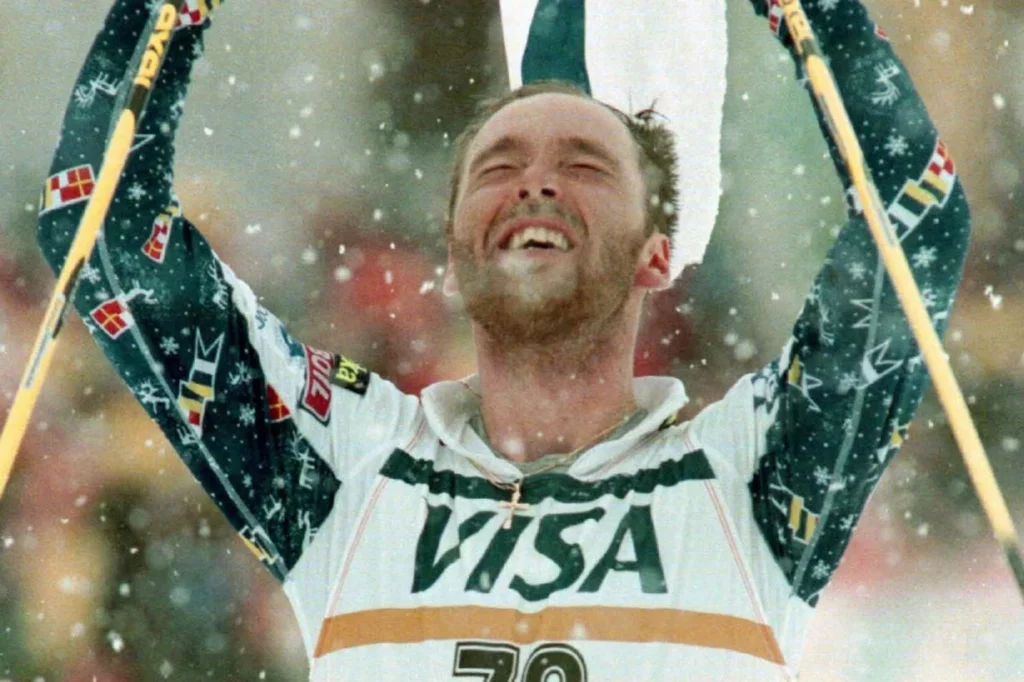
The name Mika Myllylä is inseparably linked to the doping scandal in Lahti in 2001. Now, his ex-wife tells how he stored EPO side by side with milk and cold cuts in the family fridge.
Myllylä began using the banned substance erythropoietin (EPO) to improve his cross-country skiing performance. EPO stimulates the production of red blood cells, which in turn increases oxygen uptake – a decisive factor in cross-country skiing. Several studies show that EPO can improve times by up to a minute in a 10-kilometer race.
In the book Langennut Legenda, which was released last week, ex-wife Suvi Paavola explains that her husband was open with her about the doping from the beginning, telling her about the decision immediately.
“Suvi, the thing is that I have decided to start using the miracle substance EPO,” Myllylä is said to have told her.
According to Paavola, Mika’s EPO injections became a daily routine leading up to and throughout the entire racing season, on par with other legal supplements. Doping was not a topic of discussion, and the EPO vials were stored in the family refrigerator – alongside milk and sandwich fillings. This was at least the case through 1998.
The story continues below.
Exhausted and burned out
After the 1999 World Championships in Ramsau, where Myllylä won three gold medals, his wife noticed that something wasn’t right. She saw signs of burnout in her husband.
It was around that time that Myllylä began to fear being caught. Athletes had been told that EPO could not be detected in doping tests used at the time and that EPO had no health-related side effects.
The Finnish athletes who were caught for doping during the 2001 World Championships were not caught for EPO, but for the plasma expander Hemohes. The substance was used to reduce hemoglobin levels in the blood so they remained below the maximum limit, for example, to hide the use of EPO.
It was, incidentally, a Norwegian doping hunter who exposed the Finnish skiers: Rune Andersen. He set a trap that the Finns fell into.
Claimed Norway and all rivals doped
The background for Myllylä’s decision to start using EPO was that Finnish national team coach Pekka Vähäsöyrinki had called a meeting at the end of a training camp in early autumn 1993. Present were Coach Vähäsöyrinki, Myllylä, and two other Finnish cross-country skiers, whose names are not mentioned in the book.
According to Vähäsöyrinki’s own research, all the top nations – Norway, Sweden, Italy, and Russia – had begun using EPO no later than the 1992 Olympics in Albertville. He believed the Finnish skiers had no other choice but to follow.
“I give the green light for this, but it’s up to each individual to decide for themselves,” Vähäsöyrinki is quoted as saying in the new book.
Not over in 2001
EPO largely replaced conventional blood doping in the 1990s. But as anti-doping authorities focused on detecting EPO use, old-fashioned blood doping made a comeback.
This was the doping at the center of the 2019 World Championships scandal in Seefeld. In connection with the unmasking of “Operation Aderlass” (bloodletting), where a German doctor helped athletes with blood doping, over 20 athletes from eight countries and five sports were caught. Several are said to have doped themselves in an apartment in Lillehammer.
The apartment used for the doping was located less than a kilometer from the World Cup tracks in Lillehammer.
Books and revelations
Journalist Marko Lempinen wrote the book Langennut Legenda (Tammi). He conducted several interviews, including with Finland’s former national team coach Pekka Vähäsöyrinki, who led the Finnish team through the 1990s, as well as others central to Myllylä’s life, including his ex-wife Suvi Paavola.
This is the second book about Mika Myllylä to be published in Finland this autumn. In August, the book Mika Myllylä elämä (Otava) was released, which, among other things, revealed the actual cause of the Finnish skier’s death.
Also Read: Mika Myllylä – one of the greatest legends of Finnish cross-country skiing
Subscribe to our newsletter
Most read
-
21.02.2026
-
03.12.2021
-
22.02.2026
-
30.08.2026
-
18.02.2026


More Articles
-
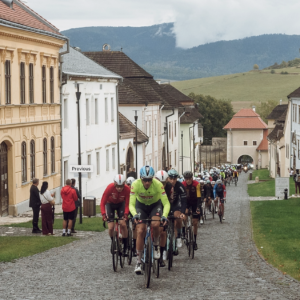
Tour of Slovakia stage 4: One day without hills
On paper, the 197,5km from Beluša to Galanta is the easiest of this year’s Tour of Slovakia.19.09.2026