Pro Team athlete trains between shifts: “It’s not about time, but how you use it”
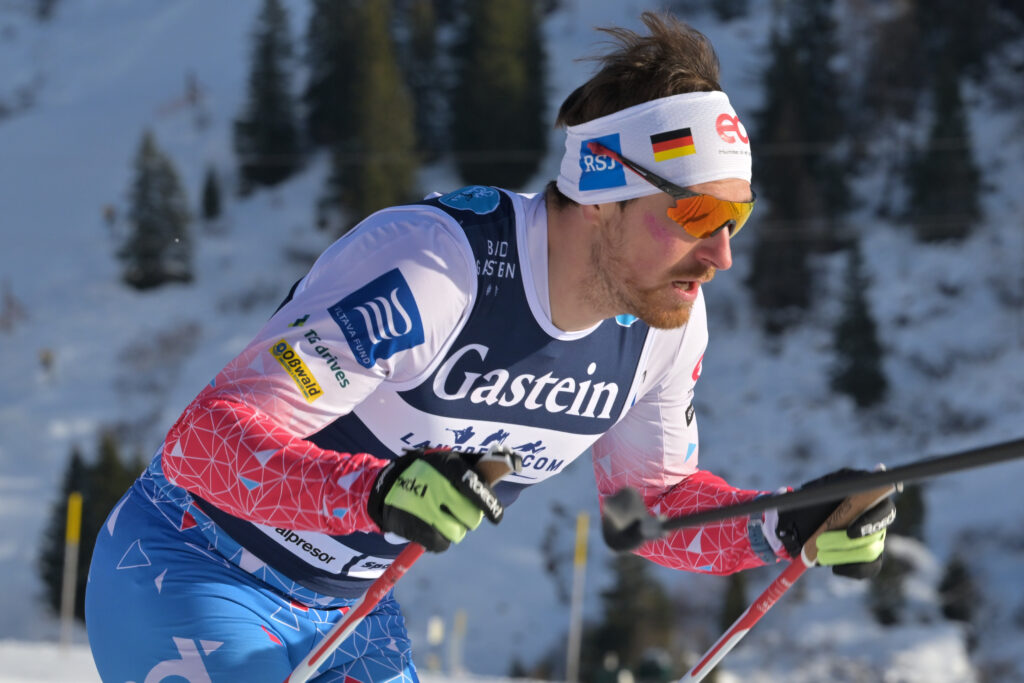
Thomas Bing is among the athletes who manage to combine the demanding Ski Classics events with a full-time job. In this interview, he discusses a season full of challenges, a fall in a prestigious race he could have won, and shares practical training advice for recreational skiers.
German Pro Team athlete Thomas Bing (36) represents the Czech eD system RSJ Team in the Ski Classics World Championship series and has been successfully balancing high-level competition with his job as a customs officer for several years.
A complicated season, yet a reason to be proud
Last season was ambitious, perhaps overly so. Thomas Bing set three challenging goals: top results at Vasaloppet, Jizerská50, and Marcialonga Pro events; a start at the home World Cup in Oberhof; and a podium finish in the legendary Nordenskiöldsloppet, the longest ski race in the world at 220km.
“By mid-season, I realized that three goals in one season was quite a lot,” Bing admits. Competing in the World Cup took a mental toll on him, affecting his performance in subsequent races. As if that wasn’t enough, after Vasaloppet, he caught a severe cold with a fever, resulting in fifteen days without training.
Nevertheless, Bing did not give up. He returned to training just the Monday before the Nordenskiöldsloppet and ultimately made it to the start line. “I was on the verge of not being able to compete,” he recalls. “Yet, thanks to my great optimism and fighting spirit, I achieved results that I am proud of.”
Also Read: Nordenskiöldsloppet 2026 delivers drama, endurance and history in the Arctic wilderness
220km and a fall before the finish
The Nordenskiöldsloppet, with its 220 kilometers, is one of the most extreme races in the world. Thomas Bing completed it after recovering from illness, but just before the finish, he fell in an unexpected turn, losing a potential victory. However, he does not see it that way.
“I don’t feel like I lost a victory. Rather, I earned 3rd place in 220km,” he says with a characteristic calmness. The race impacted him differently than other Ski Classics events. “It was racing in the old style. I really liked that,” he adds, although he admits that the kilometers between 120 and 190 km in fresh snow at a speed of just 13km/h were, in his words, “less fun.” And yet? When asked if he would participate again, he replies: “Yes. It’s hard to believe I’m saying that.”
Read More: Sedláček and Grohová winners at Nordenskiöldsloppet 2026
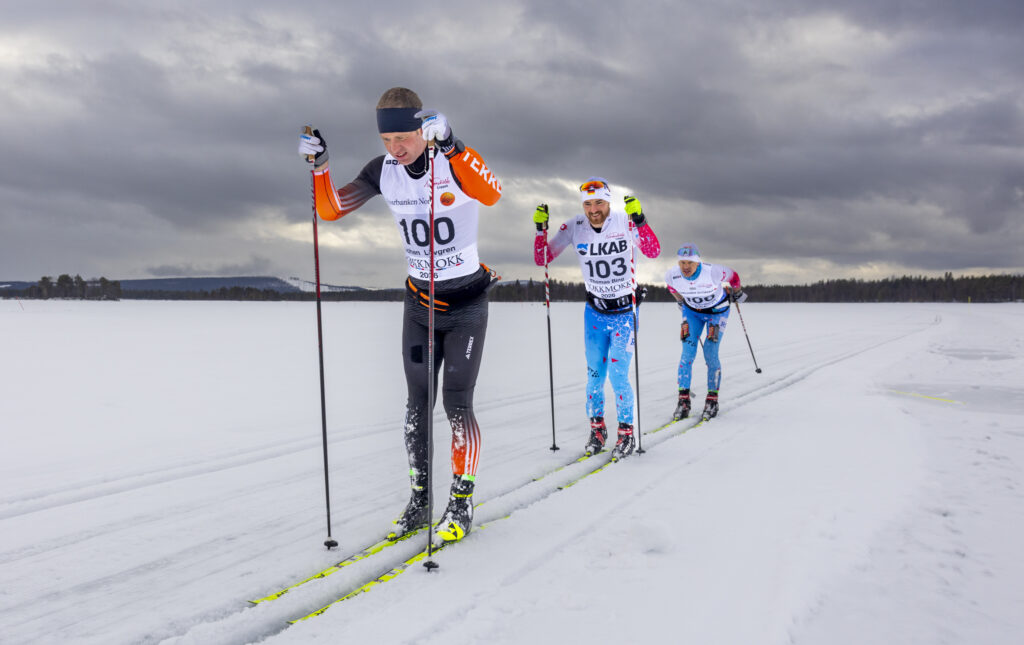
Fewer goals for the new season
Bing takes a clear lesson from last season. “Different goals, each requiring 100% focus, are too much. I will ease off a bit.” However, he is not considering retirement.
Next season’s agenda includes Marcialonga and Vasaloppet, this time supplemented by several Worldloppet races he has yet to compete in. “I won’t be racing the complete Ski Classics season. There are several races I haven’t yet participated in, and I want to fill some free weekends this season,” he explains.
Customs officer on skis
Thomas Bing competes at a professional level, but his life circumstances are similar to those of any working individual. Employed as a customs officer, he combines approximately 40 hours of work each week with 20 hours of training. “My job hardly limits my training. I can train as needed,” he says. “But after work and training, I have very little free time left. That’s a limitation I must and want to accept.”
Regarding training conditions, Thomas lives in an area he describes as “probably the best conditions in the world.” However, one problem persists: he lacks training partners. Competing at the absolute top level without daily confrontation with equal competitors is a challenge that every athlete preparing alone must deal with in their own way.
What to watch out for
As the years go by, new limitations arise. Bing smiles when asked how he feels physically: “I’d rather ask what still works.” His biggest concern is overworked elbows, a classic weak point for skiers who rely on upper body strength.
Adapting training to age and the changing nature of races is crucial, according to Bing. “The way races are run has changed significantly over the last five years. Unfortunately, not to my advantage. Therefore, I have to significantly adapt my training as well,” he states without unnecessary lament.
Golden advice for recreational skiers
At the end of the interview, one of the best pieces of advice a seasoned skier can give to a recreational skier comes up. Brief but to the point:
“It’s not about the time spent training, but how you use it. More is not always better! You need to find out what limits you and work on that. Or simply put: train what is important but what you enjoy the least.”
This philosophy — less but better — is a great piece of advice from Thomas that may calm many recreational skiers and lead them to reflection. Whether it’s about choosing races, planning the season, or daily training alongside a full-time job. In an age where your watch apps keep shouting “log more kilometers,” this is a refreshing counterbalance.
About Thomas
Thomas Bing was among the strongest German cross-country skiers and represented Germany at top events for several years. Since the 2016/2017 season, he has been competing in World Cups and was an important part of the German relay and team sprint. He recorded several top ten finishes in World Cups, showcasing his versatility regardless of whether he was racing in sprints or distance, classic or freestyle techniques.
In the 2020/2021 season, he began to dabble in long-distance skiing, participating at Vasaloppet and finishing in an impressive 11th place. In the following years, he increased his participation in Ski Classics, and in January 2023, he completed his last World Cups.
After that, he fully committed to the Ski Classics series. His best long-distance result to date was at the Bad Gastein criterium in the 2022/2023 season, where he finished in 3rd place. Two years ago, the 36-year-old athlete with professional training began to combine work and training and has since represented the Czech eD system RSJ Team.
Ski Classics World Championship Season XVIII (2026/2027)
• Event 1: December 11, 2026 – Bad Gastein Prologue – Austria – 1km
• Event 2: December 13, 2026 – Sportgastein Criterium – Austria – 30km
• Event 3: December 19, 2026 – Bad Gastein ITT – Austria – 7km
• Event 4: December 20, 2026 – Bad Gastein Criterium – Austria – 36km
• Event 5: January 16, 2027 – Engadin La Diagonela – Switzerland – 55km
• Event 6: January 17, 2027 – Zuoz–St. Moritz Sprint – Switzerland – 30km
• Event 7: January 31, 2027 – Marcialonga – Italy – 70km
• Event 8: February 12, 2027 – Bedřichov Heat Sprint – Czech Republic – 1.5km
• Event 9: February 14, 2027 – Jizerská50 – Czech Republic – 50km
• Event 10: February 27, 2027 – Oxberg–Mora Sprint Women – Sweden – 30km
• Event 11: February 28, 2027 – Oxberg–Mora Sprint Men – Sweden – 30km
• Event 12: March 7, 2027 – Vasaloppet – Sweden – 90km
• Event 13: March 20, 2027 – Birkebeinerrennet – Norway – 53km
• Event 14: April 3, 2027 – Reistadløpet – Norway – 35km
• Event 15: April 4, 2027 – Grand Finale Summit 2 Senja – Norway – 60km
For more updates and detailed information about the Ski Classics World Championship, visit skiclassics.com.
Are you interested in Ski Classics and long-distance skiing? Click HERE and read more about it.
Subscribe to our newsletter
Most read
-
04.03.2026
-
11.05.2026
-
02.05.2026
-
25.01.2026
-
16.05.2025


More Articles
-
De Fabiani hangs up his skis
Italian cross-country skier Francesco De Fabiani has retired from the sport. The 33-year-old announced the news on social media.16.06.2026