Why train at high altitude?
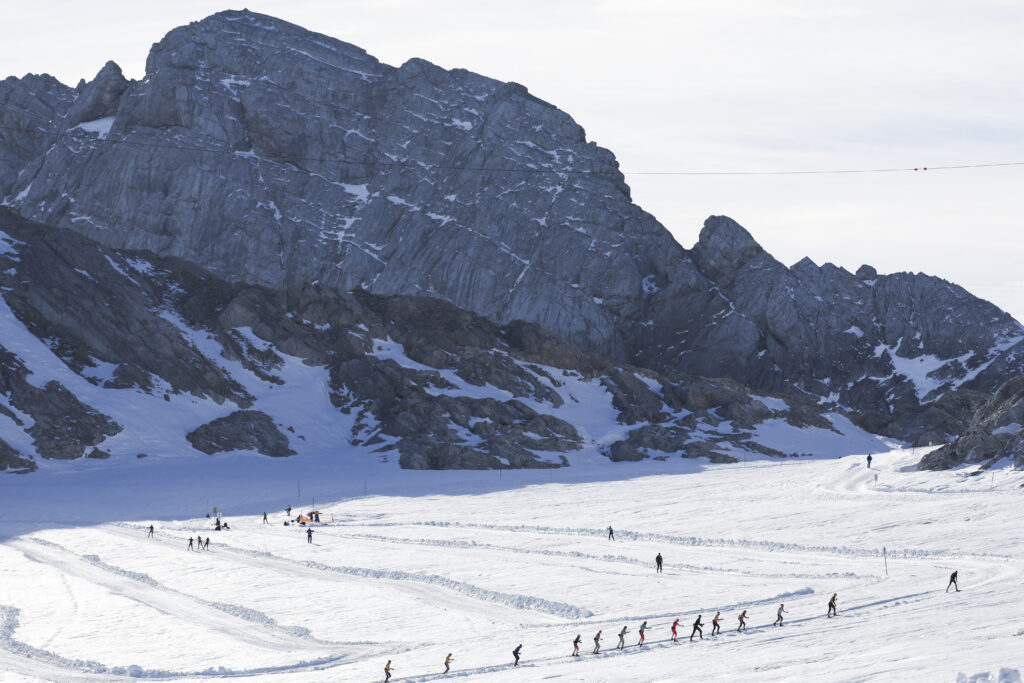
Endurance sports and high-altitude training are closely linked. But why do all these sports place such importance on this kind of training camp?
Cyclists, cross-country skiers, biathletes; they all have in common the time spent at high altitude. All this time for one thing: performance improvement.
How the air works at high altitude
First and foremost, we must explain the characteristics of the air at high altitude. The higher you go above sea level, the less oxygen (O2) there is in the air.
For example, at sea level, we have access to 100% of the oxygen available in the air, compared to 70% at 3,000 meters. This phenomenon is caused by changes in atmospheric pressure with altitude: the higher you go, the lower the atmospheric pressure, and therefore the lower the concentration of oxygen.
To put it simply, low altitudes are like a small, well-inflated bicycle tire (a lot of air available for a small volume), and high altitudes are like a larger tire with the same volume of air as the small one (less air available for a larger volume).
Also Read – CYCLING TRAINING: Easy aerobic ride – building your base one hour at a time
How the body works at high altitude
To function properly, the body needs oxygen. When oxygen is absorbed into our blood, it is carried throughout the body by red blood cells.
At high altitudes, we can observe several changes in how our bodies function: a lower VO₂ max (maximum oxygen uptake), higher heart rates during moderate exercise, and an earlier onset of fatigue during sustained exercise.
So, overall, performance is affected. But if you spend time at high altitudes, your body adapts: it will be able to produce more red blood cells to capture a greater amount of oxygen and make up for the shortfall. To acclimate properly, we need 2 to 4 weeks at high altitude.
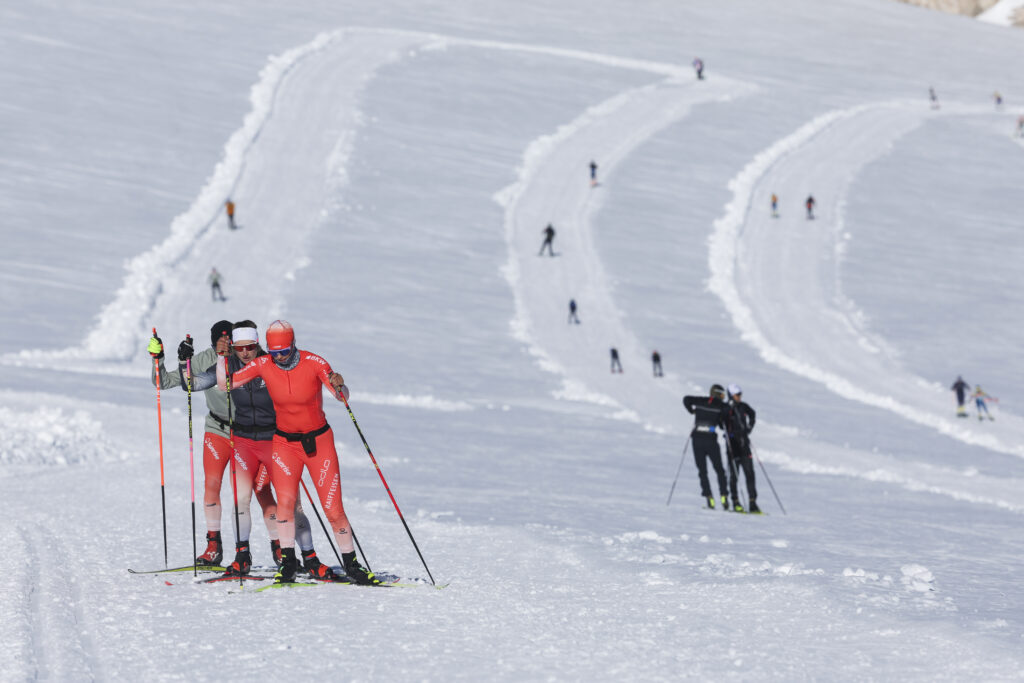
Acclimatization: and then what?
After intensive high-altitude training, the body has acclimatized and produced a greater number of red blood cells. Thus, when the body returns to lower altitudes (where the air is richer in oxygen), it is theoretically capable of taking in a greater amount of O2. It is therefore a major advantage during long, intense activities such as cross-country skiing or biathlon.
In addition, some of the World Cup venues are located at high altitudes. However, the body can acclimate more quickly if it has undergone altitude training in the months leading up to the competitions.
Read More: FIS unveils 2026/2027 cross-country skiing World Cup calendar
Now, if you’re passionate about endurance training or if you have a competitive goal you don’t want to miss, you know how to plan your summer vacation!
Are you interested in training for long-distance, traditional cross-country skiing, and biathlon? Click HERE and read more about it.
Subscribe to our newsletter
Most read
-
-
14.09.2026
-
06.03.2026
-
16.09.2026
-



More Articles
-
Team BSV IBEX — Pro Team presentation Season XVIII
Switzerland's first and leading Pro Team enters Season XVIII with a reshaped roster, headlined by a major international signing.13.10.2026