Running is a key part of a skier’s spring training
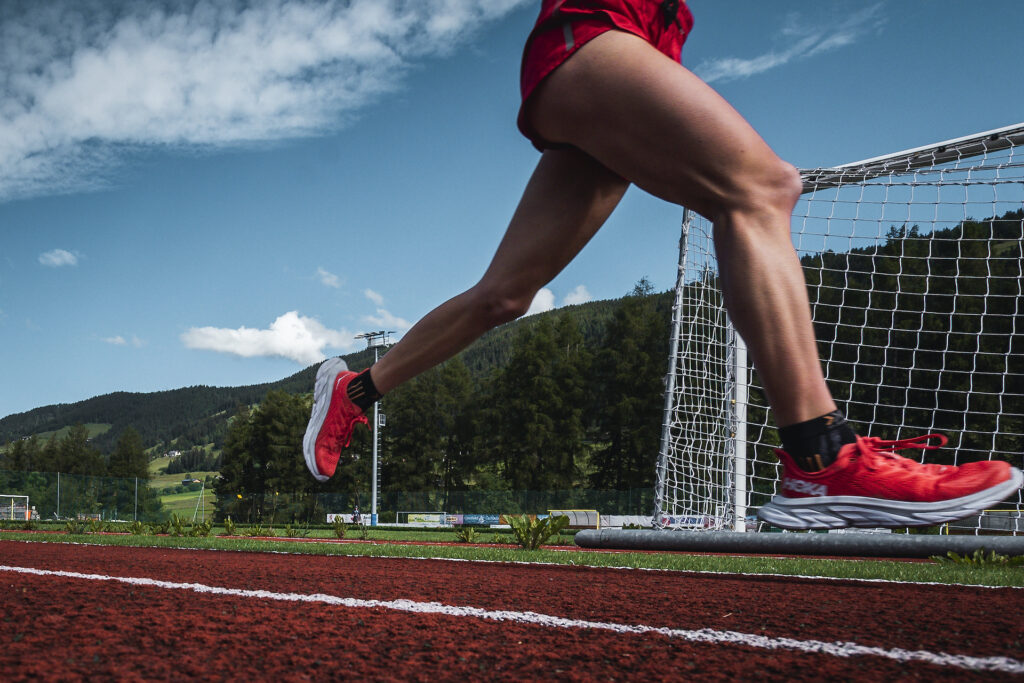
In spring, running adds variety and builds endurance for cross-country skiers, but it should be balanced with sport-specific training. When done right, it supports progress toward summer and the next winter season.
As spring arrives, many cross-country skiers shift their focus from snow-covered trails to dry roads and forest paths. The transition from winter training to running is not just a change of equipment—it’s a broader shift in how the body is loaded, how movement feels, and how training is structured. When done correctly, running serves as an excellent bridge toward summer and autumn training, but rushing into it can slow progress.
Read also: Start your roller ski season right
Sport-specific training comes first – running supports it
In modern cross-country skiing, sport-specific training is the foundation year-round. Roller skiing is the most important form of training during the drylands season, as it directly develops the strength, technique, and efficiency needed on snow.
That said, running has not lost its place. On the contrary, it provides valuable variation and challenges the body in ways roller skiing cannot. Especially uphill running with poles and combinations of pole walking and running bring training closer to skiing: they engage the upper body and mimic skiing movement patterns while still delivering the benefits of running.
The key is balance. In spring, running can be slightly emphasized, but as summer approaches, roller skiing should clearly take over as the primary training mode.
Spring is an opportunity – not a race
After the winter season, aerobic fitness is often at a high level, but the impact of running is a new stress for the body. That’s why spring should be seen as a preparatory phase rather than a time to push performance limits. Running is highly effective for building endurance and adding variation, but its benefits only come if the workload increases gradually.
At the beginning, patience is essential. Short, easy runs on soft surfaces—such as trails or forest paths—help muscles, tendons, and joints adapt to the new demands.
Less is more at the start
It’s easy to get carried away in spring, and training volume can increase too quickly. Running should not be done every day right away; the body needs time to recover. Rest days or alternative training like cycling or roller skiing support development without excessive impact.
Training volume and intensity can be increased step by step over the following weeks. As the body adapts, harder surfaces and faster sessions can be introduced—along with a greater focus on sport-specific training on roller skis.
Technique matters
Spring is an excellent time to focus on running technique. After the winter season, stride mechanics may feel heavy or uncoordinated, so working on rhythm, stride length, and posture is worthwhile. Pole running adds another dimension, helping develop upper-body coordination and timing alongside leg work.
Good technique not only improves performance but also reduces the risk of injury.
Listen to your body – pain is not part of the process
Running places different stresses on the body compared to skiing. Even small pains, especially in the shins, knees, or Achilles tendons, should be taken seriously. Ignoring them rarely leads to improvement.
If pain occurs, it’s wise to reduce running or temporarily switch to other forms of training. Roller skiing and cycling are excellent alternatives that maintain fitness without heavy impact.
Building toward summer
Spring running lays the foundation for the months ahead. When this base is built carefully and combined with a gradual increase in sport-specific training, athletes enter the summer in a stronger position.
Running is not the main goal for a skier—it is a valuable supporting tool. Its role is to prepare the body, provide variation, and develop qualities that roller skiing alone cannot fully address. With these elements in place, the transition to harder training in autumn and ultimately the winter competition season becomes much more effective.
You can also read training articles on our sister sites in Sweden and Norway.
Subscribe to our newsletter
Most read
-
28.08.2026
-
-
14.09.2026
-
06.08.2026
-
06.03.2026




More Articles
-
Training tips: how to get the most out of your SkiErg
The SkiErg machine, designed to simulate double poling, has become a popular training tool in gyms and home setups. But its benefits go far beyond serving as a rainy-day substitute.