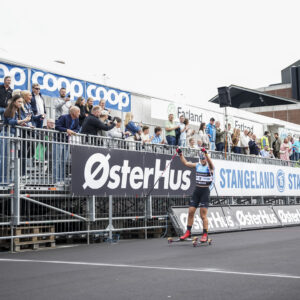
Why proper breathing matters more than you think for endurance performance
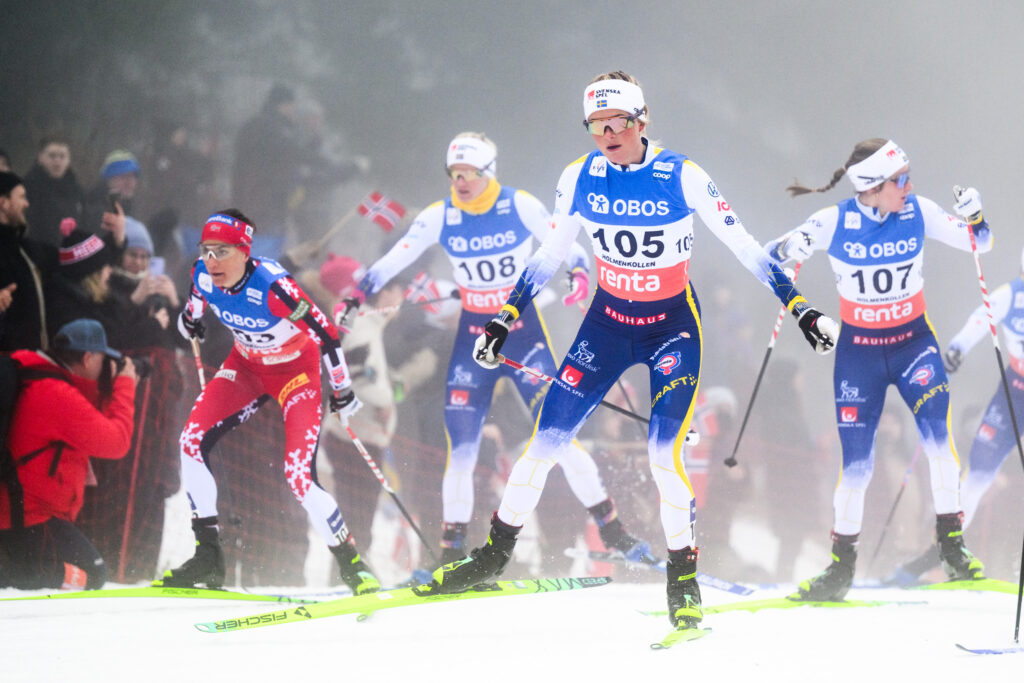
Breathe your way to better results! Proper breathing is a crucial component of success in any sport. When it comes to endurance sports, this is especially true.
According to expert estimates, only 9 out of 100 people in the general population breathe correctly. The rest breathe shallowly, tensely, irregularly, rapidly, or with interruptions.
Breathing automatically adapts to the state of our body and mind. Any stress, blocked emotions, anxiety, depression, or restlessness physically manifest in insufficient breathing — we are essentially suffocating ourselves. Additionally, we must consider the suboptimal air quality. Unfortunately, all of this is reflected in performance, which is why it’s good to occasionally focus during training specifically on lung function and respiratory muscles.
A few interesting facts about breathing
A person can survive for about 40 days without food and about 3 days without water. However, without breathing, the average person can last only about 2 minutes.
However, some people have been trained to achieve much longer times. The current record for breath-holding is held by Croatian freediver Budimir Šobat, who on March 27, 2021, held his breath for 24 minutes and 37.36 seconds. He was indeed allowed to breathe pure oxygen beforehand, but still — it’s a dreamlike performance.
We probably all remember the basics of the respiratory system from school — air enters through the nasal cavity, passes through the pharynx, larynx, trachea, and bronchi, and finally reaches the lungs. Inside the lungs, the bronchi divide into bronchioles, which in turn branch into alveoli, where oxygen is exchanged for carbon dioxide.
Also Read – Supplements in skiing: Performance booster or just hype?
But did you also know that…
- The surface area of the inner lungs is about 80 m².
- Lungs exchange about 10,000–12,000 liters of air per day.
- The maximum lung capacity (vital capacity) for a young adult male is around 4.5 to 5 liters, and for a female, about 3.5 liters. Even when exhaling as much as possible, about 1.5 liters remain in the lungs — this is called the residual volume, which keeps the lungs from collapsing.
- The right lung is larger than the left because the heart occupies space on the left side of the chest.
- Airflow speed during inhalation is approximately 70–80 km/h, and during coughing, it can reach up to 300 km/h, which is equivalent to the speed of an intense hurricane.
What is VO₂ max – maximum oxygen uptake?
VO₂ max measures the amount of oxygen the body can utilize during a specific time period. It’s usually expressed in milliliters of oxygen per kilogram of body weight per minute.
The more oxygen your muscles can use, the more energy is produced through efficient aerobic metabolism, resulting in less waste, greater performance, and delayed fatigue.
VO₂ max depends on heart output, the circulatory system’s ability to transport oxygen, and lung capacity. You can have your VO₂ max tested in sports labs.
Average VO₂ max for untrained young men: 3–3.5 L/min (~35–40 ml/kg/min). Trained athletes: About double the mentioned values.
Excellent level:
Men: Over ~70 ml/kg/min
Women: Over ~60 ml/kg/min
Elite athletes: 78–84 ml/kg/min
VO₂ max is partly genetic but can be increased by 15–30% through training.
Read More: Are fitness tests worth it for recreational skiers?
Basic breathing wave
The key is mastering the correct breathing technique that allows for truly deep inhalation and exhalation. Only then should you move on to advanced training.
Start lying on your back with your knees bent. Begin with a complete exhalation. Then inhale into the belly (the abdominal wall should rise — imagine you’re filling the entire pelvis with air) and let the breath flow smoothly into the chest. Follow this with a long, complete exhale.
End the exhale by tightening the upper abdominal muscles to push out as much air as possible.
The breathing should be smooth, not jerky. Remember: the inhale is deeper than usual, and the exhale is slower than the inhale. Gradually increase the exhale to be twice as long as the inhale.
You should also correct muscular imbalances — stretch the chest muscles, strengthen your core, etc.
How to effectively increase lung performance
Yes, you can improve oxygen transport by staying at high altitude, using oxygen inhalation, or other methods (like chest compression devices or activating reflexes triggered during diving). But let’s focus on what you can do in regular training.
1. Fragmented breathing
What is it, and what is it good for? At higher respiratory rates (approximately 40 breaths per minute), your heart pumps more blood to the lungs; however, there isn’t enough time for proper gas exchange. Fragmented breathing refers to “chunked” breathing, which is synced with your stride rhythm.
Example:
- First four steps = four short inhales
- Next two steps = one long exhale
2. Interval training
If fragmented breathing isn’t your thing, try interval workouts to increase VO₂ max.
Matt Fitzgerald, renowned author on training, recommends:
30/30 and 60/60 intervals, developed by French physiologist Veronique Billat.
Example:
- 10-minute warm-up
- 30 seconds at maximum speed you could hold for 6 minutes in a race
- 30 seconds easy
- Repeat 12–20 times
For skiers: 3–4 minute lactate intervals done at near-max effort, but still manageable throughout.
Workout ideas:
- 6–7 × 3 minutes
- 5 × 4 minutes
Yes, it’s tough — but it pays off.
3. Hills
Add hill training! For VO₂ max gains, try 2–3 minute hill climbs, then jog or ride slowly back down.
Start with:
- 4 × 2 minutes
- 3 × 3 minutes
- Advanced:
- 10 × 2 minutes
- 7 × 3 minutes
This article was updated. The original version was published on bezky.net in January 2018.
Related Article: Setting SMART goals for the summer training season
Are you interested in training for long-distance and traditional cross-country skiing? Click HERE and read more about it.
Subscribe to our newsletter
Most read
-
17.07.2026
-
10.07.2026
-
08.07.2026
-
23.07.2026
-
05.07.2026



More Articles
-
Five training sessions to develop your double poling technique
Five training sessions designed to help you develop and improve your double poling across skiing, roller skiing, and the gym.08.08.2026