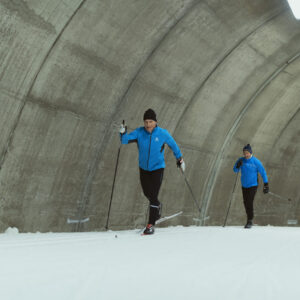
Training plan for working cross-country skiers

No pain, no gain—and without quality training, there are no results. But how do you create a plan when you work full-time and don’t have as much time for training and recovery as professional athletes?
If you want to improve and beat your friends, simply going on long scenic tours isn’t enough. While these outings can be enjoyable, your training repertoire must include other types of workouts that challenge your body and improve your fitness. So, what should your training plan look like?
Assess Your Priorities
If you’re a weekend skier dreaming of becoming a world champion overnight, slow down. Without a training base, you can’t suddenly train like a pro. Start by adding two workouts a week, and once you feel ready for more, gradually increase the load. Do this over weeks or months—not days. For example, if you currently train 200 hours a year without a solid foundation, doubling or tripling that volume in the next year will be challenging.
Don’t Neglect Rest
Your body might resist, signaling issues like weakened immunity, recurring illnesses, injuries, or burnout. Remember, you’re a working person dealing with physical or mental labor or long hours sitting in a car. All of this takes a toll on your body, which needs rest. Avoid pushing to your limits every day.
I once worked with a company director who used sports to clear his head. However, his approach was anything but leisurely—he aimed for 100% effort both at work and on the slopes. His training revealed a type of heart arrhythmia that, according to his cardiologist, was caused by excessive mental and physical stress. If your job is very demanding, consider walking or jogging in the woods to relax instead of obsessively racking up kilometers.
Read More: Learn to train smart: How to avoid training stagnation
What Should a Weekly Training Plan Look Like?
During the off-season, set aside 1–2 rest days per week for family time, walks in the fresh air, or other relaxing activities. Less experienced skiers might benefit from 3–4 rest days a week, gradually reducing them over time.
On weekends, when you typically have more free time and energy, include interval training. Adjust the number of repetitions (3–6) and interval duration (4–6 minutes) based on your fitness level. A typical session might look like this:
- Warm up for at least 20 minutes at an easy aerobic pace.
- Complete 4 intervals, each lasting 4 minutes, followed by a rest period half the interval’s length. During rest, allow your heart and breathing rates to recover.
- Cool down with a slow-paced session.
Maintain light activity during rest periods—such as moving on flat terrain or downhill—to keep your muscles from stiffening. Start intervals at a manageable pace, increasing intensity gradually to sustain performance across all sets.
On Sunday, go for a longer tour, perhaps three hours. During the week, prioritize shorter sessions and more rest. Include strength training—ideally two sessions per week.
If one interval session per week isn’t enough, try other speed-focused workouts. For instance, incorporate short bursts of high intensity within an aerobic session, pushing close to your anaerobic threshold. These segments can last anywhere from a few seconds to several minutes.
What to Watch Out For
Avoid training sessions like, “I’ll ski for three hours at race pace to prepare for a marathon.” Instead, focus on interval training, even if it doesn’t mimic the structure of a long race. The goal is to push your body to its limits during intervals and then allow adequate recovery. During a race, you won’t climb a hill for an hour straight—you’ll tackle short climbs followed by downhill rests.
In Conclusion
Train smart and, most importantly, listen to your body.
You can read more articles about long-distance skiing at ProXCskiing.com & SC Play
Subscribe to our newsletter
Most read
-
-
14.09.2026
-
06.03.2026
-
-
16.09.2026




More Articles
-
Swedish and Norwegian cross-country ski tracks open: Early snow guarantee for 2026
This weekend, several traditional Swedish and Norwegian destinations are launching their early snow offers. Here is an overview of destinations with snow guarantees.22.10.2026