The Benefits Of Drafting In Long-Distance Skiing
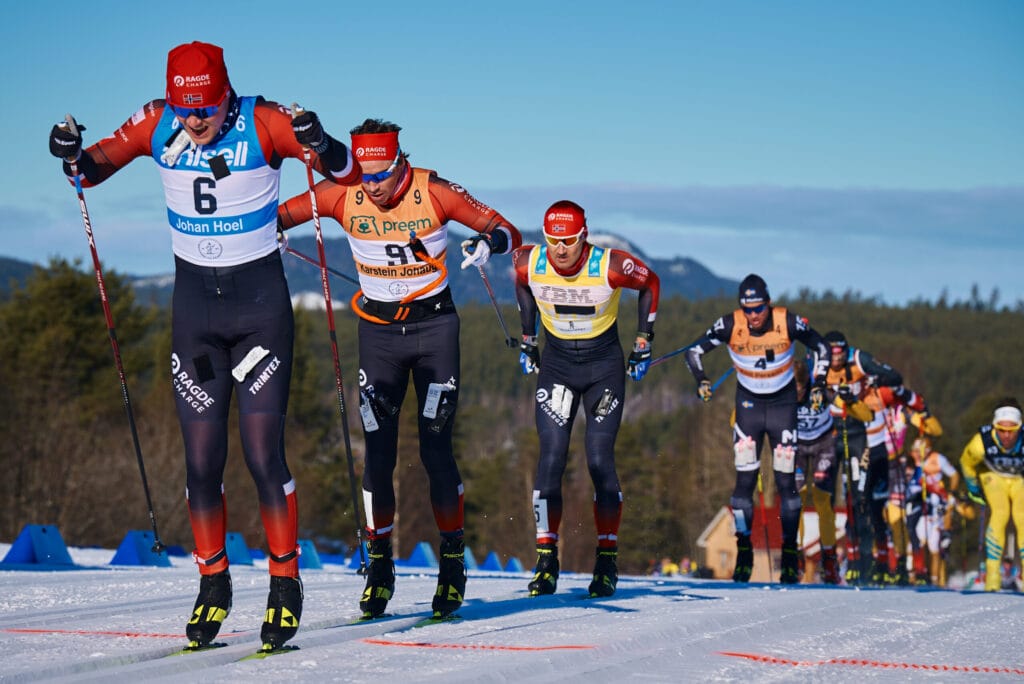
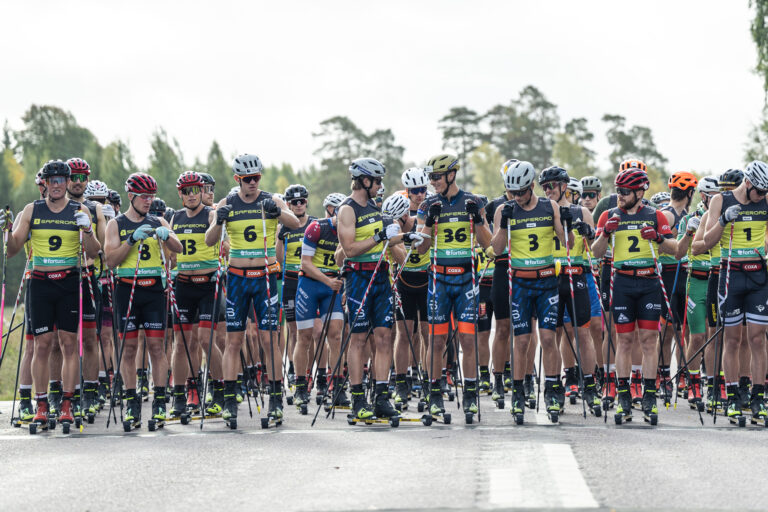
In long-distance skiing, like in cycling, drafting another skier is enormously beneficial. The term drafting is mainly used in sports physiology and biomechanics to describe the tactic of performing a mode of activity in a sheltered position.
In general terms, drafting is when an athlete skis behind another to take advantage of the lower wind resistance in this “slipstream.” This allows the drafting skier to use less energy while traveling at the same speed.
Conserving effort this way pays off in endurance sports like skiing because the athlete who can maintain the fastest pace over the long distance usually wins. In skiing, the wind resistance factor is only one benefit of drafting, as the other advantage is that the trailing skier can also get a better glide on their skis than the leading skier.
It is also worth pointing out that pacemakers can also benefit from drafting. Compared to skiing or cycling alone, going behind pacemakers reduces the frontal pressure and increases the pressure behind the trailing athlete. That means the pacemakers get a slight advantage when someone drafts behind them because the pressure behind them does not drop as sharply.
In many endurance sports, such as skiing, a large part of an athlete’s external power is used to overcome drag. Two components play a pivotal role in this force: friction and pressure. When the athlete’s speed is very low, friction drag dominates. In normal sports activities, pressure drag dominates. Still, frictional drag is influential in the velocity range in which the airstream changes from laminar to turbulent, which on the other hand, depends on the roughness of the athlete`s clothing.
Additionally, a study was conducted in Sweden in 1994 where the heart rates of cross-country skiers in leader positions were compared with those in drafting positions (2 meters behind the leader). The study found that the heart rate of skiers in drafting positions was about ten beats per minute lower than those in lead positions.
An additional finding was that the heart rate for smaller skiers in drafting positions was lower than that for larger skiers who drafted. The extra body area of larger skiers that was not protected by drafting caused those skiers’ heart rates to be higher.
It is apparent that drafting is hugely beneficial in long-distance skiing, and it has become a standard procedure for skiers in mass start events. However, we have witnessed many exceptional breakaways in Ski Classics, showing that solo skiers can succeed if they are strong enough to leave everyone eating their dust.
Subscribe to our newsletter
Most read
-
21.09.2026
-
-
14.09.2026
-
06.08.2026
-
06.03.2026


More Articles
-
Amund Riege and Stina Nilsson power to victory at Klarälvsloppet 2026
The Ski Classics Challengers event Klarälvsloppet, a 90km long-distance roller skiing race in classic technique, took place today in Karlstad, Sweden. Check out the results.20.09.2026