Stabilization exercises for skiers: Mobile and strong core

The thoracic spine is the least mobile yet the most stable section of the spine. There’s a saying that a strong core makes a strong athlete. It’s not just about strength, but also about mobility and flexibility.
The chest, with its shape, structure, and the connection of individual bones, creates a framework for respiratory movements. The active movement of the chest, particularly inhalation, is facilitated by the respiratory muscles. Movements of the thoracic spine influence the dynamics of breathing, and conversely, breathing affects the dynamics of the spine.
Generally, breathing is not just a process of gas exchange; it significantly impacts the regulation of the nervous system’s excitability. Inhalation excites (stimulates) while exhalation relaxes. As the demands on breathing increase during exertion, it is essential for the chest to be mobile and for no segment of the spine to be “blocked.” The following exercises aim to mobilize the thoracic spine, stretch the tissue around the spine, thereby improving chest mobility and enhancing breathing mechanics.
The first three positions will mobilize the core, while the fourth exercise will strengthen it.
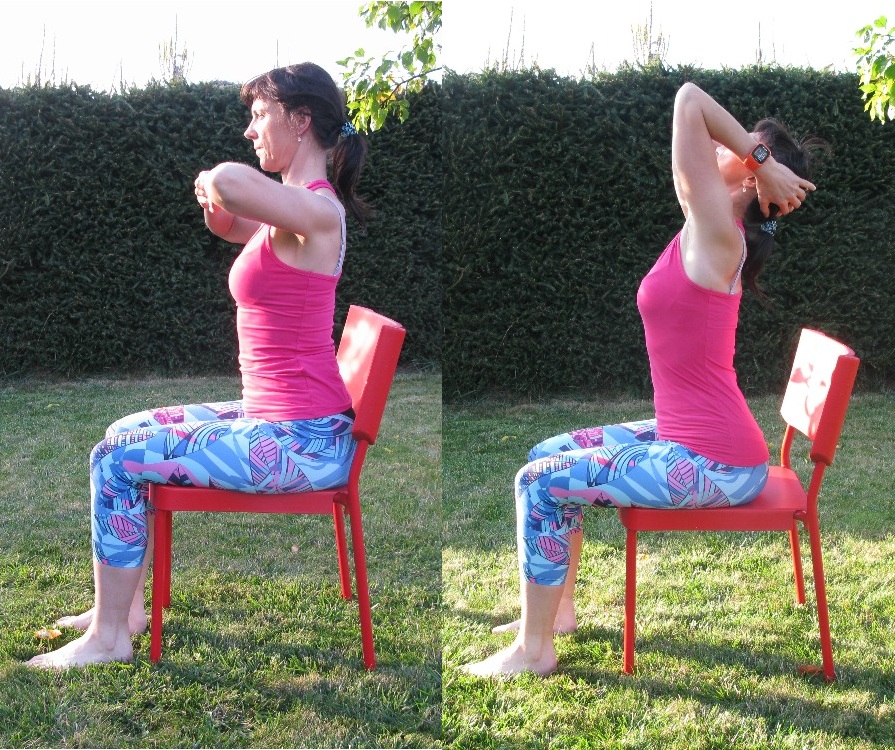
1. Seated Backbend
Sit at the front edge of a chair while maintaining lumbar lordosis, clasp your hands behind your neck to stabilize it. Perform a rhythmic backbend in the thoracic spine, reaching the end of the range of motion, hold for 1-2 seconds in the extreme position, and return. Repeat this movement 10 times, gradually increasing the range to the maximum. This exercise can be emphasized further by performing the backbend over the chair’s backrest.
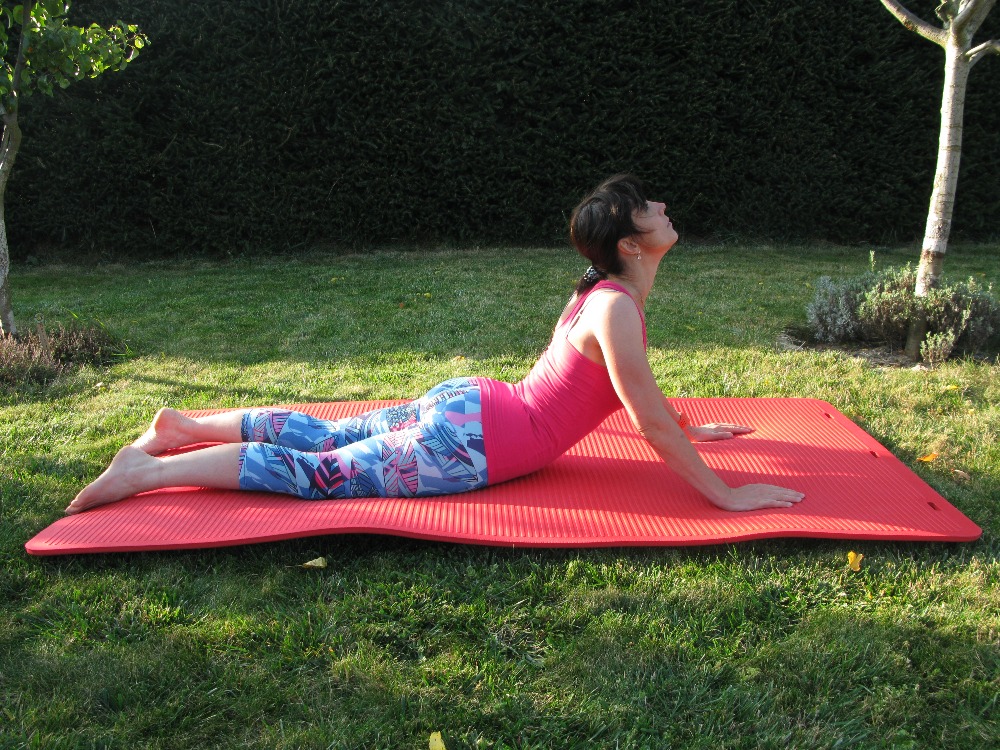
2. Prone Backbend
Lie on your stomach, placing your hands at head level, lift your torso using your arms while keeping your pelvis and thighs relaxed. Hold for 1-2 seconds in the extreme position, and repeat 10 times.
3. Seated Rotation
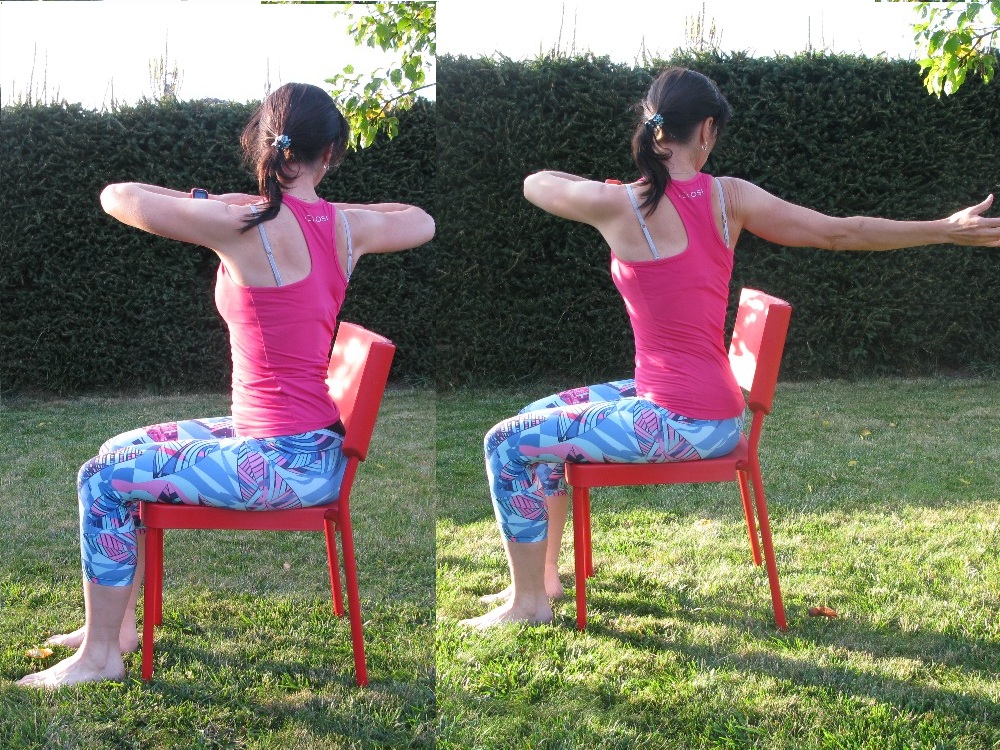
a) Sit upright on a chair, arms horizontally at chest level, fingers interlocked. Rotate to the side, maximizing the range of motion, hold for 1-2 seconds, and return to the starting position. The neck should remain stationary, with the face kept above the interlocked fingers.
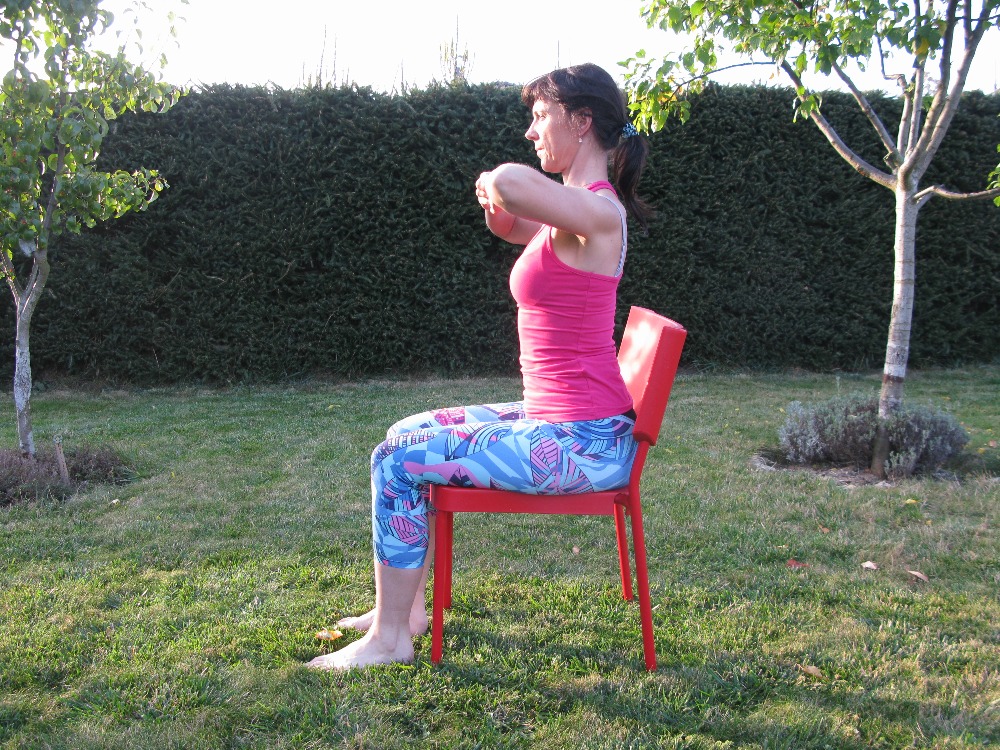
b) To achieve greater pressure and extend the range of motion, increase the force and speed of the rotation by swinging the upper limbs. Repeat 10 times on each side, first exhausting the movement 10 times to the right, then 10 times to the left.
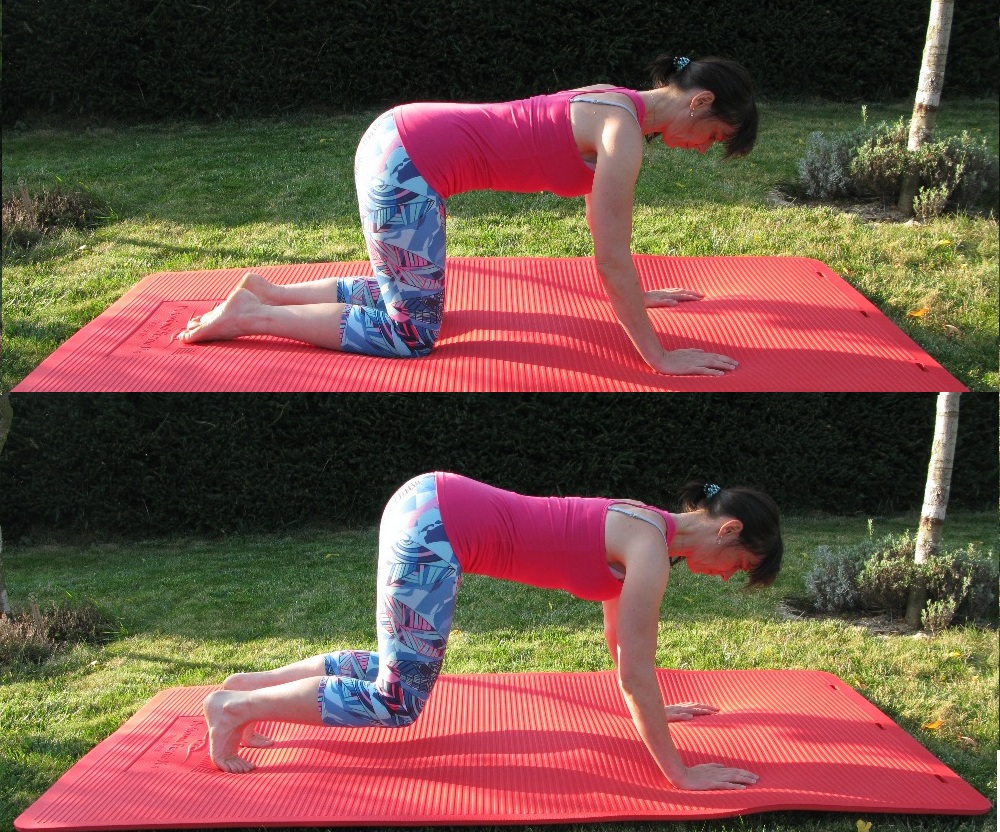
4. Core Stabilization in “4” Position
– Place your palms on the ground, fingers slightly bent, knees directly under the hips, toes resting on the mat, push the heels away, keeping the spine straight, and gaze between both hands.
– Lift both knees off the mat, hold for 10 seconds, and return to the starting position. Repeat 10 times.
When can I perform these exercises without risking injury, and are they suitable for me? You learned the principles in the previously mentioned article from last year. Let’s recap the possible reactions:
1. I have pain before exercising, during the exercise, and it does not change afterward. I can perform the exercise regularly.
2. I have no pain before exercising, but pain appears during the exercise and persists for minutes or longer afterward. I will temporarily avoid these exercises for several weeks and then test them again.
3. I have no pain before exercising, pain occurs during the exercise, but it disappears after the exercise. This reaction is acceptable, and the exercise is permitted.
4. I have pain before exercising, pain increases during the exercise, and remains worsened. This response is inappropriate for the body; I will temporarily avoid the exercise and test it again in a few weeks.
If I am starting with these exercises and experience reactions I do not fully understand, or if I am unsure whether everything is alright, I should consult a professional who can assess everything and establish a proper individualized compensatory training plan.
Also Read – Stabilization exercises: Catch up on what you missed during the season
Are you interested in training for long-distance, traditional cross-country skiing and biathlon? Click HERE and read more about it.
Subscribe to our newsletter
Most read
-
-
14.09.2026
-
06.03.2026
-
-
16.09.2026




More Articles
-
Swedish and Norwegian cross-country ski tracks open: Early snow guarantee for 2026
This weekend, several traditional Swedish and Norwegian destinations are launching their early snow offers. Here is an overview of destinations with snow guarantees.22.10.2026