Sports nutrition supplements: How to optimize your performance?
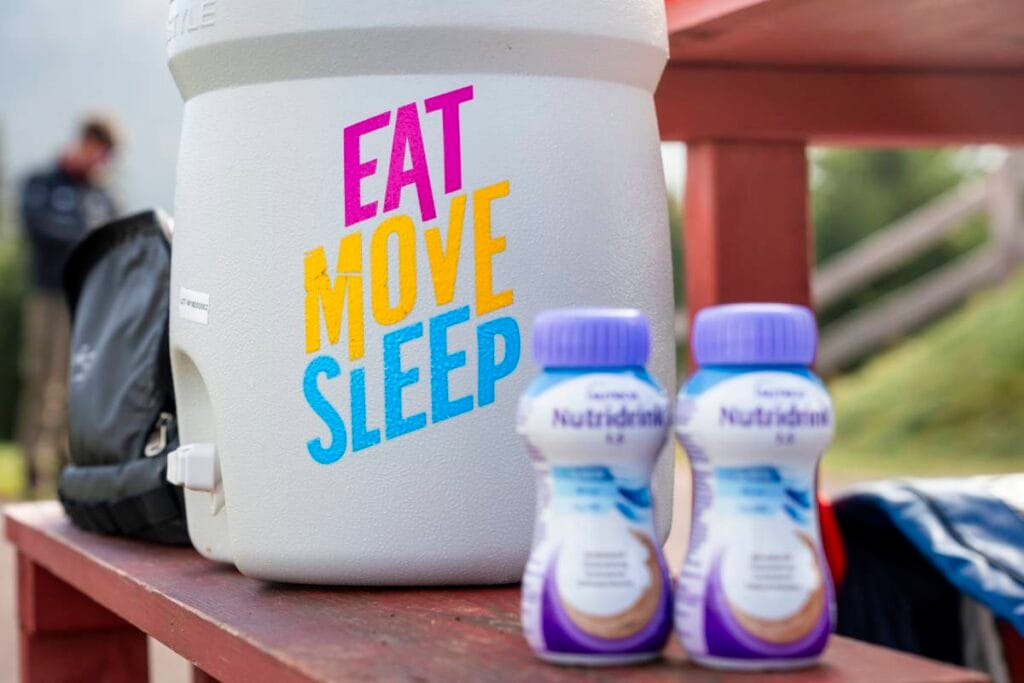
There is little doubt that sports nutrition supplements have become a major phenomenon today. Practically every athlete, whether professional or recreational, is looking for ways to enhance performance.
Libor Vítek, professor of medical chemistry and biochemistry at the First Faculty of Medicine, Charles University, takes care of many Czech athletes and is the chief physician of the Czech biathlon team. One of the country’s leading experts shares his knowledge of sports nutrition, specifically dietary supplements, in the following article.
Of course, one of the easiest options is to buy a “guaranteed” sports nutrition supplement, which we are constantly exposed to through ads and glowing articles. It’s a huge business: globally, sales of these supplements are estimated at around USD 9 billion (interestingly, about 80% of this is spent on protein-based products, although the usefulness of these supplements is highly debated).
However, this does not mean that sports supplements are useless. Some of them have an indispensable role during training, racing, or for specific groups of athletes (depending on the sport or the athlete’s anthropometric characteristics), and they genuinely improve performance. This article aims to help readers navigate the overwhelming sea of information. It is based on evidence-based sources (see the reference list) and reflects the current state of scientific understanding.
Also Read: Nutrition fundamentals for recreational skiers
Types of sports supplements
There are hundreds of sports supplements on the market, which can be categorized in various ways. One option is by the function they support:
- Electrolyte and mineral balance (e.g., sports drinks)
- Energy resources for performance (e.g., energy gels and related products)
- Muscle strength (e.g., protein extracts and other derivatives influencing protein synthesis)
- Other functions, such as red blood cell production, immune support, protection against oxidative stress, or effects on the central nervous system.
Another categorization comes from the Australian Institute of Sport (AIS), which is valuable even for recreational athletes. AIS divides supplements into four groups (the ABCD classification system):
- Group A: Supplements with proven performance-enhancing effects.
- Group B: Promising substances lacking sufficient scientific data – should be used only in research, not routinely.
- Group C: Supplements with no scientific basis for use in sport and most likely no effect. This is the largest group, if a supplement is not in Groups A, B, or D, it belongs here.
- Group D: Substances that are banned (on the doping list).
Sports drinks (electrolyte beverages)
Sports drinks are indispensable in sports nutrition (classified under Group A by AIS). During intense physical exertion, the body generates a lot of heat (muscular efficiency is only about 25%, with the rest released as heat), which can threaten core temperature stability. Sweating is the most effective mechanism for heat dissipation – 1 liter of sweat can release up to 2,400 kJ of heat.
Under adverse climatic conditions and prolonged exertion, an athlete can lose more than 1.25 liters of sweat per hour. A 1–2% fluid loss already reduces performance, while a 5% deficit can decrease performance by as much as 30%.
Sweat contains not only water but also essential ions that influence neuromuscular function. Their loss can impair performance or cause cramps. Thus, do not wait until you’re thirsty, hydration should be consistent, as thirst usually signals a fluid deficit that already harms performance.
Choosing the right sports drink
Every athlete knows that sports drinks should not be hypertonic, but rather hypotonic or at most isotonic. This refers to osmolality – the concentration of osmotically active substances. Human blood serum has an osmolality of 275–285 mmol/kg. Solutions above this are hyperosmolar (hypertonic); below this are hypoosmolar (hypotonic).
Hypertonic drinks are unsuitable for sports as they can draw fluid into the digestive tract, causing stomach discomfort and worsening dehydration.
Importantly, the drink’s tonicity is primarily affected by simple sugars, not electrolytes. So:
- For long workouts or races, energy-rich sports drinks (e.g., Isostar: ~1,000 kJ in 500 ml at 240 mmol/kg) make sense.
- For athletes needing to manage weight or just maintain hydration, low-carb drinks are better (e.g., Penco Ionogen or Enervit: ~325 kJ per 500 ml at 70 mmol/kg).
Energy sources for athletic performance
Muscle glycogen generally fuels about one hour of intense exercise. Thus, athletes need fast-absorbing carbohydrates for longer training sessions or races. Although fat stores are available, they are harder to utilize, especially for lean athletes with low body fat, who are more sensitive to energy deficits.
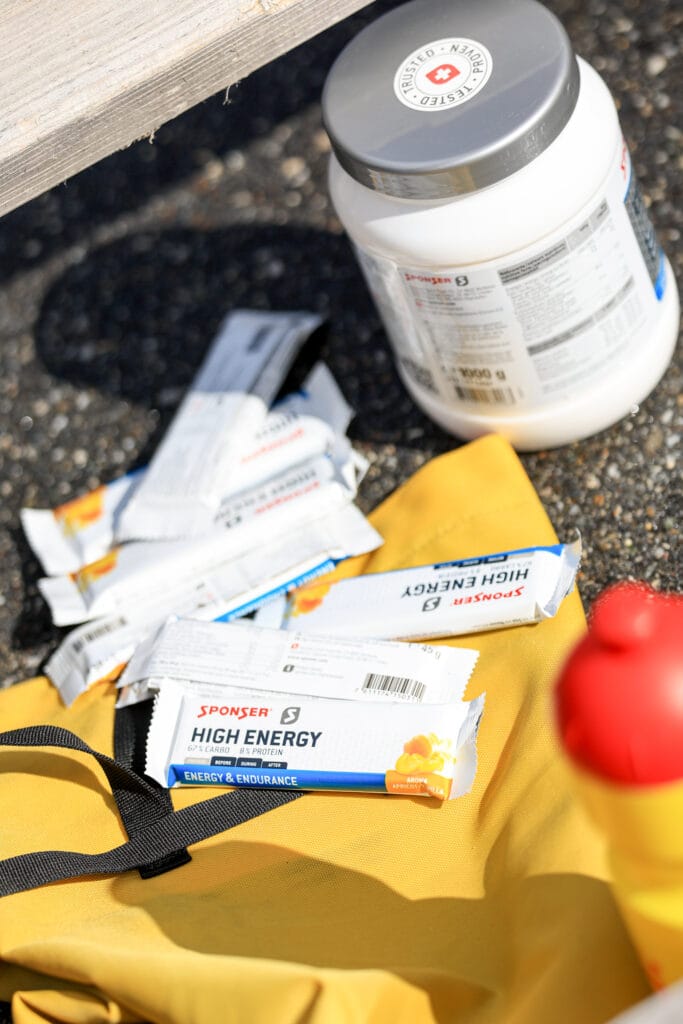
Energy supplements (also in AIS Group A) include:
- Energy gels: 300–800 kJ
- Energy bars: 600–900 kJ
- Sports drinks: Isotonic drinks can also supply energy
Don’t wait until you’re hungry – this usually means it’s too late, and performance is already declining. If the effort exceeds 60 minutes, supplemental energy is needed.
A specific issue is post-exercise carbohydrate replenishment. Rebuilding muscle and liver glycogen quickly is essential. Carbohydrate drinks, used within 30 minutes of exercise, are ideal. For strength training, gainers (protein-carb blends in a 1:3 ratio) are also beneficial, as added protein enhances glycogen restoration.
Also Read – Supplements in skiing: Performance booster or just hype?
Other supplements
Although 80% of supplement sales involve proteins or their derivatives, they are not essential for an athlete’s nutrition and may even be harmful. Many elite athletes consume more than 2g/kg of protein, which forces the body to excrete excess nitrogen via urea (a fatigue/overtraining marker), placing stress on the liver and kidneys. This is rarely tested in practice but evident in lab results when performed.
Processing excess protein also consumes energy, reducing overall efficiency.
Notably, branched-chain amino acids (BCAAs), despite their popularity, are categorized by AIS as Group C, with no proven benefit in sports.
Supplement contamination with banned substances
Even for those unwilling to give up unproven supplements, it’s important to remember the risk of contamination.
Beyond intentional contamination (e.g., U.S. cases of steroid-laced protein powders), supplements may be tainted with anabolic steroids, banned stimulants, diuretics, or beta-blockers. Reputable manufacturers test their products, but no testing is 100% foolproof.
Conclusion
Approach sports nutrition supplements with caution and realistic expectations. Most performance gains come from proper nutrition and optimized training. The only clear exceptions are supplements supporting hydration, electrolytes, and energy, which are nearly essential in endurance sports.
Recommended reading
- Maughan RJ. Nutrition in Sport. Blackwell Science, 2001
- Antonio J et al. Essentials of Sports Nutrition and Supplements. Humana Press, 2008
- Position of the Academy of Nutrition and Dietetics, Dietitians of Canada, and the American College of Sports Medicine: Nutrition and Athletic Performance, J Acad Nutr Diet 2016;116:501–528
- Judkins C, Prock P. Supplements and Inadvertent Doping – How Big Is the Risk to Athletes? Med Sport Sci 2013;59:143–152
- www.ausport.gov.au (Australian Institute of Sport)
This article was updated. It was initially published in December 2017 on Bezky.net.
Are you interested in training for biathlon, long-distance, and traditional cross-country skiing? Click HERE and read more about it.
Subscribe to our newsletter
Most read
-
-
14.09.2026
-
06.03.2026
-
16.09.2026
-



More Articles
-
Training at altitude: a double-edged sword, but effective – how to maximize its benefits
Are you looking to improve your physical fitness by training at higher altitudes, or planning to log your first kilometers on skis this season in one of the Alpine resorts? If so, do you understand the changes happening in your body, how to properly plan your training, and what mistakes to avoid?16.10.2026