Run, but don’t forget about your feet
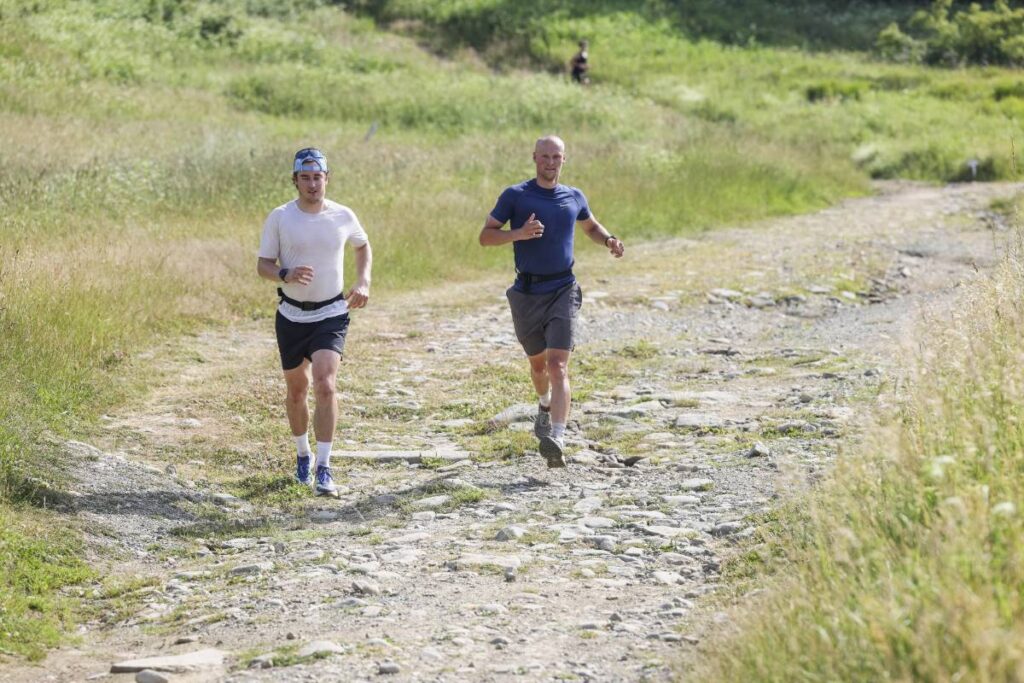
For every athlete incorporating running into their training plan, healthy feet are essential. Feet are undoubtedly the most stressed part of the body, yet most of us treat them as if our legs end at the ankles.
With every step, your feet must absorb the hard impact, support your entire body weight, and propel you forward instantly. This cycle repeats thousands of times, often for hours on end.
After a tough training session, we instinctively massage our stiff thighs or calves, but we often forget about the soles of our feet, which are in constant contact with the ground. Yet, the condition of your feet determines how the rest of your body functions and directly impacts your athletic performance.
Athletes often only start addressing their foot health when issues arise, such as fallen arches, leading to complications that force them to stop running altogether.
Take care of your feet
Imagine buying a luxury sports car with a completely rusted chassis. How would that drive? The human body is similar. Healthy feet are the foundation for proper posture and peak performance. If you neglect them, pain in other areas will inevitably follow. Conversely, runners who regularly care for their feet experience faster progress with significantly less training effort.
The risk also applies to occasional runners. If you think that any old sneakers are sufficient for your “jogging,” you are paradoxically at the greatest risk. While elite athletes frequently change their shoes and keep their foot muscles active, recreational runners often have weak foot muscles. This issue may not manifest during regular walking, but it quickly becomes apparent when running.
Quick Test: Try spreading your fingers on one hand as wide as possible. Now do the same with your feet. Can’t do it? Are only some moving, or are your toes curled inward and sticking out sideways? Tight shoes and a lack of care are to blame.
Anatomy of stability and hidden risks
A healthy foot must be flexible, which is ensured by the longitudinal and transverse arches. These arches absorb shocks, respond to uneven terrain, and maintain stability. However, when the arches fail, complications arise:
- Fallen Transverse Arch: Supported mainly by ligaments and toe flexors, when weakened, the foot expands.
- Longitudinal Flat Foot: Often associated with inward-turned ankles. This is usually due to muscular imbalance.
- Typical Flat Foot (“Pancake”): The ankle remains aligned, but the foot is completely flat. Genetics plays a crucial role here.
- High Instep (Too High Arch): The opposite extreme. Such a foot is rigid, poorly absorbs shocks, and often causes pain.
All these deviations cascade up through the entire musculoskeletal system. They can be a real and hidden cause of chronic pain in the knees, hips, or tendons. While running strengthens the body and adapts it to stress, if ambition outpaces readiness and training is not complemented by recovery and compensatory exercises, your feet will soon give out.
Also Read – Stabilization exercises for skiers: Mobile and strong core
This article has been updated. It was first published on Bezky.net in May 2021.
Are you interested in training for long-distance, traditional cross-country skiing and biathlon? Click HERE and read more about it.
Subscribe to our newsletter
Most read
-
21.09.2026
-
-
14.09.2026
-
06.08.2026
-
06.03.2026





More Articles
-
CYCLING TRAINING: Threshold – pushing your threshold higher, one steady effort at a time
Threshold training is the cornerstone of endurance performance. This threshold ride challenges you to hold a high, controlled effort for extended periods, sharpening the fitness that lets you ski faster for longer without fading.20.09.2026