Planning the annual training cycle
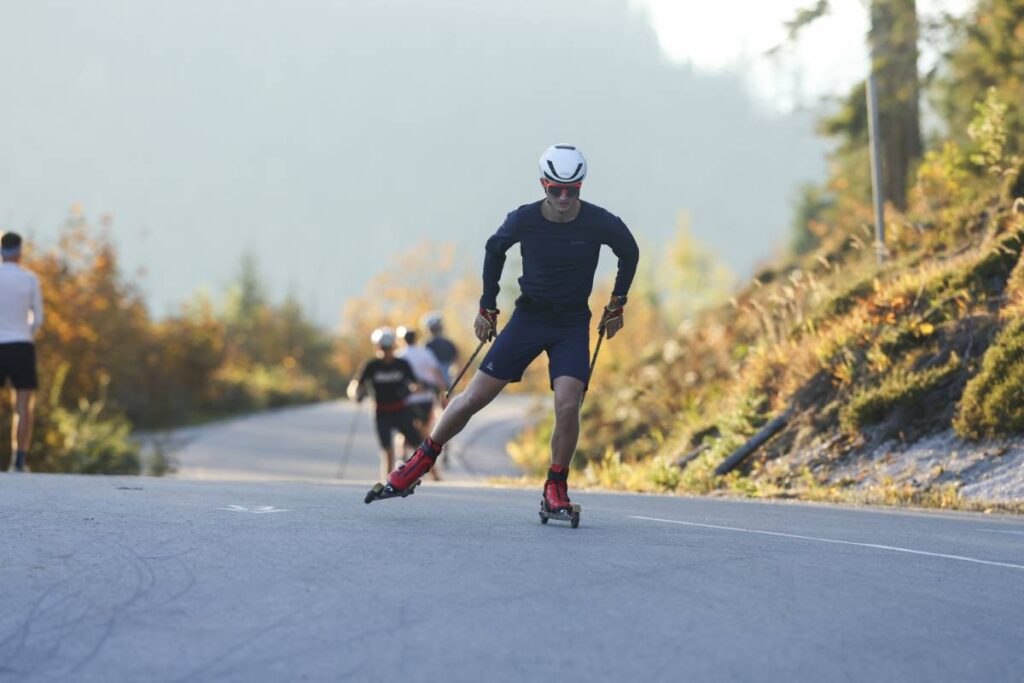
If you want to improve your performance, it’s a long-term commitment. Although it may not seem obvious at first glance, planning an annual training cycle is one of the key components that allows us to enhance our skills. It helps us track our training, evaluate it continuously, and monitor our performance.
Whether you are an amateur or a professional athlete, everyone sets certain goals they wish to achieve. The purpose of planning an annual training cycle (ATC) is to structure training according to different periods. In each period, we focus on specific general or specialized activities, from developing physical abilities and skills to tactics and mental preparation, in order to achieve optimal performance during the competitive season.
Phases of the ATC
For simplicity, we divide the training periods into specific cycles: preparatory, pre-competitive, competitive, and transitional. In the annual training cycle (known as a macrocycle), shorter training segments are divided into mesocycles (e.g., a month) or microcycles (a week). The “problem” for cross-country skiers is the typically long preparatory phase and a very short competitive phase. For this reason, many athletes participate in roller ski races, cycling, running, and triathlons during the preparatory phase for the skiing competition season.
Through repeated stress, we develop our training capacity and adapt our bodies to the workload. It is crucial to find the optimal training load to avoid overtraining. Athletes need to learn to listen to their bodies and individualize their training based on the principles of training volume, intensity, and recovery duration. The more one trains, the more important it is to manage training effectively, especially through continuous evaluation of workouts.
| Period | Main Task | Characteristics |
| Preparatory (May – August) | Development of physical abilities and training capacity | Adaptation to increasing physical load, general development training |
| Pre-competitive (September – November) | Performance enhancement | Increasing intensity of training and slight reduction in volume, increased share of specific training |
| Competitive (December – January) | Maintaining high performance | Tuning athletic form |
| Transitional (April) | Physical and mental recovery | Rest and versatile recovery training |
What should we focus on in each phase of the ATC?
1. Preparatory Phase (May – September)
- Basic Endurance – running, cycling, roller skiing, hiking
- Strength – gym workouts, imitation, bodyweight exercises
- Technique – roller skiing, working on skiing technique
- Gradual Increase in Training Volume
2. Pre-competitive Phase (October – November)
- Transition to Snow
- Increase in Intensity – interval training
- Simulation of Race Pace
3. Competitive Phase (December – March)
- Performance Optimization – reduction in volume, maintenance of intensity
- Recovery Between Races
- Tuning Form – shorter workouts with higher intensity
4. Transitional Phase (April)
- Active Rest – recovery, light sports activities (cycling, hiking)
- Season Analysis – evaluation of performances and planning for the next year
Training diaries
Currently, there are numerous options for tracking your training. The simplest method is to purchase a sports tester. Manufacturers compete every year with various features that enhance the training process. Subsequently, we can transfer the training data to a computer or a mobile app (some are paid, while others are free). However, you can also use traditional methods of recording training in a paper diary. It is important to ensure accurate data recording and to maintain consistency throughout.
In addition to recording training data, it is advisable to regularly comment on individual workouts, which helps maintain a comprehensive view of the training undertaken. Among athletes, regardless of their level, the most significant difference will be in the overall volume. It is crucial to balance light and heavy training with varying recovery times, especially for athletes who train in two phases or for amateur competitors who work and train in their free time. You must also consider sitting at a desk in the office and mental stress, especially if you spend many hours behind the wheel.
How to plan
In the first phase, it is essential to evaluate your current training status and set a rational plan that involves outlining specific tasks and goals.
You can set your plan based on kilometers covered or hours spent training, but a very significant indicator is also the time spent in different heart rate zones.
Most athletes do not train too little; rather, they train too intensely. The most common mistake is having too little volume at low intensity. The basic training volume should occur at low intensity, especially in Zone 1.
To illustrate, let’s consider some specific numbers. If you are an athlete who trains approximately 500 hours a year, you are already considered reasonably trained. Professional skiers train from 800 hours a year and more (some even up to 1200 hours/year). Each of us is unique, so some may thrive on more training while others on less. Moreover, not everyone can dedicate all their time to training and recovery. It is essential to consider all circumstances and create a training plan accordingly. The plan is merely theoretical, but practice can be entirely different. It can be expected that you won’t remain healthy or injury-free throughout the year. Sometimes you may feel very fatigued, perhaps due to an impending illness, so it is crucial to adjust your plan or even skip training. This can help prevent not only illness but also overtraining. Remember, sometimes less is more.
| Zone 1 | Low intensity (recovery and basic endurance) | 70–80 % | 350–400 h |
| Zone 2 | Moderate intensity (tempo endurance) | 5–10 % | 25–50 h |
| Zone 3 | Lactate threshold (longer intervals) | 5–10 % | 25–50 h |
| Zone 4 | High intensity (short intervals, ANP) | 5 % | 25 h |
| Zone 5 | Maximum intensity (sprints, race simulations) | 2–3 % | 10–15 h |
Learn how to differentiate training intensities here.
This article has been updated. It was first published on Bezky.net on April 3, 2025.
Subscribe to our newsletter
Most read
-
08.08.2026
-
17.07.2026
-
10.07.2026
-
08.07.2026
-
23.07.2026

More Articles
-
Nutrition does not have to be rocket science
Finnish nutritionist and Master of Food Science Kaisa Sali would like to see an increase in coaches' knowledge of nutrition, for example, by adding nutrition sections as a part of their overall coaching training.22.08.2026