A recreational skier’s smart transition period in April and May
Spring is an important but often underestimated phase for recreational skiers. The transition period in April and May helps you recover from winter, build a fitness base, and take your first steps toward summer training – in a relaxed but effective way.
Spring marks a change for skiers. The tracks disappear, but training doesn’t stop – it simply changes. April and May give recreational skiers a chance to recover after winter, stay active in a varied way, and build a foundation for the next season without pressure or urgency. This period isn’t about high intensity, but about smart training that carries you into summer and beyond.
Read also: Annual training guide for recreational and competitive skiers
Letting go of winter without rushing
The end of the ski season often brings mixed feelings. On one hand, you’ve had an active winter; on the other, everyday life without skiing can feel empty. That’s why April and May are so important – instead of trying to replace skiing, you allow your body to recover. A recreational skier should remember that fitness doesn’t disappear overnight, even if training is reduced.
April – light movement and recovery
In April, the key is to step away from the winter routine. Training can be more relaxed and even irregular. Easy walks, gentle cycling, or short jogs keep your body moving without adding stress. This is also a great time to focus on mobility and body maintenance, which are often neglected during the ski season.
For many recreational skiers, a good mindset is that all movement counts, as long as it feels good. Time in nature, spring hikes, or even yard work can all be part of an active lifestyle without needing to be labeled as formal training.
May – rebuilding rhythm and base fitness
By May, your body is usually better recovered, and you can start adding a bit more structure to your training. A typical week might include a few regular sessions, with one longer, easy endurance workout. Other sessions can focus on light strength training or varied movement like Nordic walking or walking in hilly terrain.
At this stage, there’s still no need for high intensity. Consistency and gradual progression are enough. The goal is to prepare your body for summer training, not to test your limits.
Variety builds fitness without strain
One of the biggest benefits of the transition period is the opportunity to do more than just ski. Running, cycling, and strength training all support ski fitness surprisingly well. Core stability and upper body strength, in particular, are essential for skiers and can be developed effectively off the snow.
Bodyweight exercises like planks, squats, and push-ups are simple but highly effective. When done regularly and with good form, they pay off once you return to skiing.
Getting started with roller skiing
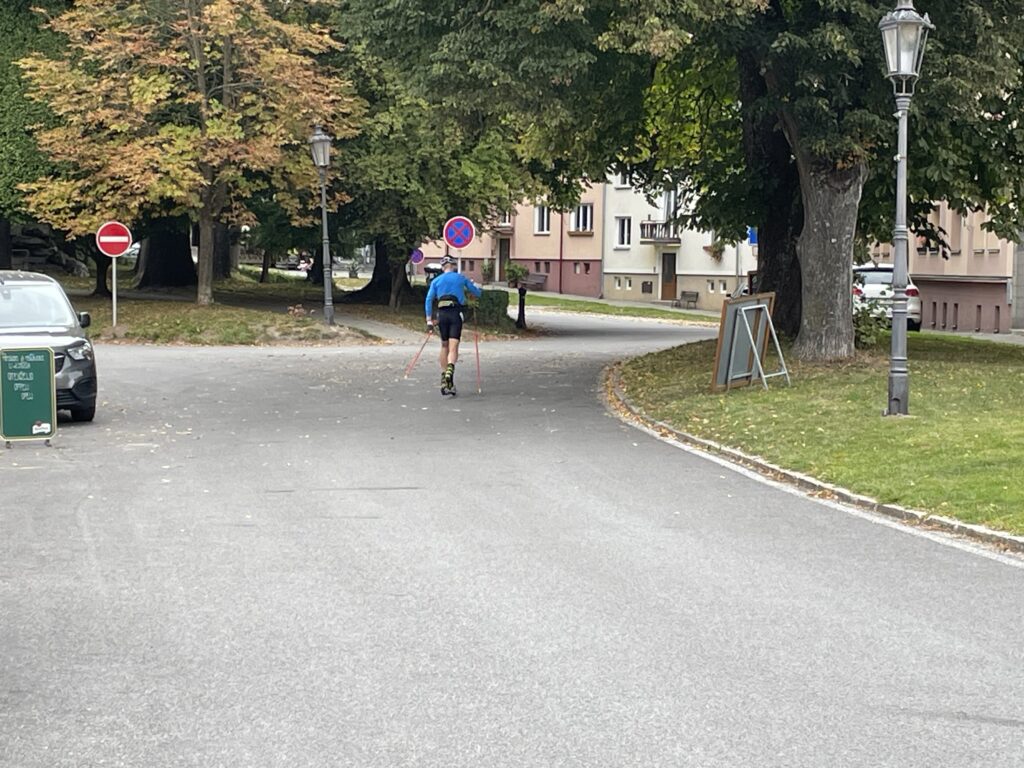
Spring is a great time to take your first steps into roller skiing. For beginners, the focus should not be on speed, but on balance and safe movement. The first sessions should take place on flat, safe surfaces such as quiet bike paths, with attention on basic technique.
Many people find roller skiing intimidating at first, but cross-country roller skis can make the transition easier. They provide a more stable and ski-like feel, lowering the threshold to get started, and you can ski on ski trails surrounded by nature. As confidence builds, progress tends to come quickly.
Safety comes first
Roller skiing always requires caution. A helmet is essential every time, and it’s wise to choose a calm training environment with minimal traffic. Short and easy sessions are enough in the beginning – there’s no need to learn everything at once.
It’s also important to understand wheel resistance when choosing roller skis. Faster wheels roll more easily and can make training feel smoother and lighter, especially on flat terrain. However, they also increase speed quickly on downhills, which can make them more difficult and potentially dangerous for beginners. Slower wheels, on the other hand, provide more resistance and better control, making them a safer option when starting out. At the same time, very slow skis can feel physically demanding and may make training unnecessarily heavy if used for longer sessions. Finding a balanced setup that matches your skill level and training goals is key.
Looking ahead to summer
As summer begins, training gradually becomes more structured and slightly more goal-oriented. Endurance is developed through longer sessions, and weekly training becomes more consistent. One or two slightly more intense workouts can be introduced, and roller skiing takes on a bigger role, allowing you to work more specifically on technique.
For recreational skiers, the main goal of summer is to steadily build endurance and get used to a regular training rhythm. The careful groundwork done in spring makes this transition much smoother.
What recreational skiers should keep in mind in spring
The key idea of the transition period is simple: less can be more. When training is light, varied, and enjoyable, motivation stays high and the body responds well. Pushing too hard at this stage can easily lead to fatigue or setbacks later.
Spring offers a chance to build a strong foundation without pressure. When movement stays relaxed and varied, you’ll be better prepared for summer training – and ultimately for the moment when the ski tracks return once again.
Check out upcoming roller-ski and ski events on the Ski Classics site.
Subscribe to our newsletter
Most read
-
21.09.2026
-
14.09.2026
-
-
-
06.08.2026


More Articles
-
Autumn training: How to avoid getting sick
The arrival of autumn brings back dampness and cold weather, ideal conditions for the spread of viruses. Whether you’re a competitive athlete or a recreational one, it’s important to protect yourself as you prepare for the final months leading up to winter.23.09.2026