Biathlon 101: the basics of skiing and shooting
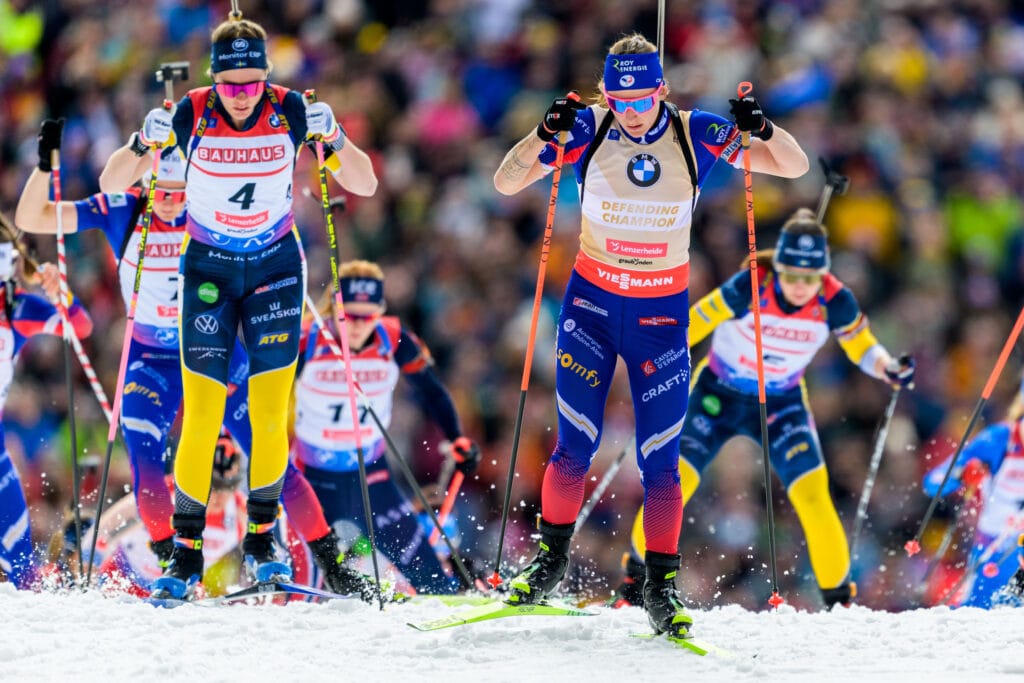
Biathlon combines the speed of cross-country skiing with the precision of rifle shooting. What may seem like an unusual pairing has grown into one of the most exciting winter sports, demanding endurance, accuracy, and mental strength.
Introducing our biathlon series
Today, ProXCskiing.com is launching a new series about biathlon. We’ll take readers from the basics—like skiing and shooting—to advanced topics, including all race formats, equipment, dry shooting, mental training, and summer preparation. Whether you’re discovering the sport for the first time or seeking to deepen your knowledge, this series provides a comprehensive guide to the fascinating world of biathlon.
What is biathlon?
Biathlon is a winter sport that combines cross-country skiing with rifle shooting. Its origins trace back to Scandinavian military training, where soldiers needed to move quickly across snow while remaining able to shoot accurately. Today, biathlon is a professional sport with a full World Cup circuit, Olympic events, and a growing global community.
Success in biathlon requires not only physical fitness but also the ability to manage heart rate and stress under pressure. Athletes alternate between explosive physical effort and calm, precise marksmanship—one of the sport’s most unique challenges.
Also Read: Autumn season begins – Training for skiers before the snow arrives
How a biathlon race works
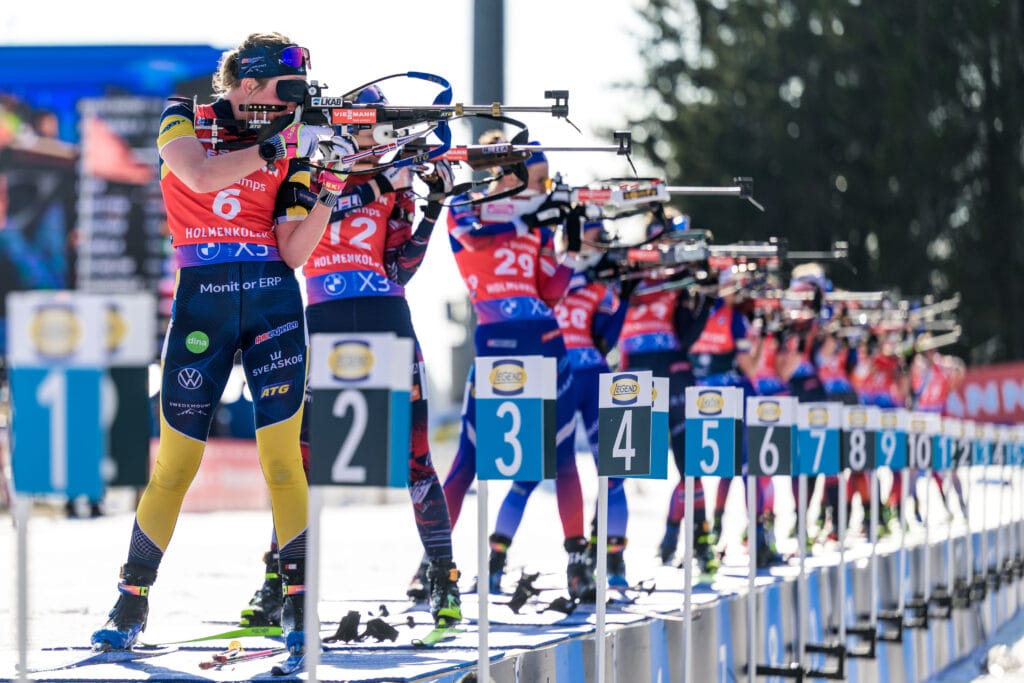
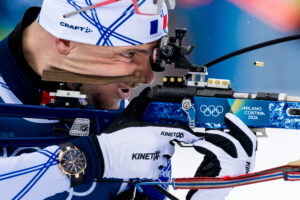
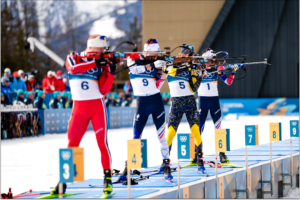
Races vary in format, but the principle remains the same: athletes ski multiple loops and stop at shooting ranges to fire at five targets. Shooting is done from either the prone position (45 mm targets) or the standing position (115 mm targets). Accuracy under physical stress is critical.
Key race formats for senior athletes
- Sprint – 7.5km women / 10km men. Three skiing loops with two shooting bouts (prone and standing). Each missed shot means a 150m penalty loop.
- Pursuit – 10km women / 12.5km men. The start order is based on sprint results. Four shooting bouts (prone-prone-standing-standing). Missed shots mean a 150m penalty loop.
- Individual – 15km women / 20km men. Four shooting bouts. Each missed target adds a one-minute penalty.
- Mass Start – 12.5km women / 15km men. All athletes start together and shoot four times. The first to finish wins. Missed shots mean a 150m penalty loop.
- Relay – Teams of four (6km women / 7.5km men). Each leg includes two shooting bouts. Athletes may use up to three spare rounds per bout; remaining misses result in 150m penalty loops.
- Other formats – Mixed Relay, Single Mixed Relay, Super Sprint, Short Individual, and Mass Start 60. Distances, shooting bouts, and penalties are defined in the IBU rules and vary by event.
These are the main formats for senior athletes. Junior and youth competitions follow the same principles, with shorter distances and slight variations. Later this week on ProXCskiing.com, we’ll publish a complete guide with every competition format explained in detail.
The story continues below.
Read More – Core strength: the game-changer for skiers
The skills involved
Biathlon demands a unique mix of abilities:
- Skiing – Endurance, strength, and technical efficiency are essential. Modern biathlon uses freestyle technique, with different skating styles crucial for maintaining speed.
- Shooting – Precision under pressure is decisive. Athletes must control breathing, heart rate, and stability. Shooting accuracy often separates winners from the rest.
- Mental focus – Switching from high-intensity skiing to calm, accurate shooting challenges even experienced competitors. Visualization, breathing techniques, and consistent pre-shot routines are vital.
Equipment basics
Biathletes rely on specialized gear, all of which must comply with International Biathlon Union (IBU) regulations:
- Skis and poles – Lightweight, high-performance skis (minimum 750g per pair without bindings). Poles must not exceed the athlete’s height, and no mechanical assistance is allowed.
- Rifle – A small-bore (.22 caliber) rifle carried on the athlete’s back, weighing at least 3.5kg. Rifles are manually operated, typically bolt-action or straight-pull, ensuring precision and safety.
- Clothing – Breathable, flexible, and lightweight, with total padding ≤ 6mm (except for the back, where the rifle rests). Non-slip material up to 3mm is permitted. Gloves and boots are designed for both skiing and shooting stability.
The story continues below.

Why biathlon is unique
What sets biathlon apart is the balance of endurance and precision. Athletes must push their physical limits while maintaining enough control to shoot with accuracy. A single missed shot can change the outcome, keeping both athletes and fans on edge until the finish line.
Looking ahead
This article is just the starting point. From equipment choices to shooting techniques, dry shooting, training methods, and mental preparation, there is much more to explore. In the coming weeks, this series will guide readers through the essentials of biathlon, helping athletes and fans dive deeper into the sport.
Are you interested in biathlon? Click HERE and read more about it.
As a member of ProXCskiing.com, you get full access to all content on the site. Also, live streaming of Ski Classics events with English commentaries is available.
When you become part of one of the world’s leading XC ski communities, you will receive numerous exclusive offers throughout the year.
Subscribe to our newsletter
Most read
-
27.08.2026
-
20.02.2026
-
03.08.2026
-
30.09.2025
-
15.02.2026

More Articles
-
Travel Guide – Bad Gastein: where Ski Classics meets Belle Époque charm
Bad Gastein has hosted Ski Classics since 2022, and its dramatic Belle Époque architecture, cascading waterfall dropping 341 meters through the town center, and high-altitude Sportgastein arena make it one of the most distinctive stops on the calendar.19.09.2026