France’s must-see mountain passes – part 2

France’s mountainous terrain is full of legendary mountain passes and climbs, many of which became famous because the Tour de France peloton rode through them. Check out part 2.
If you’re a cycling enthusiast or an athlete looking for a mountain pass to conquer on roller skis, you’ll probably be interested in the second part of our list of France’s most legendary mountain passes.
If you plan to climb these passes on roller skis, make sure you have a way to get back down, as the descents may be too steep to tackle on roller skis.
Also Read: France’s must-see mountain passes – part 1
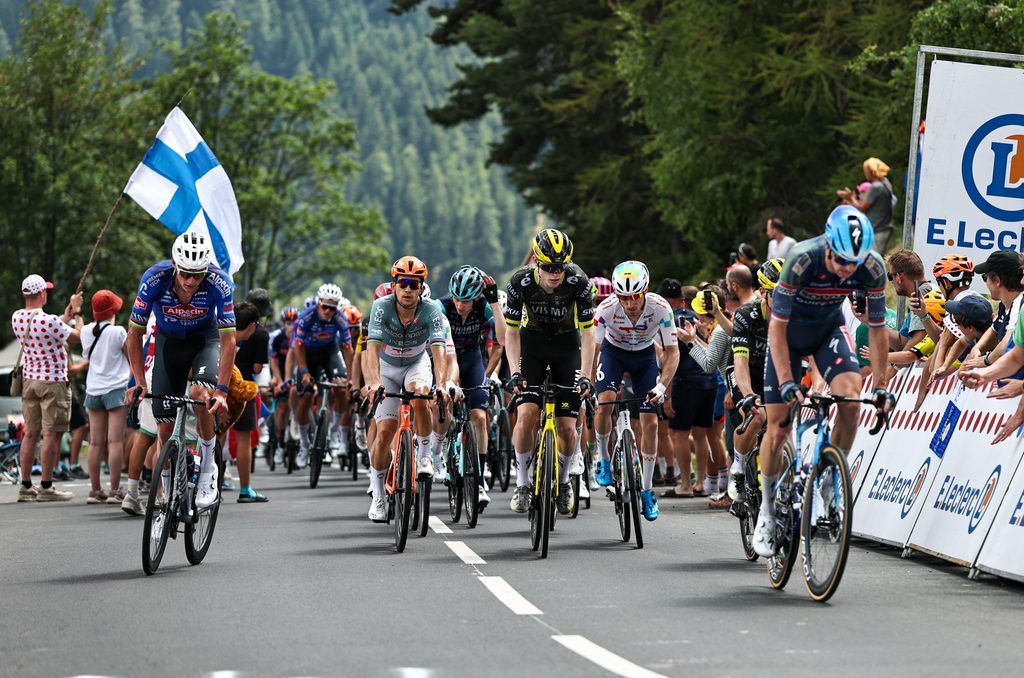
Alpe d’Huez (1860m): The myth of the 21 turns
These are surely the 21 most famous turns in the world. This climb has very often been the scene of major battles in the Tour de France peloton.
This climb, which connects the village of Bourg-d’Oisans to the Alpe d’Huez resort, was first tackled by the Tour de France in 1952.
If you’d like to tackle this climb, be sure to warm up properly to handle the steepest sections at the start of the climb. In fact, the first 3 kilometers of the climb have an average gradient of 10%. The total distance of the climb is 13.8km, with an average gradient of 7.9%. Some sections of the climb even reach a gradient of 13%.
The 21 turns are numbered on signs in descending order along the entire climb, enough to keep you motivated all the way to the summit.
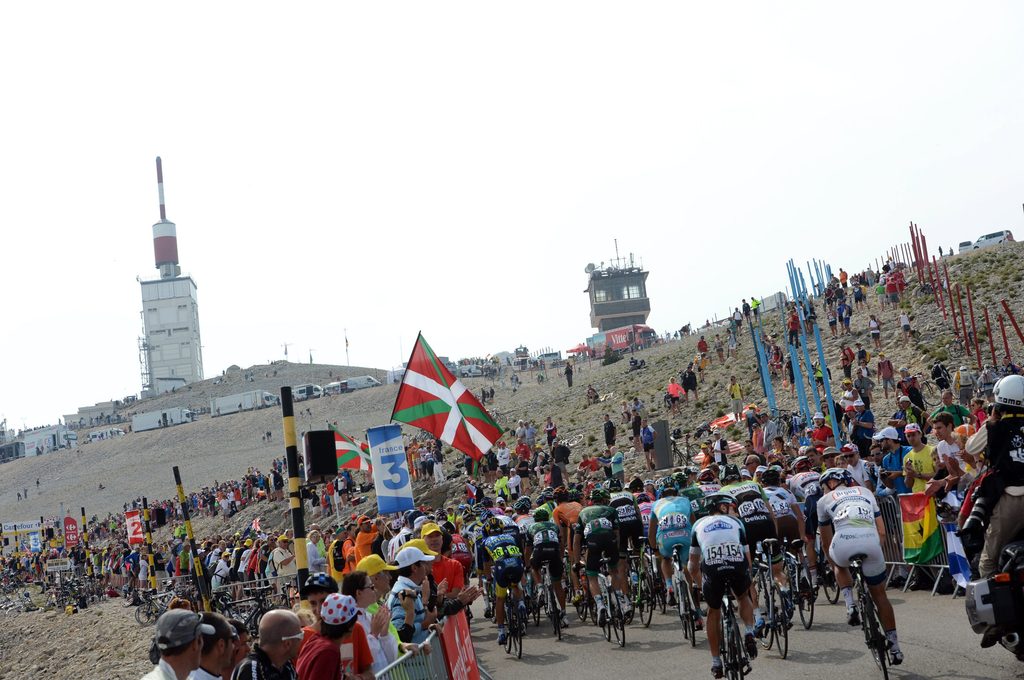
Mont Ventoux (1910m): Le “Mont Chauve” (translation of “bald mountain”)
Mont Ventoux is a truly unique peak: its geographical isolation makes it visible from miles around. Moreover, its summit, which is regularly battered by strong winds, is devoid of vegetation; with its bare limestone cliffs, this magnificent landscape gives you the impression of being on the moon.
As with the Col du Grand Colombier (see the first part of the presentation on France’s greatest mountain passes HERE), there are several ways to climb Mont Ventoux: from the village of Malaucène, Bédoin, or Sault.
On the south side, the climb from the village of Bédoin is known to be the most difficult. At nearly 22km long, you’ll face 1,610 meters of elevation gain, for an average gradient of 7.5%, with sections exceeding 12% in the final kilometer.
From Malaucène, on the north side, it’s a 21.2-kilometer climb with an average gradient of 7.2%, so it’s also very challenging.
If you’d like to tackle Mont Ventoux on roller skis, we recommend the ascent from the village of Sault. At 25km, it’s the longest route to the summit, but also the easiest. Since the village of Sault is at a higher elevation than Bédoin, you’ll only have to climb 1,206 meters in elevation gain with an average gradient of 5%. But be sure to save some energy, because the last kilometer is very difficult too.
So, choose your side!
Col de la Loze (2304m): the new go-to choice for cyclists
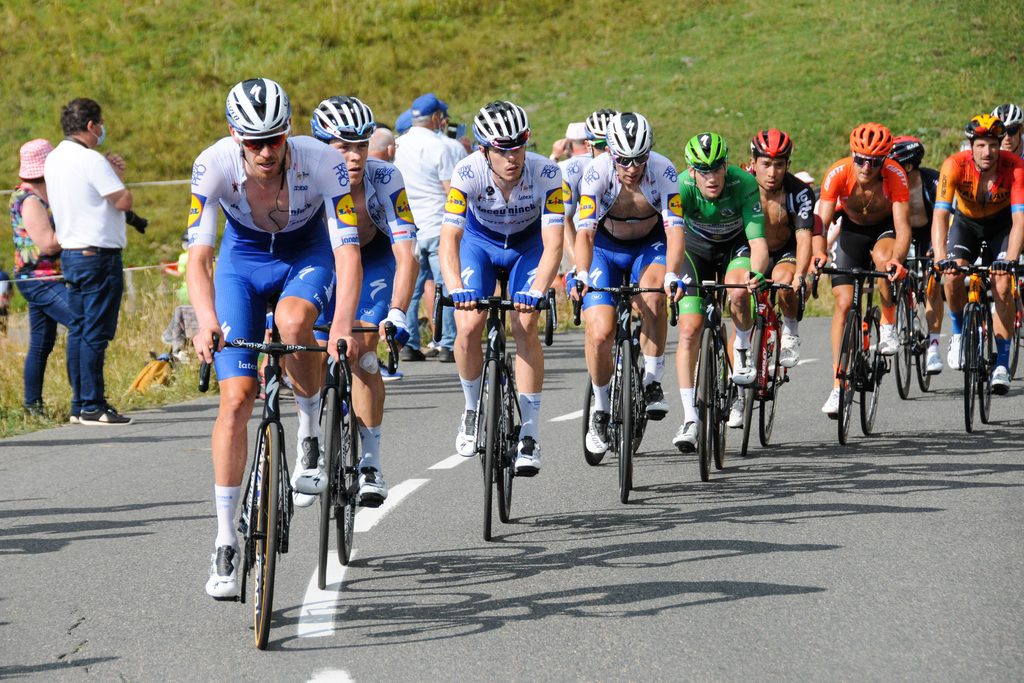
The Col de la Loze is a mountain pass that could be described as very “modern.” Located between the ski resorts of Méribel and Courchevel, the road over the Col de la Loze was paved in 2019. It is closed to motorists starting at the Courchevel exit (if you want to do this on roller skis, you’ll need to arrange another way to get down besides by car). Since its creation, this pass has hosted the world’s greatest cyclists several times during the Tour de France.
The best-known and most challenging climb is the one on the Méribel side. Starting from the village of Brides-les-Bains and passing through Les Allues and Méribel, this climb is 22.5km long with an average gradient of 7.7%. What makes this climb so challenging is not only the altitude but also the uneven terrain. With a section reaching 24% gradient, the final kilometers of this pass are like climbing a flight of stairs!
Since the last 7 kilometers are on a bike path, you’ll be able to fully enjoy the alpine pastures and breathtaking scenery.
In the next article, we’ll introduce you to the legendary Col de l’Izoard, the Col de la Croix de Fer, and the Col de la Bonette.
Also Read – CYCLING TRAINING: Climbing power repeats – forging the raw strength your skiing demands
Are you interested in training for Ski Classics, long-distance, traditional cross-country skiing, and biathlon? Click HERE and read more about it.
Subscribe to our newsletter
Most read
-
-
14.09.2026
-
06.03.2026
-
-
16.09.2026


More Articles
-
Olympic door opens for Johaug: reveals ongoing conversations
Both Olympic and World Championship doors swing wide open for Therese Johaug, as conversations are revealed.23.10.2026