Physiological effects of cross-country ski training
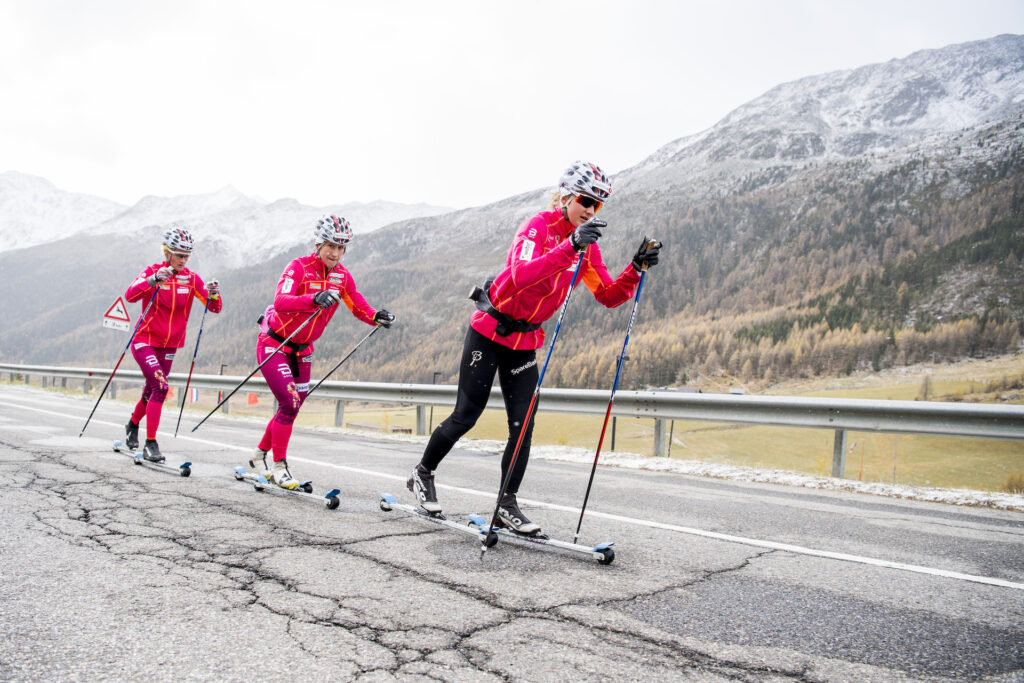
Cross-country ski training improves endurance by strengthening the heart, enhancing oxygen use, and boosting muscle energy production. Performance develops through supercompensation, where the right balance of training and recovery is key—while imbalance can lead to overtraining syndrome.
Cross-country skiing is often called the king of endurance sports, and for good reason. A skier must simultaneously develop a powerful cardiovascular system, an efficient respiratory system, and strong, well-coordinated muscles throughout the entire body. A single skiing performance combines sustained aerobic endurance, bursts of anaerobic power, and full-body force production. This unique combination makes the sport both highly demanding and physiologically fascinating.
To improve, a skier needs progressive, structured training in which the balance between workload and recovery is carefully controlled. Over time, training induces both structural and functional changes in the body. Fitness improves, but what exactly is happening beneath the surface? Let’s explore the key physiological adaptations through the body’s major systems.
Read also: The ABCs of the transition period for cross-country skiers
Cardiovascular system – the foundation of endurance
Endurance training, such as long low-intensity ski sessions or roller skiing, increases stroke volume, meaning the amount of blood the heart pumps with each beat. The heart muscle becomes stronger, and the left ventricle enlarges, allowing it to pump more efficiently. As a result, resting heart rate and heart rate during submaximal exercise decrease, since the heart can deliver the required blood flow with fewer beats. This is one of the clearest signs of improved fitness in endurance athletes.
At the same time, capillarization in the muscles increases. New capillaries form around muscle fibers, enhancing the delivery of oxygen and nutrients while improving the removal of metabolic byproducts such as carbon dioxide and lactate. Blood adaptations also occur: hemoglobin concentration and red blood cell count may increase, improving the blood’s oxygen-carrying capacity.
Another important adaptation is improved cardiac output at maximal effort, which directly supports a higher aerobic capacity. These changes do not happen overnight but require consistent, long-term training, exactly the kind of year-round work elite skiers commit to.
Respiratory system – oxygen uptake and utilization
The lungs serve as the gateway for oxygen, but even more important than lung volume is how efficiently the body can use oxygen. Training strengthens the respiratory muscles, including the diaphragm and intercostal muscles. This reduces the relative energy cost of breathing, making respiration more efficient during intense exercise.
A key performance indicator is maximal oxygen uptake, or VO₂max. This reflects the body’s ability to take in, transport, and utilize oxygen during maximal exertion. With training, VO₂max increases, allowing skiers to maintain higher speeds without excessive accumulation of fatigue-inducing metabolites.
Ventilatory efficiency also improves. Trained athletes can extract more oxygen per breath and maintain effective gas exchange even at high intensities. Together, improvements in the respiratory and cardiovascular systems enable skiers to perform at high levels for extended periods with better efficiency.
Muscles and energy metabolism – the engine of movement
Training adaptations are especially evident within muscle cells and their energy systems. One of the most important changes is an increase in mitochondrial density. Mitochondria are the “power plants” of the cell, where aerobic energy production takes place. More mitochondria mean a greater capacity to produce energy using oxygen.
This enhances the muscle’s ability to utilize fat as a fuel source, which is crucial during long training sessions and competitions where carbohydrate stores are limited. Efficient fat metabolism helps preserve glycogen for critical moments, such as climbs or final sprints.
In addition, enzymatic activity within muscle cells improves. Enzymes involved in aerobic metabolism become more active, accelerating energy production and improving efficiency. Anaerobic capacity can also be enhanced through high-intensity training, increasing the body’s tolerance to lactate and improving performance during intense efforts.
Strength and speed training further develop the neuromuscular system. The nervous system becomes better at recruiting muscle fibers quickly and effectively, leading to improved coordination, more economical movement patterns, and greater power output. In skiing, this translates to smoother technique and stronger propulsion, especially in demanding terrain.
Supercompensation – the physiological secret of progress
The essence of training lies in controlled stress. Each workout temporarily reduces performance as muscles fatigue, energy stores are depleted, and the nervous system is taxed. During recovery, the body repairs the damage and replenishes energy reserves.
If recovery is adequate, the body does not simply return to its previous state but adapts to a slightly higher level of performance. This process is known as supercompensation.
Timing is crucial. If the next training session occurs during this improved state, performance continues to increase. If training is resumed too early, before recovery is complete, the body accumulates fatigue. If the break is too long, the benefits of the previous session diminish. Successful training programs carefully balance stress and recovery to maximize this adaptive process.
Overtraining – when balance breaks down
The balance between training and recovery is delicate. Excessive training or insufficient recovery can lead to overtraining syndrome, a state of prolonged physiological stress.
Symptoms include decreased performance, elevated resting heart rate, sleep disturbances, persistent fatigue, irritability, and increased susceptibility to illness. Hormonal imbalances often occur, with elevated cortisol levels and reduced anabolic hormones such as testosterone. The nervous system may also become dysregulated, and chronic inflammation can develop in muscle tissue.
Recovery from overtraining can take weeks or even months, making prevention essential. This involves proper periodization, regular rest days, monitoring training load, and paying attention to subjective feelings of fatigue and readiness.
Progress comes from balance
The human body is a complex system that adapts to training only under the right conditions. Consistent training strengthens the heart, improves oxygen transport and utilization, enhances muscular energy production, and refines neuromuscular coordination.
Progress is driven by supercompensation, but it can only occur when training and recovery are in harmony. Excessive stress without sufficient rest leads to stagnation or even decline. When balance is achieved, the body gradually adapts to increasing demands, allowing skiers to reach higher levels of performance year after year.
This physiological foundation explains why long-term, structured training is the key to success in cross-country skiing and why the sport remains one of the most demanding and rewarding endurance disciplines in the world.
You can also read training articles on these sites: langd.se and langrenn.com.
Subscribe to our newsletter
Most read
-
21.09.2026
-
14.09.2026
-
-
06.08.2026
-
06.03.2026




More Articles
-
It’s official: Olympic champion Jacquelin skips the biathlon season for cycling
Emilien Jacquelin has confirmed what many had expected for weeks. The French biathlete will not race the 2026/2027 season and will instead keep chasing his dream on the bike.22.09.2026