Annual training guide for recreational and competitive skiers
Planning your training year is the key to improvement. In this guide, you will learn how to structure your training correctly, develop performance, and peak at the right time.
Planning your annual training is essential for both recreational exercisers and competitive cross-country skiers. Properly structured training combines building endurance, improving performance, and ensuring recovery so that peak condition is reached at the right time.
Whether you are a recreational athlete or a goal-oriented cross-country skier, your training is almost always guided by a clear objective. Training planning is not just about selecting individual workouts, but about building a structured whole where progress is consistent and peak performance is achieved at the right moment. The annual training cycle provides a clear framework for this.
Read also: The philosophy of fatigue – What is fatigue and what causes it?
Structure of training
Annual training, or the macrocycle, consists of smaller phases. Mesocycles typically last from a few weeks to a month and focus on developing specific qualities. Microcycles form the weekly training structure. This type of periodization helps manage workload, prevent overtraining, and ensure steady progress.
Preparatory period
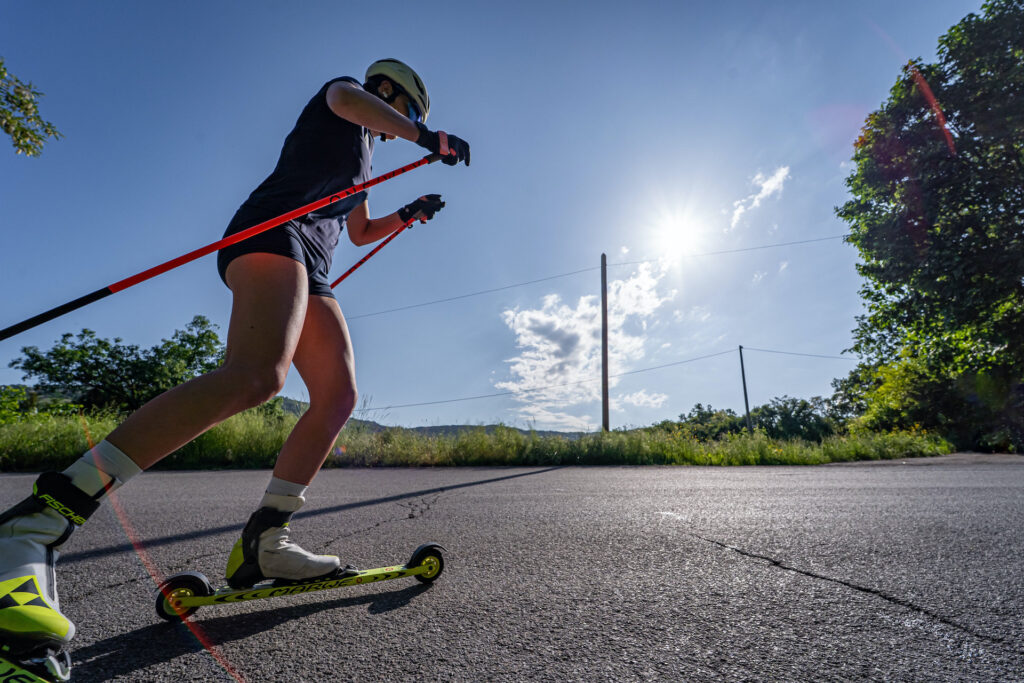
The training year begins with the preparatory period, which takes place from spring to late summer and forms the foundation of all training. During this phase, the focus is on developing basic endurance, strength, and technique. Training is mostly low intensity, and the volume increases gradually. Running, cycling, roller skiing, and strength training play a central role. This phase is especially important, as a strong base enables more effective training later on.
Pre-competition period
In autumn, training shifts to the pre-competition period, where the nature of training changes. Basic fitness is converted into performance by increasing intensity. Interval training, threshold workouts, and sport-specific training become more prominent. At the same time, overall training volume may decrease slightly, while quality increases. For many skiers, this phase also includes transitioning to on-snow training and practicing race pace efforts.
Competition season
During the competition season, the goal is to reach and maintain peak condition. Training volume decreases, but intensity remains. The focus is on competitions, recovery between races, and fine-tuning performance. Short, high-quality workouts support race fitness while avoiding excessive fatigue. Freshness and recovery management are key during this phase.
Transition period
After the competition season comes the transition period, which focuses on physical and mental recovery. Light exercise, outdoor activities, and relaxed movement help the body recover from the demands of the season. This is also a good time to analyze the past season and plan the next one.
Specific characteristics of cross-country skiing
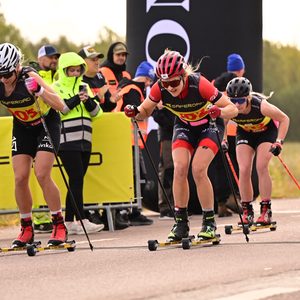
In cross-country skiing, one particular challenge is the long preparatory period compared to the relatively short competition season. For this reason, many athletes seek competitive stimuli during summer and autumn by participating in roller ski races, as well as running, cycling, or triathlon events. This helps maintain a competitive edge and adds variety to training.
Load and adaptation
Training development is based on the balance between load and recovery. When the body is stressed appropriately and given enough time to recover, it adapts and improves. Excessive training without adequate recovery can lead to overtraining, while insufficient load will not produce results. Therefore, training volume should be increased gradually (approximately 5–10% at a time), and lighter periods should be included regularly, such as an easier week every 3–4 weeks. It is also important to continuously listen to your body and its signals.
Training intensity
One of the key factors in effective training is the correct distribution of intensity. Most training should be done at low intensity, even though high-intensity training is often tempting. In endurance sports, the majority of development comes from easy training, while high-intensity workouts complement the overall program.
Based on research and practical experience, an effective model is:
• 70–90% low-intensity training
• 10–30% high-intensity training
Training volume
Training volume varies greatly between individuals. A recreational athlete can make significant progress with a few hundred hours of training per year, while competitive athletes often train several hundred or even over a thousand hours annually. The key is not the absolute volume, but what is realistic for your own life situation. Below are example ranges for recreational athletes, active competitors, and elite skiers.
• Recreational athlete: 150–400 hours per year
• Active amateur: ~400–600 hours per year
• Competitive athlete: 600–1000+ hours per year
Training diary
Tracking training is an essential part of improvement. A training diary, whether digital or traditional, helps you understand overall workload and monitor progress. Data alone is not enough; your own subjective feeling is equally valuable. Fatigue, motivation, and recovery sensations often provide more insight than individual metrics.
Individuality and daily life
When planning annual training, it is important to consider your overall life situation. Work, studies, sleep, stress, and possible illnesses all affect how much and how effectively you can train. There is no such thing as a perfect training year, and plans must be adjusted as needed. Sometimes lighter training or rest is the best choice for long-term development.
How to start planning
Planning your training year begins with a realistic assessment of your current level. It is important to identify your fitness, strengths, and areas for improvement so that training can be structured effectively and safely. Based on this, clear and achievable goals are set to guide the entire season.
Next, the year is divided into phases, each with its own focus. This allows training to progress logically from building basic fitness to achieving peak performance during the competition season. After periodization, a weekly structure is created to balance workload and recovery. Training weeks should include both lighter and more demanding days.
However, a plan is never final. Training should be monitored regularly and adjusted when necessary. In addition to performance, it is important to consider your well-being, life situation, and any changes in daily life. This ensures that training remains flexible and individualized, supporting long-term progress.
A successful training year is built on proper periodization, balance between load and recovery, and individual planning. When these elements are in place, training becomes structured, effective, and sustainable over the long term.
Check out more long distance ski info on the Ski Classics site.
Subscribe to our newsletter
Most read
-
21.09.2026
-
14.09.2026
-
-
06.08.2026
-
06.03.2026




More Articles
-
Finnish Roller Ski Championships crown their champions in Kuopio
The Finnish Roller Ski Championships ran across three days in Kuopio, from Friday, September 18 to Sunday, September 20, 2026, with titles decided in a hill climb, a freestyle sprint, and a 10km individual skate. Check out the results.22.09.2026