12 weeks at 3,000 meters – and no doubt: “I’m going to win Olympic gold”
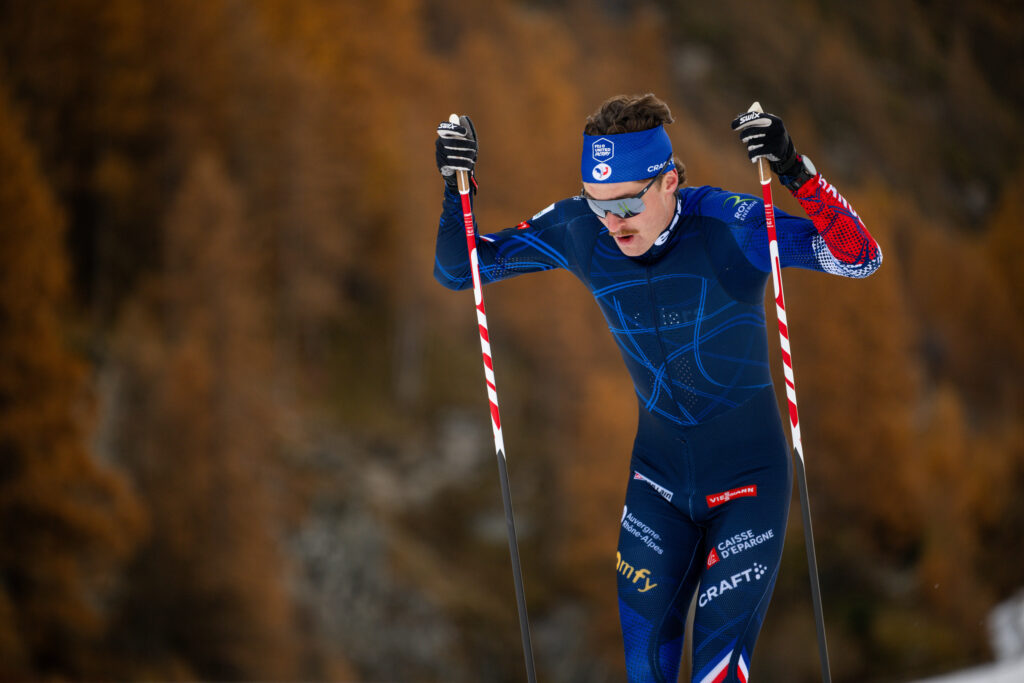
Twelve weeks at 3,000 meters above sea level is more than most people can handle. Now, just days before the season starts, winter’s newest rising star is all smiles.
For most of Norway’s national team stars, 3,000 meters is a distance on the running track. For France’s new sensation, 3,000 meters is the ideal altitude.
“I tested it a bit before last season, and my body responds extremely well to it,” says Mathis Desloges to Langrenn.com.
The 23-year-old is one of several international World Cup skiers looking to challenge Klæbo and the rest of the Norwegian elite at the traditional season opener in Beitostølen this coming weekend.
Now his goal is to win Olympic gold. The plan is as simple as it is difficult.
“First, I want to be on the World Cup podium. But the goal is to win Olympic gold,” Desloges says matter-of-factly.
But then you must beat Johannes Høsflot Klæbo, who won six out of six gold medals at the World Championships last winter…?
“It’s easy to beat Klæbo. I just have to ski faster than him.”
But the young Frenchman is not as bold as he may sound.
Desloges has great respect for Klæbo and the rest of the field. But he also has big ambitions, and he is working purposefully to achieve them.
The story continues below.
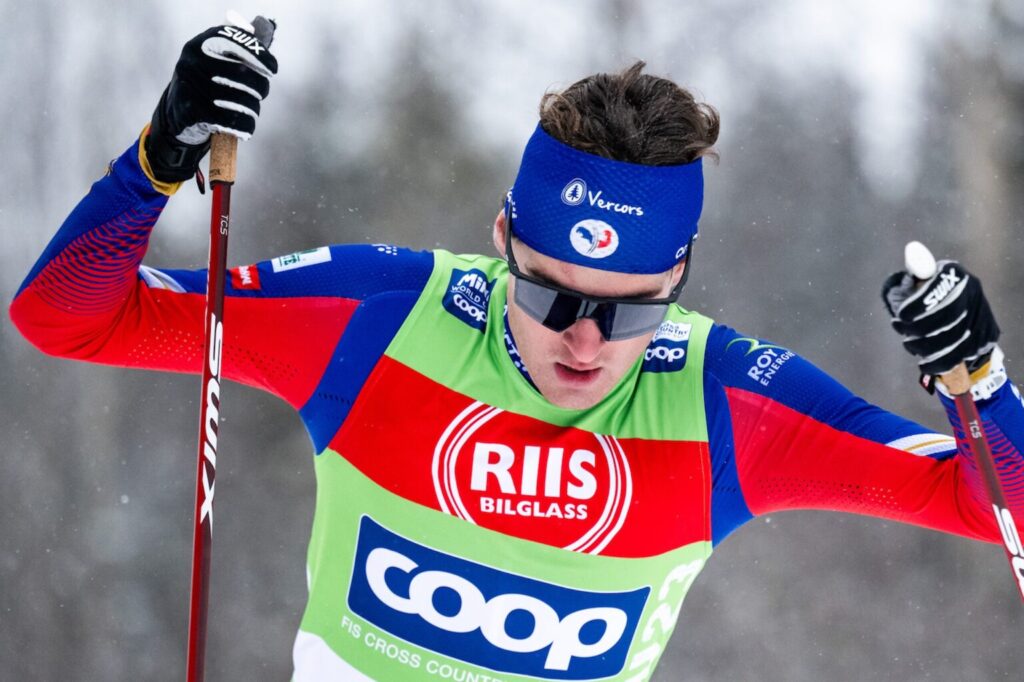
From beginner to podium contender
Desloges made a huge leap ahead of last season, which was his first full year in the World Cup. He finished second overall in the U23 World Cup, just behind Edvin Anger, and 13th in the overall World Cup standings. And he delivered the race of his life at the World Championships in Trondheim, his first championship at the elite level.
“Last winter I confirmed that I have the capacity and the speed to go with the best, but I lost the victory and the podium in the last 200 meters,” Desloges says, continuing:
“The sixth place in the 20km in Trondheim is the best I’ve done, but that was exactly what happened there.”
After leading almost the entire race, Desloges lost more than two seconds in the final few hundred meters. At the finish, he was 2.3 seconds behind Klæbo and nine hundredths from the podium.
That is not going to happen again, and he has worked specifically on that ever since the World Championships. Now Desloges has taken new steps — shown in both tests and results.
“I’m at a higher level than I was at the same time last year,” he says.
Two key measures
Desloges attributes his progress over the past year to two main things.
One is a greater focus on technique and tactics, specific task-based training, and constant competition with his national teammates.
“I’ve worked a lot on finishing. It’s unnecessary to lose the podium on the final stretch. And I lack some experience. But many of the others on the team have that. They’re among the best in the world. I learn an extreme amount from competing against them throughout the training period and during the season,” Desloges says.
The second key measure is a brutal altitude regimen — and Desloges goes further than most. The young Frenchman has revived the technology used in Bjørn Dæhlie’s glory days: the old-school altitude house.
The story continues below.
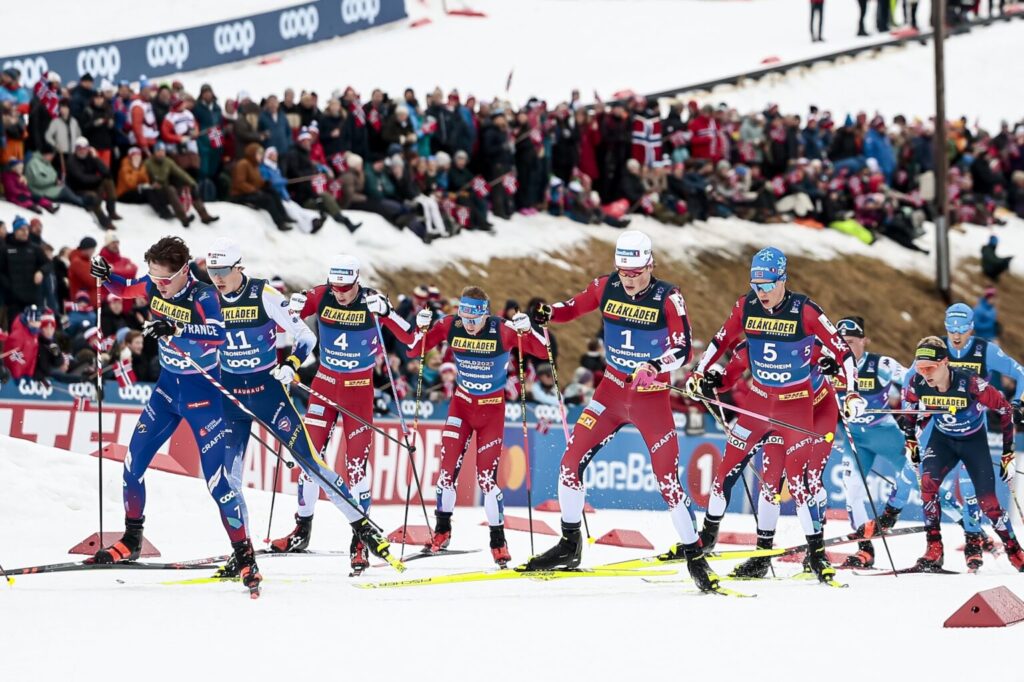
Sleeping at 3,000 meters
“The national team has access to a house with this setup in Premanon, so I use it a lot in addition to altitude camps with the team. The point is simply to get even more days at altitude,” Desloges explains.
“I started using it a bit last summer and discovered that my body responds extremely well to it. So, this year I’ve done even more of it and pushed the altitude even further. Now it’s set to 3,000 meters above sea level.”
There, he spends 14 hours a day, three to four weeks at a time. In total, he has spent over 12 weeks at altitude in preparation for the upcoming season.
Are there any downsides to using an altitude house and/or spending so much time at altitude?
“Yes. You don’t sleep as well, and altitude is a strain on the body, so it requires extreme focus. You must be very careful with everything, so the overall load doesn’t get too high. Altitude also means recovery takes longer, and you can’t do high-intensity sessions at the same level as at low altitude, so you can’t train at maximum speed. So, it’s all about finding the right balance.”
Test coming up this weekend
In a few days, Desloges will get the first part of the answer to whether the preparation has worked: this weekend, he will race both distance events at the season opener in Beitostølen. Both are individual-start races, with Klæbo and the rest of the Norwegian elite team on the start line — a brutally honest indicator of his form.
The answer to whether his finishing training has paid off will come the following week at the World Cup opener in Ruka. The season’s first mass start is on the program there, where Desloges will face all five skiers who beat him in the 20km at the World Championships.
The story continues below.
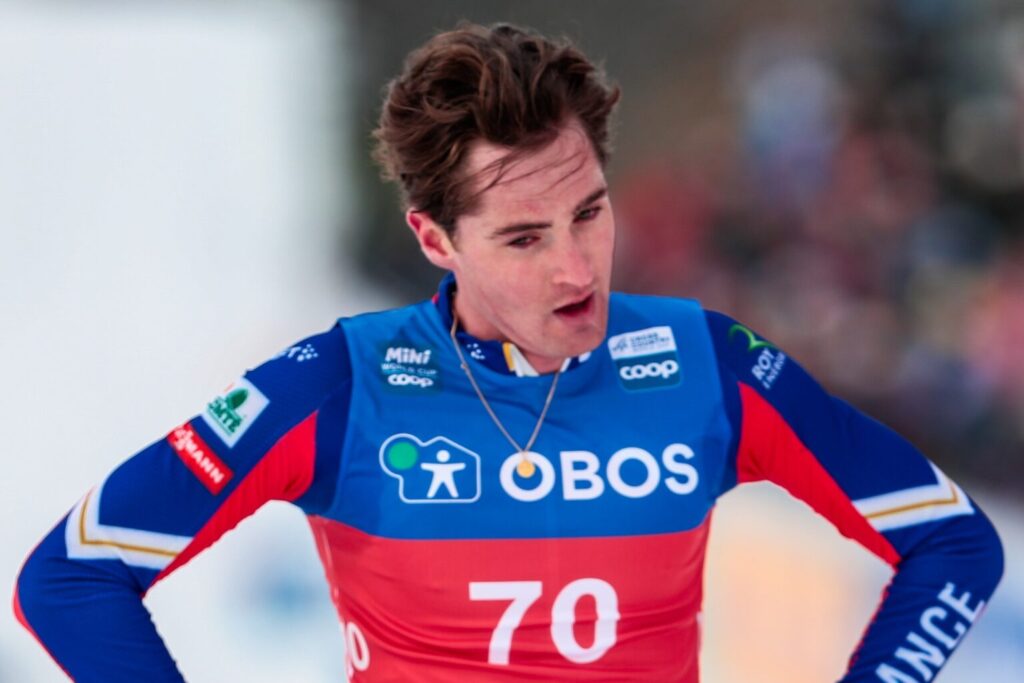
“It looked so cool”
As a child, Desloges dreamed of becoming a track and field star, and he pursued that goal for several years. But then something happened that changed everything.
“I was watching cross-country skiing from the Olympics with my father when I was about 10 years old. I was totally fascinated. What they were doing looked so cool. I wanted to try that,” Desloges tells Langrenn.com.
So, he did. And Desloges quickly realized that cross-country skiing would be his thing. He was competitive from the beginning and won almost everything throughout his youth. But for Mathis Desloges, cross-country skiing is about much more than winning. He becomes animated when trying to put his passion into words.
“I love, love, love the feeling of gliding on snow, and the incredible experiences in nature. France and other places around the world have such beautiful nature. You experience it in a unique and different way on skis.”
Read More: All you need to know about the cross-country season opener: Program and TV schedule
Are you interested in traditional cross-country skiing? Click HERE and read more about it.
Subscribe to our newsletter
Most read
-
03.12.2021
-
16.02.2026
-
21.02.2026
-
14.02.2026
-
10.02.2026



More Articles
-
Stenshagen and Fosnæs win Brekka Opp at Toppidrettsveka 2026
Toppidrettsveka 2026 continued on Saturday with Brekka Opp, an uphill mass-start freestyle race in Aure, Norway. Mattis Stenshagen claimed victory in the men's race, while Kristin Austgulen Fosnæs topped the women's field.22.08.2026