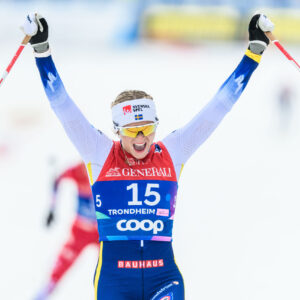
Annual training cycle and its planning

If you want to improve your performance, it’s a long-term commitment. Even though it might not seem so at first glance, planning an annual training cycle (ATC) is one of the key components that helps us improve. It allows us to track training sessions, evaluate them continuously, and monitor our performance.
Whether you’re an amateur or professional athlete, everyone sets certain goals they want to achieve. The purpose of planning an annual training cycle is to structure training according to different periods. Each period focuses on general or specific aspects, ranging from developing physical abilities and skills to tactics and mental preparation, all aimed at achieving peak performance during the competition season.
Phases of the ATC
To simplify, training periods are divided into specific cycles: preparatory, pre-competition, competition, and transition. In an annual training cycle (macrocycle), shorter training segments are divided into mesocycles (e.g., a month) and microcycles (e.g., a week). A challenge for cross-country skiers is the typically long preparatory period and very short competition period. Because of this, many athletes participate in roller ski, cycling, running, or triathlon races during the preparatory phase to prepare for the ski racing season.
By repeatedly exposing our bodies to training loads, we develop endurance and adapt to stress. The key is finding an optimal training load to avoid overtraining. Athletes must learn to listen to their bodies and individualize training based on volume, intensity, and recovery duration. The more you train, the more important it becomes to manage training efficiently, especially by continuously evaluating your sessions.
Training Periods and Their Focus
| Period | Main Goal | Characteristics |
|---|---|---|
| Preparatory (May – August) | Development of physical abilities and endurance | Adaptation to increasing physical load, general development training |
| Pre-competition (September – November) | Performance enhancement | Increased training intensity with a slight reduction in volume, higher focus on sport-specific training |
| Competition (December – January) | Maintaining high performance | Fine-tuning competition form |
| Transition (April) | Physical and mental recovery | Rest and general recovery training |
Key Focus Areas in Each Phase of the ATC
1. Preparatory Period (May – September)
- Base endurance – running, cycling, roller skiing, hiking
- Strength – gym workouts, ski imitation drills, bodyweight exercises
- Technique – roller skiing, refining ski technique
- Gradual increase in training volume
2. Pre-competition Period (October – November)
- Transition to on-snow training
- Increased intensity – interval training, anaerobic threshold (AT) workouts
- Race-pace simulation
3. Competition Period (December – March)
- Performance optimization – reduced volume, maintained intensity
- Recovery between races
- Form tuning – shorter, high-intensity sessions
4. Transition Period (April)
- Active recovery – light activities (cycling, hiking)
- Season analysis – performance evaluation and next year’s planning

Training Logs
Nowadays, there are many ways to track and control training progress. The simplest option is using a sports watch. Manufacturers continuously improve their products with features that enhance the training process. Training data can then be transferred to a computer or phone app (some are free, while others require payment). Alternatively, traditional paper logs can still be used. The key is maintaining consistent and precise records over time.
In addition to recording data, it’s useful to comment on sessions to keep a comprehensive overview of completed training. Differences between athletes, regardless of level, mostly come down to total training volume. Balancing light and hard training with appropriate recovery time is particularly crucial for those training twice a day or amateur athletes balancing work and training. Office work, psychological stress, or long hours behind the wheel should also be considered.
Read More: Understanding the Endurance Athlete’s Heart
How to Plan Your Training?
The first step is assessing your current fitness level and setting a realistic plan with clear tasks and goals.
Your plan can be based on kilometers skied or total training hours, but one of the most important indicators is time spent in different heart rate zones.
Many athletes don’t train too little but rather train too intensely. The most common mistake is insufficient volume at low intensity. The majority of training should be in low intensity, especially in Zone 1.
Training Intensity Distribution
For perspective, let’s look at some concrete numbers. If you train about 500 hours per year, you already belong to a well-trained group. Professional cross-country skiers train 800 hours per year or more (some even reach 1,200 hours per year). However, everyone is unique—what works for one person may not work for another. Not everyone can dedicate all their time to training and recovery. All factors must be considered when creating a training plan. A plan is just a theoretical guideline—real-life conditions may differ significantly. Over a year, you’re unlikely to stay completely healthy or injury-free. If you feel extremely fatigued, perhaps due to an illness, it’s important to adjust or even skip training. This can prevent illness and overtraining. Sometimes, less is more.
| Intensity Zone | Description | % of Total Training Time | Hours per Year (for 500h) |
|---|---|---|---|
| Zone 1 | Low intensity (recovery & base endurance) | 70–80% | 350–400h |
| Zone 2 | Moderate intensity (tempo endurance) | 5–10% | 25–50h |
| Zone 3 | Lactate threshold (longer intervals) | 5–10% | 25–50h |
| Zone 4 | High intensity (short intervals, AT) | 5% | 25h |
| Zone 5 | Maximum intensity (sprints, race simulations) | 2–3% | 10–15h |
While the Ski Classics season has ended, some elite athletes will line up for the Kobberløpet race this Saturday. You can watch the event live on SC Play.

Subscribe to our newsletter
Most read
-
-
14.09.2026
-
06.03.2026
-
16.09.2026
-



More Articles
-
Training at altitude: a double-edged sword, but effective – how to maximize its benefits
Are you looking to improve your physical fitness by training at higher altitudes, or planning to log your first kilometers on skis this season in one of the Alpine resorts? If so, do you understand the changes happening in your body, how to properly plan your training, and what mistakes to avoid?16.10.2026