New FIS president speaks openly about finances, annual World Championships and Russian athletes
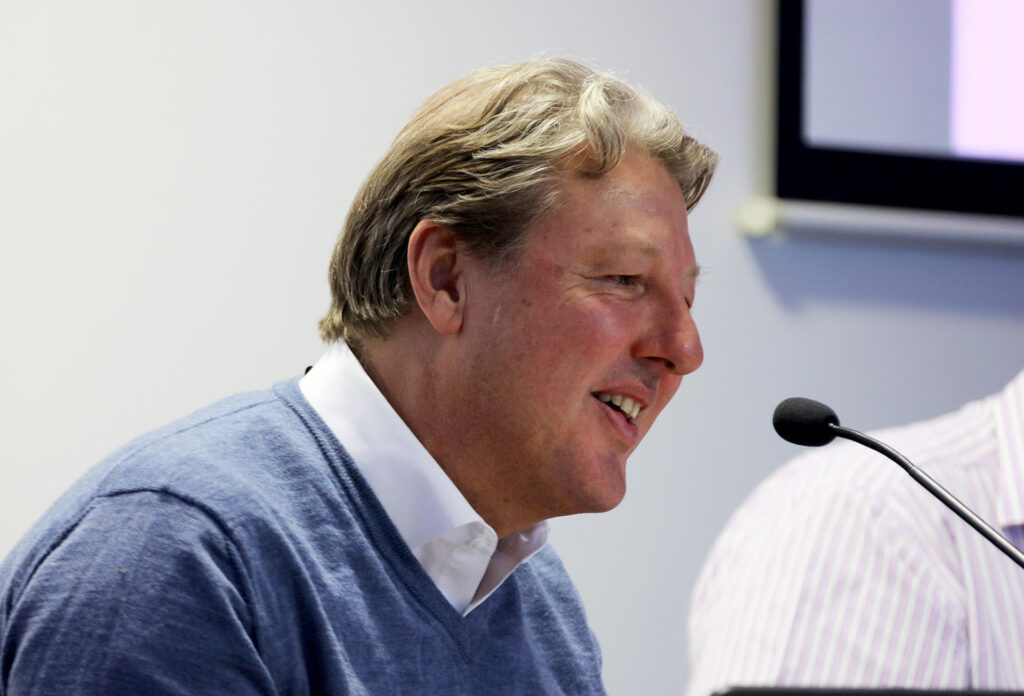
New FIS President Alexander Ospelt was the main guest at the 47th Forum Nordicum in Nové Město na Moravě. He says cross-country skiing must become more exciting for spectators, and he supports the idea of holding World Championships every year.
He also spoke openly about the drop in FIS finances, the World Championships in Falun and the new rules for Russian athletes.
Alexander Ospelt, the former head of the Liechtenstein Ski Association, defeated incumbent president Johan Eliasch by 65 votes to 64 at the FIS Congress in Belgrade in June. However, he did not get the usual 100-day grace period. According to Ospelt, one FIS Council member, a New Zealander, told him at their very first meeting that he had received a “hospital pass.”
In rugby, this is a pass to a player who is immediately tackled by all the opponents. “I like this job, and I see that I have to do it. That is why I do it,” said Ospelt. He considers the return of solidarity among the national federations to be the biggest success of his first months.
“Even though I was elected by 65 votes to 64, most of the federations came to congratulate me that same evening,” he said. He wants to meet with all of them during the season and, after it ends, evaluate together what can be improved.
World Championships every year
Ospelt supports annual World Championships, as biathlon has. So far, the debate mainly concerns alpine skiing, but he believes it would also help the Nordic disciplines. He explained the idea with his own experience from Liechtenstein.
For example, alpine skier Tina Weirather was injured in a championship year, and when she was in top form a year later, there were no World Championships. The Ospelt family company, according to him, the largest pizza producer in Europe, supported downhill skier Patrick Küng. He eventually became world champion, and his value to the partner was four times the amount invested. “A World Championship medal is a huge opportunity for athletes to increase their value,” said Ospelt.
Other arguments relate to the calendar. FIS wants to plan the World Cup calendar three to four years in advance to give organizers certainty. According to Ospelt, spectator interest drops in early and mid-February and only rises again with the finals. Championships during this period would also open the way to Japan, South Korea or China and give a chance to athletes from small countries who do not compete in the World Cup.
Shorter and cheaper championships
One journalist asked whether there would be enough organizers for annual championships. Ospelt admitted that the format would have to change. “Two weeks is too long for me. It should be ten days with two really strong weekends,” he said. According to him, organizers lose money mainly on Mondays, Tuesdays and Wednesdays.
He said there is no need to worry about the 2032 World Championships, as candidates already exist. Austria was the first to apply, even though criticism of annual championships has come from there. However, he praised Austria as the country that organizes the most races for FIS.
More excitement
According to Ospelt, work should be done on all disciplines, not only on raising the prestige of Nordic combined, which was dropped from the Olympics. “In cross-country skiing, we have to find a system that is more exciting,” he said. He stressed that technical changes are a matter for experts and that he speaks “only as a spectator.”
Still, he hinted at what he would like to see. He is a fan of city races and head-to-head duels, which he believes could be developed further. “It would give the underdog a chance to take on the big names. That is what sport is about,” he said. In his view, formats should be created together with people who truly love the sport.
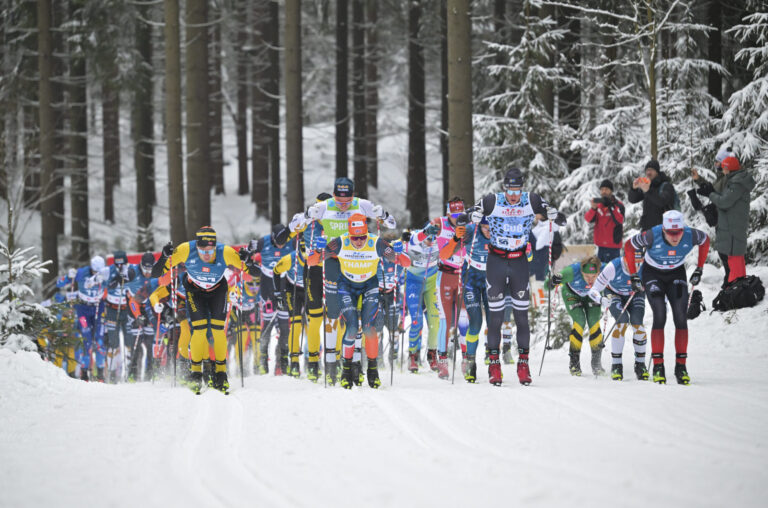
Ospelt himself has skied the Engadin Skimarathon eleven times. “I still ask myself why we don’t have a World Cup there too,” he admitted. Asked whether FIS will cooperate more with the Worldloppet series, he replied: “Definitely. I am completely for it. We should do everything that is in the best interest of our sport.”
On the spectator experience, Ospelt pointed to biathlon. According to him, biathlon was also once in a critical situation and managed to use it to become more interesting for spectators. Fans should be able to see where each athlete is, and the race should build all the way to the finish.
“It is not a return of the Russians”
Asked about the return of Russian athletes, Ospelt rejected the wording itself. “That is not true. It is not a return of the Russians. We just changed the AIN system,” he said. Previously, all were excluded, and each athlete had to apply for admission, which cost FIS a lot of money and resources because it assessed every case individually.
Now athletes sign a declaration of honor. In it, they confirm that they will not promote the regime, that they have not been part of it in the past, and that they will not let themselves be used for its ideas. Anti-doping controls are also carried out. “We are not making any political statement with this. We are bringing back athletes who do not support the regime in any way,” said Ospelt.
According to him, there was no pressure from the IOC: “Not at all. We are an independent federation.” He admitted that some people are nervous about athletes with AIN status, but he sees no reason for it himself. According to SVT Sport, the Swedish Ski Association, together with the Swedish Sports Confederation RF, is working to have the government deny Russian skiers visas for the World Championships (SVT Sport).
The article continues below.
World Championships in Falun: TV, marketing and budget
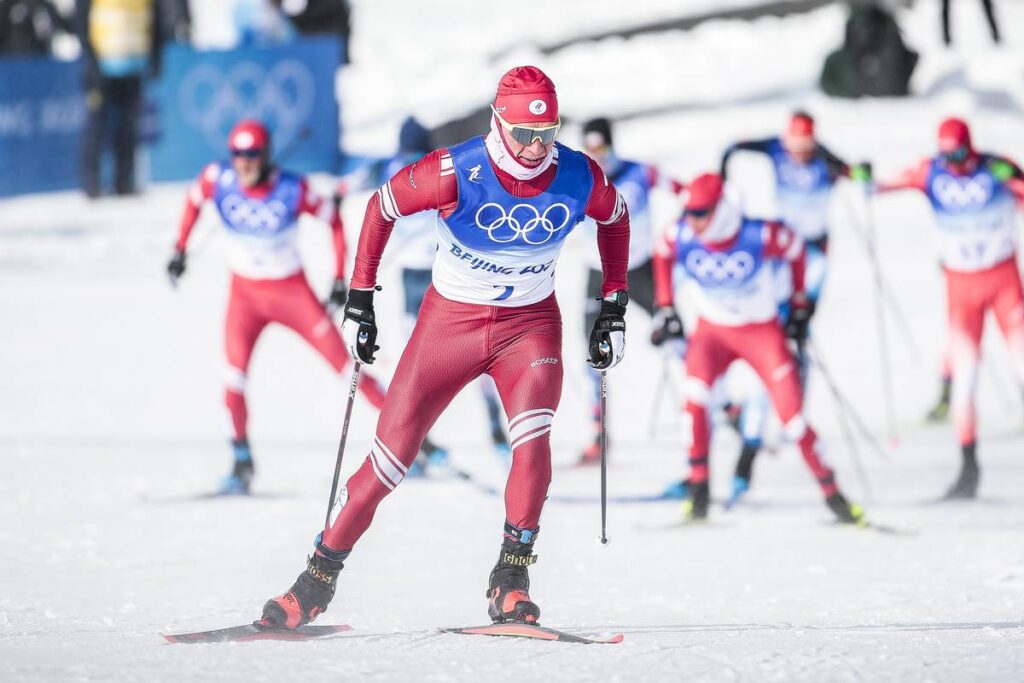
The highlight of the season will be the Nordic World Ski Championships in Falun (February 24 – March 7, 2027). Above all, Ospelt wants a great event. “We have to bring joy back to our sports, celebrate with the athletes, really have parties. But we are not there yet,” he said.
Also Read – Falun World Championships 2027: here is the complete competition schedule
Pay TV or public broadcaster?
A Swedish journalist asked about the TV coverage. According to him, since the World Cup moved to pay TV, people in Scandinavia hardly talk about skiing on the street. “It is clear that nothing is clear yet for Falun,” Ospelt replied.
According to Ospelt, FIS could have made things easier and settled for selling to pay broadcaster Viaplay. He said pay TV offers significantly more money. “But we really want it to be on public television. That is why we are negotiating with both sides and looking for a solution,” said Ospelt. A sublicense is meant to be the way forward.
Editor’s note: Three days after the interview, on October 27, Viaplay announced that it holds the rights to the World Championships in Falun as well as to the Alpine and Freestyle World Championships in 2027 and 2029 (Sweden Herald / TT). It has not yet been announced whether some of the coverage will also be shown on free-to-air TV.
Joint packages and an uncertain budget
Ospelt also described problems with marketing. FIS and the Swedish organizers sold partner packages separately, so they were in fact competing with each other. For the last packages, they therefore agreed on a joint sale, from which FIS will receive a commission. “Now I am really optimistic that we will achieve a positive result for Falun,” he said.
The championship budget is currently in the red. The organizers are calculating with costs similar to those of the 2025 World Championships in Trondheim, where bad weather made preparing the courses and facilities much more expensive. According to Ospelt, better weather would reduce costs, and the final figure could end up positive.
At the 2015 World Championships in Falun, the stands were full for the cross-country races but almost empty for ski jumping and Nordic combined. Ospelt responded that good races at the start of the season will raise expectations ahead of the championships.
FIS equity has fallen by almost half
When Gian-Franco Kasper left, FIS was described as a wealthy federation. Ospelt confirmed that the equity of FIS itself has fallen from 81 to 43 million (he did not specify the currency). This figure does not include the Marc Hodler Foundation, whose money is earmarked for a specific purpose. He called Eliasch’s consolidated reporting of both entities together incorrect.
According to Ospelt, the money was mainly consumed by the centralization of international media rights and investments in digital. “When I started, I asked for the business plan. People were surprised and asked what business plan I was talking about,” he said. He found a tangle of bilateral contracts with national federations, including promises that FIS is not sure are legally sound.
FIS is now mapping its obligations and negotiating new terms with the federations. The goal is a common framework above all the bilateral agreements, so that each federation does not defend only its own interests. According to Ospelt, the renewed solidarity among federations and transparency make the negotiations easier.
Read More: FIS unveils 2026/2027 cross-country skiing World Cup calendar
Are you interested in traditional cross-country skiing? Click HERE and read more about it.
Subscribe to our newsletter
Most read
-
11.05.2026
-
03.10.2026
-
07.05.2026
-
09.05.2026
-
30.09.2026


More Articles
-
Ski Classics World Championship Season XVIII: All Pro Teams’ presentations in one place
Season XVIII is just around the corner, and all 26 Pro Teams have been featured on ProXCskiing.com. In this article, all the Pro Teams are linked in one place.01.11.2026