The star reveals key workout: “It’s awful. It’s exhausting, and you get such a crazy burn in your legs”

It’s no coincidence that the best succeed. Heidi Weng’s key workout is so brutal that she calls it “awful.”
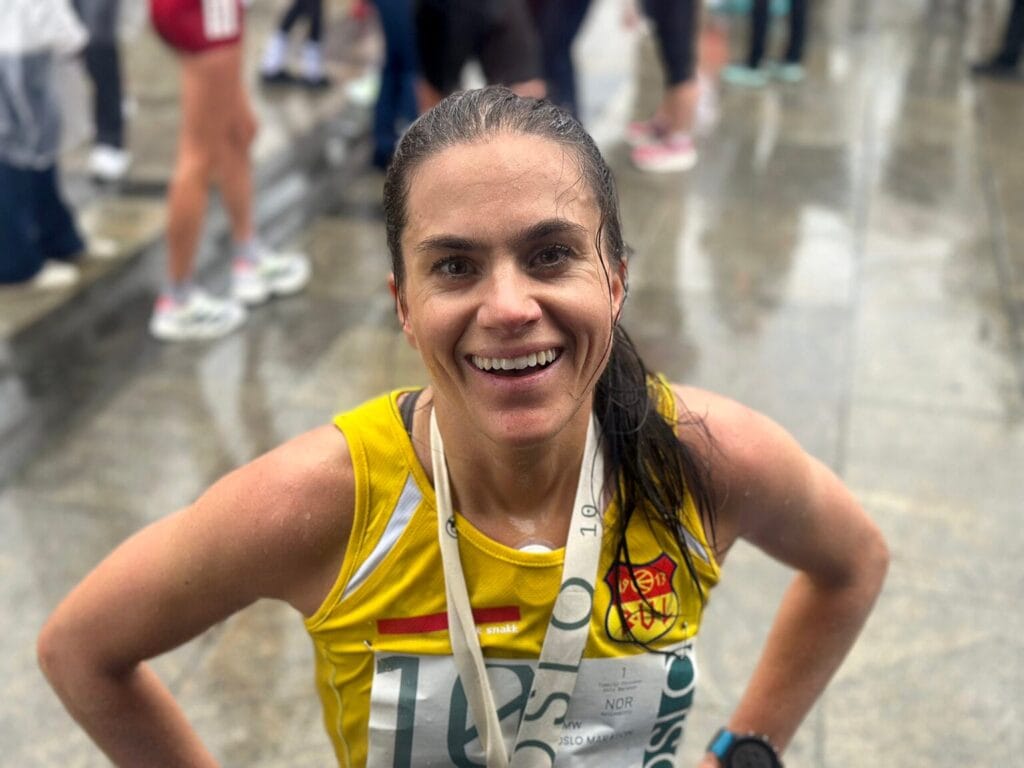
There’s no doubt that Heidi Weng loves to run. And she’s good at it too: on Saturday, she took second place in the 10km at the Oslo Marathon, a race she feared she was too sick to enter.
Also Read: Straight from Covid to top time and Norwegian Championships silver in the 10km
But while a national silver medal is nice, the 2026 Olympics remain the main goal for the 34-year-old. The Norwegian national team veteran already has one Olympic medal: bronze in the skiathlon at the 2014 Sochi Olympics.
Weng famously missed the 2022 Olympics after contracting Covid during the team’s pre-Games camp. A year later, she also missed the World Championships in Planica again due to illness. At last winter’s Worlds in Trondheim, she claimed two silver medals. In total, Weng has 11 World Championship medals, five of them gold.
Read More – Heidi Weng: “I thought it was all over, then came the turning point”
Key workout: both brutal and useful
Weng finds it hard to pick a favorite session, but one stands out.
“Elghufs (bounding uphill with poles) is awful. It’s exhausting, and you get such a crazy burn in your legs almost right away. But it’s a very useful workout,” Weng told Langrenn.com.
When she really wants to push herself, she prefers knowing every meter of the track in advance.
“I like to train in familiar surroundings, so I’d rather do elghufs at Skeikampen or Hafjell, where I know exactly what awaits in every step of the climb, than in places I’m not as familiar with.”
The workout
Elghufs intervals with poles uphill, often on a ski slope.
- Five intervals of five minutes each, just below to just above threshold.
- Warm up with easy jogging on a trail or gravel, ideally as transport to a suitable hill.
- The first interval is just below the lactate threshold, the next ones progressively harder, around the threshold, and the last one a bit above.
- About two minutes’ rest between intervals. Cool down with easy jogging.
Why this session works
Intervals increase capacity by boosting stroke volume of the heart, i.e., the amount of blood it can pump to the muscles. Increased stroke volume means more oxygen, which lets muscles work harder and generate more speed.
Training at or near threshold also raises the anaerobic threshold, meaning the athlete can sustain higher effort without accumulating more lactic acid than the body can process.
The story continues below.
Winter favorite: similar to an autumn workout
Weng’s favorite winter session looks remarkably similar to her key dryland workout.
“In winter, it might be 5 x 5 minutes classic intervals in a gradual uphill. And preferably at Skeikampen. I really love it there,” Weng said.
The 2026 Winter Olympics in Italy will be held in Val di Fiemme from February 6 to 22. It was there that Weng won her first World Championship gold back in 2013.
Are you interested in training for long-distance, traditional cross-country skiing, and biathlon? Click HERE and read more about it.
Subscribe to our newsletter
Most read
-
-
14.09.2026
-
06.03.2026
-
-
16.09.2026



More Articles
-
Swedish and Norwegian cross-country ski tracks open: Early snow guarantee for 2026
This weekend, several traditional Swedish and Norwegian destinations are launching their early snow offers. Here is an overview of destinations with snow guarantees.22.10.2026