ROLLER SKI TRAINING: Pacing intervals for younger athletes
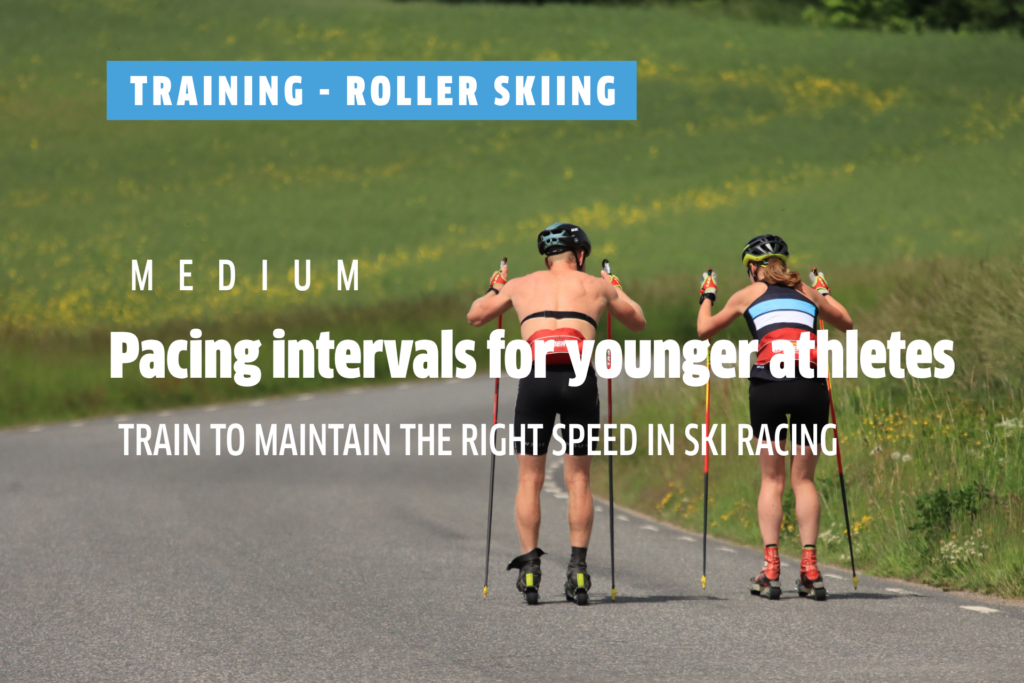
Interval session with standardized efforts and medium intensity designed to train the ability to maintain the right pace in ski races – specifically developed for younger athletes.
Maintaining the right pace from start to finish requires training. The purpose of this session is to practice pacing for shorter ski races.
This session was developed by coach Vetle Leander Johansen from Team Swenor-Splitkon, who is responsible for athletes including Calle Halfvarsson and Oskar Svensson, as well as several of Norway’s fastest elite skiers.
Training facts
| Type | Interval |
| Duration | 45 minutes to 1 hour |
| Intensity | Medium to high |
| Terrain | Relevant tracks |
| Structure | Warm-up / Main Session / Cooldown |
| Frequency | Weekly |
Training benefits
The aim of the session is to train pacing for ski races.
Execution
Warm-up
- Ensure you are well warmed up before starting the intervals
Main Session – Intervals
- Perform 3-minute intervals at medium to high intensity
- 1.5 minutes rest (90 seconds)
- The goal is to go faster and faster from interval to interval. This is the focus – not that the effort should be extremely high
Cooldown
- Include a good cool down after the last interval
Description
Conduct a standardized interval round – preferably on roller skis or skis. The focus of the session is to increase speed from interval to interval – not to push the effort too high. If you still have plenty of energy after the last interval, you can add another one.
This session can be performed weekly or as often as necessary in the final phase of preparation for the ski season – until you feel confident that you can pace as well in a competition situation as in training.
Also Read
ROLLER SKI TRAINING: VO2max intervals
ROLLER SKI TRAINING: Standard session on SkiErg
ROLLER SKI TRAINING: Strengthen your skate technique with just two kilometers of asphalt
Are you interested in training for Ski Classics, long-distance, traditional cross-country skiing, and biathlon? Click HERE and read more about it.
Subscribe to our newsletter
Most read
-
21.09.2026
-
-
14.09.2026
-
06.08.2026
-
06.03.2026



More Articles
-
Season XVIII continues with Engadin La Diagonela in Switzerland
Ski Classics World Championship Season XVIII heads to Switzerland on Saturday, January 16, 2027, with the Engadin La Diagonela, a 55km classic race from Pontresina to Zuoz.20.09.2026