ROLLER SKI TRAINING: A game of speed — fartlek prepares you in every direction
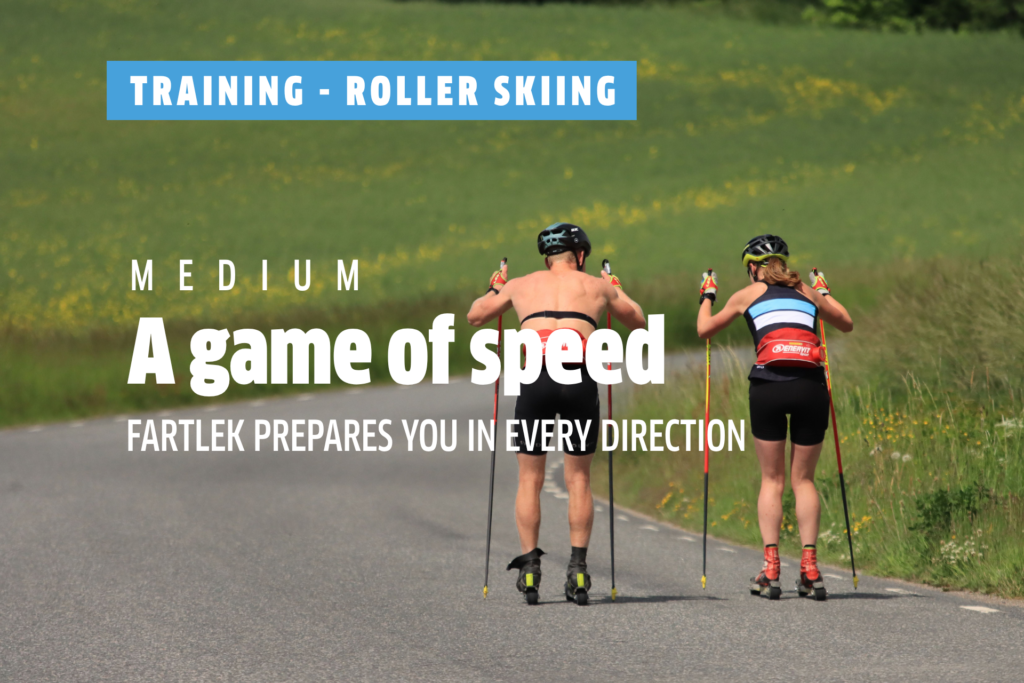
Looking to increase your speed, enhance your fitness, and prepare for unexpected pace changes during a race? Fartlek is one of the training methods that can elevate your performance.
Discover how to properly structure this variable training and how to maximize its benefits for your skiing form.
Fartlek (Swedish for “game of speed”) is a highly effective training method that combines continuous skiing with varying intensity intervals within a single session. You can tailor the workout according to your preferred technique—whether you favor skating, classic, or double poling.
Training facts
| Type | Endurance + Intervals |
| Duration | 2 hours |
| Intensity | Mixed |
| Terrain | Gently rolling profile |
| Structure | Warm-up / Main Session / Cooldown |
| Frequency | Once every 14 days |
Training session structure
Warm-up — 15 to 20 min
Easy skiing on flat terrain, including two short 30-second segments at a higher pace to engage and warm up your body.
Main Session — 90 min
Incorporate 8–10 sprints at maximum effort (15 seconds) and 3–5 intervals lasting 3–5 minutes just below your anaerobic threshold.
Example: 20 minutes of easy warm-up skiing, followed by 1 maximum sprint, 2–5 minutes of easy skiing, 3 minutes at a pace just below the anaerobic threshold, 5 minutes of easy skiing, another sprint…
Key Rule: Do not stop during the workout! After completing a fast interval, slow down to an easy pace but keep moving continuously.
Cooldown — 15 to 20 min
Relaxed, easy skiing or easy jogging on flat terrain to accelerate recovery.
Training tips
Adjust your training based on your feelings and the terrain profile. Alternate profiles for sprints—try accelerating on flat ground, steep climbs, and gentle descents. If you’re feeling fit, include more long threshold intervals. If you’re fatigued, replace long segments with more short sprints.
If you’re feeling good, a great tip is to train with a partner. Let them start the intervals without prior warning—this keeps you alert and simulates the unexpected attacks from competitors during a race.
Rest periods between intervals can vary—from 2 to 10 minutes depending on the current load.
Mix sprints and longer threshold intervals throughout the session. Avoid completing all sprints in the first half of the workout and saving longer segments for the second half (or vice versa).
Why does this training work?
This type of training closely simulates an actual race. Sprints correspond to surges, attacks, and tactical accelerations during a race, while longer intervals represent the high racing pace maintained during climbs or long flats. And just like in a real race—you don’t have the option to stop and rest; you must recover while moving.
Also Read
ROLLER SKI TRAINING: VO2max intervals
ROLLER SKI TRAINING: Standard session on SkiErg
ROLLER SKI TRAINING: Strengthen your skate technique with just two kilometers of asphalt
Are you interested in training for Ski Classics, long-distance, traditional cross-country skiing, and biathlon? Click HERE and read more about it.
Subscribe to our newsletter
Most read
-
-
14.09.2026
-
06.03.2026
-
16.09.2026
-
02.09.2026



More Articles
-
“Completely insane,” Swedish stars say of the equipment race
In Norway, the alarm has been raised about the equipment race in cross-country skiing. It has become an extremely expensive sport for young people, who often bring 20 pairs of skis for a season. "It sounds completely insane," say Swedish stars Maja Dahlqvist and Linn Svahn, who are reacting strongly to the growing equipment race.04.10.2026