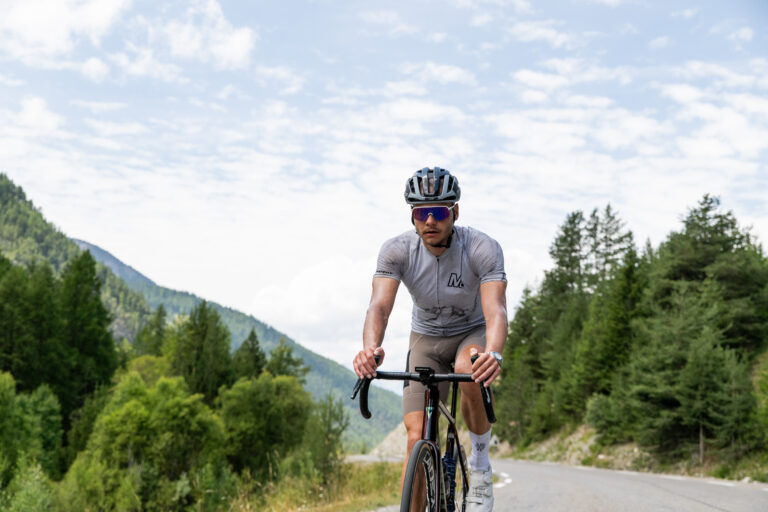
CYCLING TRAINING: Gravel and MTB endurance ride – training your whole body, not just your legs
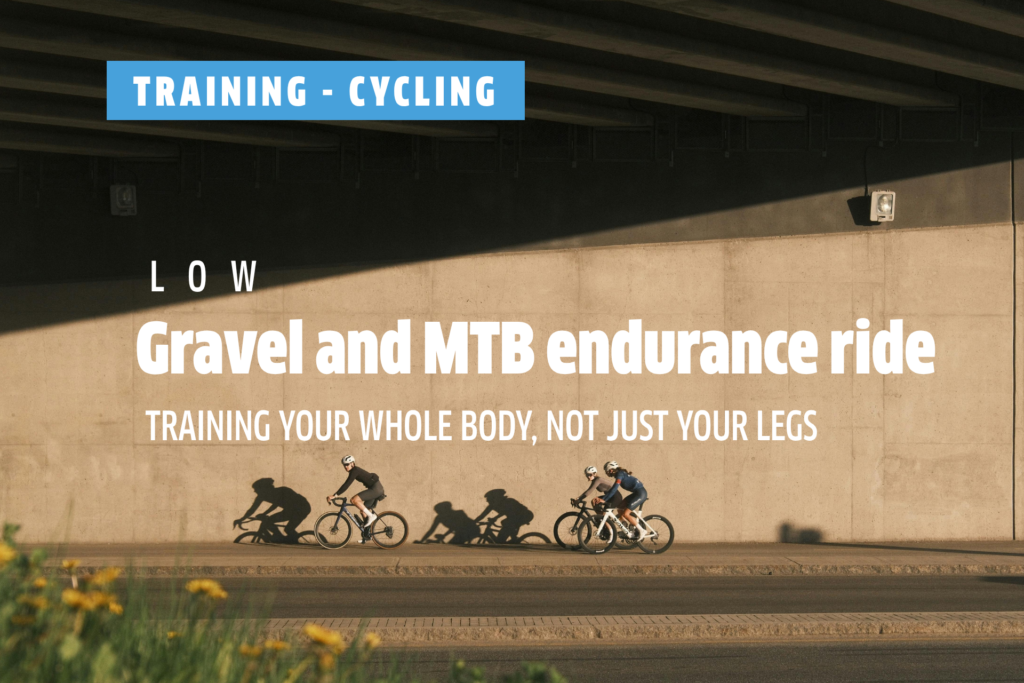
Unpredictable terrain demands more than fitness; it demands balance, coordination, and a constantly engaged core. This off-road endurance ride builds the full-body stability and mental focus that set strong skiers apart when the trail gets technical.
Session facts
| Type | Endurance / Stability |
| Duration | 90–120 min |
| Intensity | Low to moderate (Z2–Z3) |
| RPE | 3–5 out of 10 |
| Terrain | Gravel, forest roads, singletrack |
| Structure | Warm-up / Main session / Cooldown |
| Frequency | 1 time per week |
Training effect
Riding on unpredictable surfaces recruits stabilizing muscles throughout the hips, core, and upper body that flat road riding largely bypasses. This constant low-level stabilization demand mirrors what cross-country skiing asks of the body, particularly in classic skiing, where balance and core control are decisive on technical terrain. Beyond the physical benefits, off-road riding also sharpens proprioception and spatial awareness, two qualities that directly improve skiing confidence and efficiency on varied snow conditions.
Warm-up — 15 min
- Begin on easier, more predictable terrain to let the body settle in
- Gradually increase pace over the first 15 minutes before moving onto more technical sections
- Use this time to calibrate your feel for the surface — grip levels, loose sections and any technical features ahead
Main session — 65–90 min
- Ride continuously at a steady Z2–Z3 effort across varied off-road terrain
- Allow effort to fluctuate naturally with the terrain — short technical climbs may briefly push you into Z4, and that is fine as long as the overall session stays aerobic
- Focus actively on body position: hips back and low on descents, core braced and quiet through rough sections, relaxed grip on the bars at all times
- On climbs, stay seated where possible and drive power smoothly through the pedal stroke rather than grinding or surging
- Technical sections are not obstacles to get through quickly — treat them as skill work and slow down if needed to ride them cleanly
- If riding gravel without technical features, add interest by varying cadence, standing out of the saddle on climbs, or choosing the roughest line deliberately to increase the stability challenge
Cooldown — 15 min
- Return to easier terrain for the final 15 minutes and let pace drop naturally
- 5 min stretching after dismounting: hip flexors, glutes, lower back and shoulders — the upper body takes more load off-road than most riders expect
Note: Road riders often underestimate how demanding off-road riding is for the stabilizing muscles. After your first proper gravel or MTB session, you may notice fatigue in your core, hips and even forearms that a road ride of the same duration would never produce. This is exactly the point. Cross-country skiing is a full-body sport, and training that challenges your balance and coordination off snow is never wasted time.
Also Read
CYCLING TRAINING: Hill climb intervals – building the strength to power through every climb
CYCLING TRAINING: Sweet spot ride – the most efficient effort in your training week
Are you interested in training for Ski Classics, long-distance, traditional cross-country skiing, and biathlon? Click HERE and read more about it.
Subscribe to our newsletter
Most read
-
28.08.2026
-
-
06.08.2026
-
06.03.2026
-
05.08.2026



More Articles
-
Biathlon star continues to prove himself in cycling
Since this spring, French biathlete Emilien Jacquelin has joined the Decathlon CMA-CGM cycling team to try his hand at cycling. The original plan was to spend the summer on the bike, then pick up his rifle again in the autumn to prepare for the biathlon season.10.09.2026