Leevi Tarjanne burst onto the scene in Olos – a breakthrough that strengthened his belief in his potential
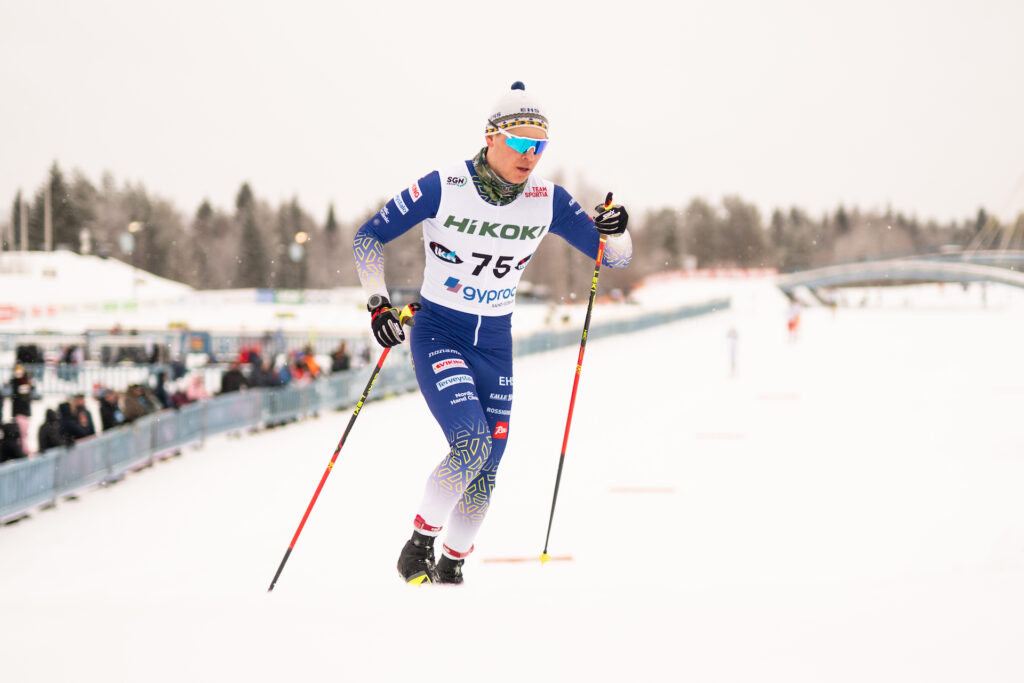
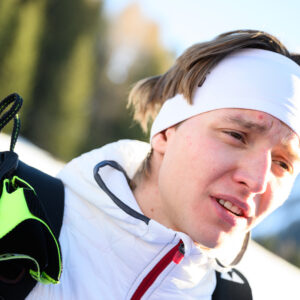
21-year-old Finnish skier Leevi Tarjanne stunned skiing fans with a sensational fourth place in the 10km classic race in Olos – a performance some observers are calling one of the biggest surprises in years. But who is this young athlete who rose from near-anonymity to challenge the country’s best?
Maastohiihto.com dove into the background of Tarjanne’s breakthrough, the risks in his training, his dreams, and the burning passion that has carried him from the margins to the edge of medal battles.
The 21-year-old from Espoo became known in Finland over the weekend when he finished a sensational fourth in the 10km classic race in Olos. His performance has even been called the skiing bomb of the century, and Tarjanne tells Maastohiihto.com that he never imagined himself fighting for the win.
“I knew I was in good shape, since I’ve spent the autumn trying to keep up with Topias Kemppi and Karri Stevander, but honestly, I still didn’t expect this. I thought that on a good day, I could be in the top 12 and fight for a World Cup spot. A battle for the win? I wouldn’t have believed it.”
He also said he gained confidence from joint training sessions with Ville Ahonen and Risto-Matti Hakola. “In those sessions, I got the feeling that my level is approaching the top in Finland. That’s when I understood that on a good day, anything is possible.”
After the Olos race, he realized his potential was far greater than he had previously believed. “The skiing felt good the whole way, and I was able to push hard all the way to the finish. This was a big confirmation that I really do have a chance to aim for World Championships and the Olympics.”
Also Read: German skier controls the men’s 10km classic in Olos/Muonio

From sailing to skiing – and a spark lit in front of the TV
Tarjanne’s skiing career began in an unusual way. As a youngster, he competed in sailing at Esbo Segelförening and won Finnish Championship medals in the Optimist dinghy. Skiing entered the picture only in 2014, when he watched the Sochi Olympics with his family.
“The day of the team sprint stayed with me forever. That’s where the passion for skiing began and where the desire to head out onto the trails with my father was born. That’s when I thought: this is it.”
His idols were Finnish endurance legends Aino-Kaisa Saarinen, Krista Pärmäkoski, Matti Heikkinen, and Kaisa Mäkäräinen. “I always looked up to them and hoped that someday I could be like them. But I didn’t think it was realistic, because I never saw myself as talented.”
His early racing years supported that belief. “I was always last, losing even to all the girls. But still, I looked forward to training more than anything else. It was pure enthusiasm.”
Axa Sorjanen of Espoon Hiihtoseura, and later Johanna Kemppi, laid the foundation for Tarjanne’s development and sparked the drive to train seriously.
A radical training block in the U.S. changed everything
Tarjanne spent last season in the United States at the College of St. Scholastica, studying finance, and experienced a significant shift both physically and mentally.
“America taught me to relax. I learned to take skiing less seriously and found ways to build confidence. That was a huge factor in my step forward.”
After the racing season ended, he made a bold decision. He planned a four-week training block that he says no coach in Finland would have recommended. “I trained over 20 hours a week, did five intensity sessions every week — sometimes double sessions — and reduced carbohydrates because I wanted to lose some weight. It sounds crazy, but I had nothing to lose.”
The experiment worked perfectly. “When I returned to Finland, I was like a different man. My weight dropped, speeds improved, and I was fitter than ever. From there, it was easy to continue.”
After the block, he returned to work under his coach-mentor Maija Hakala. “Maija’s importance is huge. She understands that an athlete is not just a machine but also a human being.”
Team Edux, double poling, and hopes for a stronger Ski Classics culture
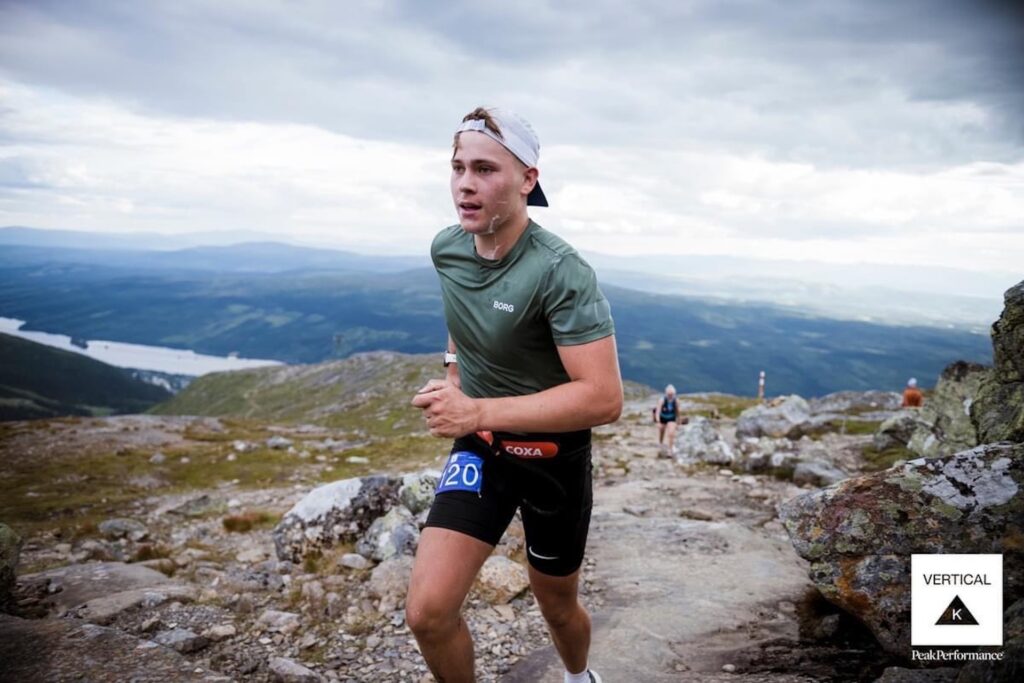
Knee issues have forced Tarjanne to focus on upper-body training for years, making him a strong double-poler. Training with Team Edux has supported his development.
“It’s been great to train with Team Edux. I’ve gained a lot of knowledge and new stimuli. It has had a big impact on the skier I am now.”
He feels that long-distance skiing could be a significant opportunity for him in the future. “I hope the Ski Classics culture grows in Finland. We have all the ingredients for it. It would be great if long-distance skiing were at the same level here as it is in Sweden and Norway.”
Finlandia-hiihto 2023 remains a special memory for him. “I missed the start by five minutes and passed hundreds of skiers in the first kilometers. Towards the end, I almost caught the leaders and finished fifth with the fastest time. It was one of the best races of my life.”
Goals: The Ruka World Cup, Lillehammer, and the 2029 Lahti World Championships deadline
This season, Tarjanne set a goal of qualifying for the domestic World Cup and earning a spot at the U23 World Championships in Lillehammer. His sensational result in Olos brought those goals much closer. He said he no longer wants to simply participate in Lillehammer but also succeed there.
He has also set a clear timeline for his career. “I gave myself a deadline. If I’m not at the national team level by the 2029 World Championships in Lahti, then I can happily look for other directions in life. But I want to be there, and I want to be in the shape of my life at the 2030 Salt Lake City Olympics. My goal is an Olympic medal.”
He is also interested in societal issues. “Some might think it sounds boring, but while others watch Netflix series, I sometimes follow sessions of the Finnish Parliament. It helps me understand society better and gives me new ideas. Someone like Mikko Hautala has been a big inspiration.”
A 13-country road trip and a new perspective
In the summer, Tarjanne took a week-long road trip with friends, driving across Europe and visiting 13 countries, including Ukraine.
“Visiting Ukraine was touching and an experience I will remember for the rest of my life. It opened my eyes and gave me perspective. I realized how privileged I am to be able to focus on sports.”
The trip gave him exactly the mental recovery he needed. “Someone might say it wasn’t optimal for training, but I dare say it was one of the best decisions I’ve made. It prepared me mentally for what was ahead.”
Sacrifices, support, and a message to everyone working behind the scenes
Tarjanne openly says that elite sport requires huge sacrifices. “My lifestyle is very different from that of a typical 21-year-old student, and I’ve missed out on many things. But my friends and family have supported me all the way, even if they haven’t always understood my choices, and I’m forever grateful.”
He also stresses that an athlete’s identity cannot be solely tied to sport. “When your identity is tied only to your athletic self, injuries can feel like your whole life is collapsing. That’s why it’s important to have other things in life too.”
In the end, he wants to send a message to those working hard behind the scenes of the sport. “I hope my example encourages others. It may feel like the top is far away, but in the end, progress can come from small things. Hard work and belief are always rewarded, in one way or another.”
Are you interested in traditional cross-country skiing? Click HERE and read more about it.
Subscribe to our newsletter
Most read
-
11.05.2026
-
07.05.2026
-
09.05.2026
-
28.09.2026
-
13.09.2026
More Articles
-
Swedish and Norwegian cross-country ski tracks open: Early snow guarantee for 2026
This weekend, several traditional Swedish and Norwegian destinations are launching their early snow offers. Here is an overview of destinations with snow guarantees.22.10.2026