Jens Burman: “I Have High Hopes For The Season”
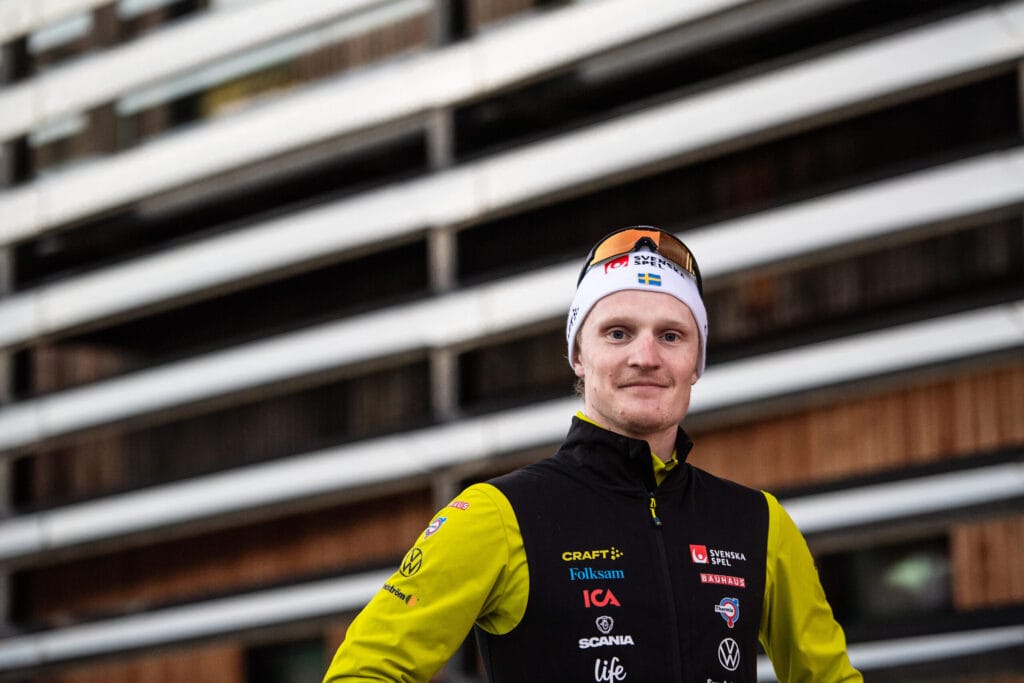
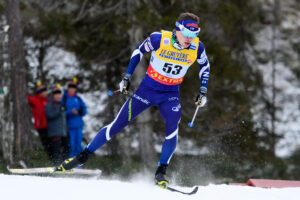
Jens Burman has solved the injury that spoiled his Olympics. Now the Swedish cross-country skier is going for gold in the World Championships. This is how he will fulfill his ambitions.
Jens Burman’s new training schedule and changes in the transition between dryland and snow should ensure gold in the World Championships in Planica next February. Now the Swede oozes motivation.
The 27-year-old from Åsarna IK has found the cause of the back problems that plagued him right from the season opener in Gällivare last year and spoiled large parts of the winter, including the Olympics in Beijing.
Ahead of the championship, Burman was on paper a medal candidate for several distance races but returned home with 8th place in the 15km classic race as his best individual placement.
Aiming for World Championships gold
With his back in good shape and the winter’s disappointments behind him, Burman is aiming for gold in the World Championships in Planica next winter.
“I have high hopes for the season and the World Championships above all. There, I bet on the 50 and 30-kilometer races. These distances suit me well, and I think I can fight for victory there,” says Burman to Langrenn.com.
The Swede came 5th in the 50km race during the World Championships 2021 in Oberstdorf, Germany, and 11th in the 30km skiathlon.
The back problems, which stemmed from a slipped disc, appeared already during the first competition weekend last year. Burman had to stop at the opening race in Gällivare, skip both the first part of the World Cup and the Tour de Ski and was unable to complete the training he had planned for the Olympics.
But now, Burman believes he has found the cause and the solution to the back problem. In recent months, he has rearranged his training with, among other things, a new strength training program, and the signals are encouraging so far.
“I have trained a different kind of strength this year, and it seems to be working. You have to keep at it for a while and get continuity in it because it takes time before you get visible changes. But I haven’t felt anything in my back for a long time now, no pain or anything,” says Burman happily.
What kind of strength training are you doing now?
“I hardly do any heavy strength training anymore. What I do now is much more aimed at prevention, specifically developed to avoid my back hurting again.”
What kind of exercises are we talking about?
“Instead of core strength specifically on the arms, abdomen, or back, there are a lot of full-body exercises that require a lot of balance and stability. It gives me a better base for skiing and makes me use my whole body and all the muscles more effectively.”
Burman also believes he has found out what caused him to suffer the back problems at the start of last year’s season and that it is the key to avoiding them appearing again.
“Skiing is much more difficult than rollerskiing, and it becomes a slightly different technique,” he says and continues:
“On rollerskis, you always have a grip when you go diagonally. The poling is always in place, and you always have a predictable base. But on snow, the surface is more unstable. You can miss the timing and miss the pole positioning. It puts a lot of strain on the back.”
Furthermore, Burman sees that he must be more aware of the technique and the transition details between dryland and snow.
“I didn’t have enough focus on the technique, in addition to going too much and too fast. So, when I did it with a slightly poor technique, it happened.”
Now Burman has learned from his experiences.
“I must be more sensible in the transition to snow and focus better on the details to avoid overloading my body and back.”
In addition to a new strength training program and more focus on technique and details, Burman has also advocated a new training plan this year and thinks it has already yielded results.
“I don’t train to look for hours now because then it’s easy for the quality to be poor, so I stick to the same volume as before. But instead, I increase the effort in certain sessions now,” says Burman and explains:
“This means that I no longer train in time, but at a higher intensity and more quality, so that the total load becomes tougher.”
How many hours do you train in a year?
“It is around 900 hours. But it isn’t easy to compare hours because everyone calculates a little differently. What matters is what level you are at, and whether you increase it and still maintain the quality,” concludes Jens Burman.
Subscribe to our newsletter
Most read
-
21.02.2026
-
03.12.2021
-
22.02.2026
-
30.08.2026
-
18.02.2026


More Articles
-
CYCLING TRAINING: Threshold – pushing your threshold higher, one steady effort at a time
Threshold training is the cornerstone of endurance performance. This threshold ride challenges you to hold a high, controlled effort for extended periods, sharpening the fitness that lets you ski faster for longer without fading.20.09.2026