Hit or miss? What Czech star thinks of the new race format

During the Toppidrettsveka roller ski races, the elite tested a new race format that will become part of the Tour de Ski. How did Michal Novák and other skiers like the innovation?
Unique Czech Participation
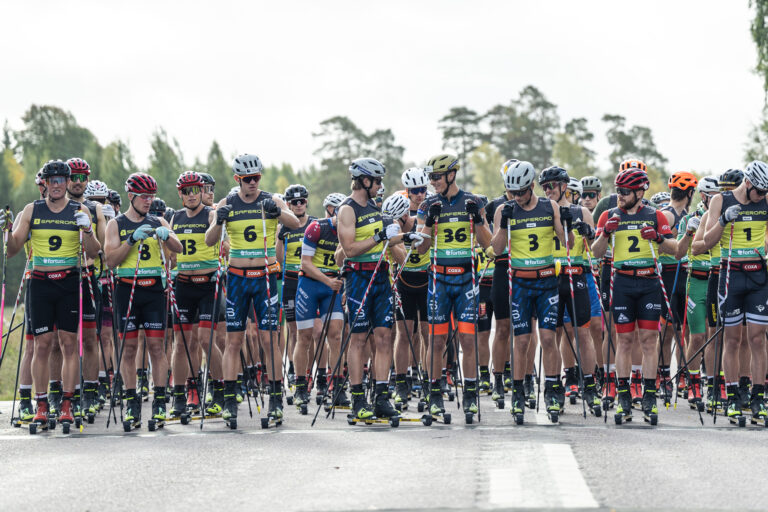
The only Czech competitor was the country’s top skier, Michal Novák. The long-distance roller ski race in classic technique did not go as he had expected. He finished 63rd, more than six minutes behind the winner:
“For me, it wasn’t a good weekend at all. The results speak for themselves. In the long race, I made a mistake with fueling, and that probably cost me not only in that race but in the following days as well,” he says, according to Bezky.net.
Also Read: Kvam Grindhagen wins long-distance race at Toppidrettsveka 2025
He skipped the sprint but started at the race with the new format, which will be included in the World Cup this season as part of the Tour de Ski. Athletes, therefore, had the chance to test it for the first time. It was a 4km freestyle technique race, with athletes competing in separate heats, similar to sprint racing.
Novák’s View
How does Michal Novák rate the Toppidrettsveka weekend?
“This event is always great – very well organized, and it’s the biggest race of the whole summer. Many Norwegian athletes compete, and they are almost specialists on roller skis, so the competition is great for training purposes as well.”
He also tried the new format, which will be part of the World Cup in winter. However, the feedback from athletes has been mixed so far. Novák himself was positive:
“I evaluate the new format positively. For me, from the place where it was held, it was attractive for both spectators and competitors. When you see how cross-country skiing viewership has gone downhill in recent years, it’s necessary to liven up the program. So, I appreciate the effort to bring in something new.”
Also Read: Karsten Andre Vestad takes heat victory at Toppidrettsveka 2025
The New Race Format
Athletes are divided into heats of 20–25 skiers. The allocation is based on World Cup standings, but with a maximum of three athletes per country in each heat.
The overall result is determined solely by time from start to finish. So, if a skier finishes 10th in the fourth heat but records the 10th fastest overall time, they are placed 10th in the race. Winning a heat only means you were the best in that group – it does not guarantee World Cup points.
For men, heats start every 15–16 minutes; for women, every 17–18 minutes. The number of heats depends on the field size. In a typical World Cup event, this means 4–6 heats, lasting up to 1.5 hours from the start of the first to the last.
According to FIS, the goal is to ensure 60–70 minutes of action and suspense right up to the final heat. Leading nations may have up to 10 athletes spread across heats. FIS believes this format will bring a new dimension to cross-country skiing, with close battles, tactical racing, speed, and drama.
The story continues below.

And What About the Other Skiers?
According to a previous article on Langrenn.com and ProXCskiing.com, several French athletes stated that while the logistics worked well on roller skis, they considered the concept fundamentally unfair. They believe problems will be even greater in winter.
Many Norwegian and Swedish athletes were skeptical when FIS first presented the format in spring, but after Toppidrettsveka, most of them were more positive.
Read More – “Total lottery”: Ski elite split on FIS new race format
Are you interested in traditional cross-country skiing? Click HERE and read more about it.
Subscribe to our newsletter
Most read
-
21.02.2026
-
03.12.2021
-
22.02.2026
-
30.08.2026
-
18.02.2026


More Articles
-
Amund Riege and Stina Nilsson power to victory at Klarälvsloppet 2026
The Ski Classics Challengers event Klarälvsloppet, a 90km long-distance roller skiing race in classic technique, took place today in Karlstad, Sweden. Check out the results.20.09.2026