Details that make the difference: Fabian Sieder’s way of coaching athletes towards the top of the World
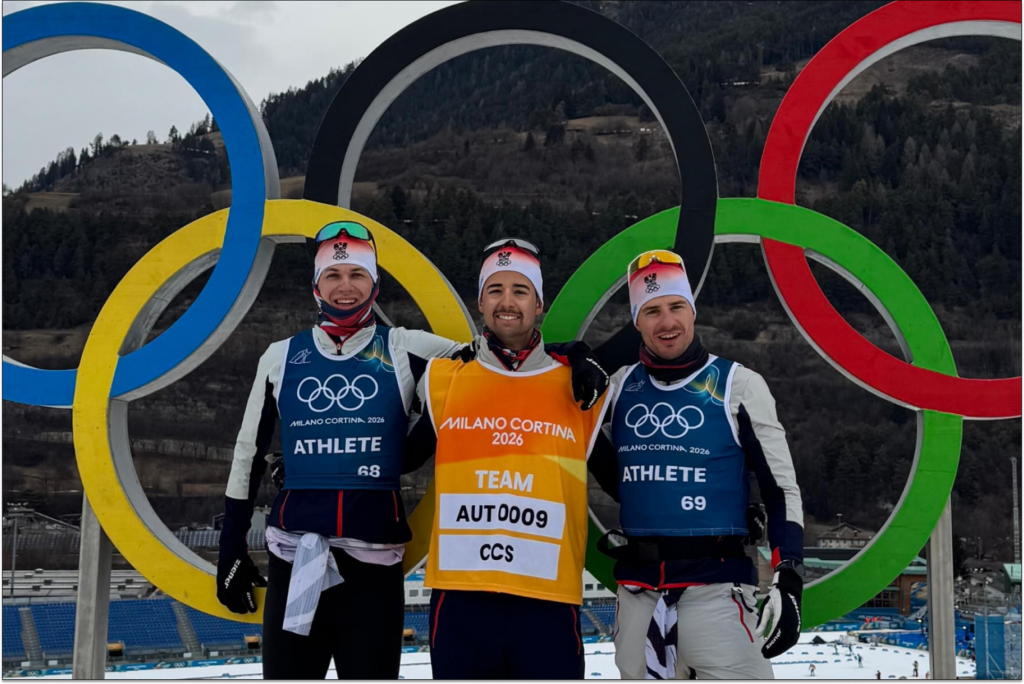
Podium finishes at summer competitions, sprint World Cup final qualifications, a first podium, and a top-10 overall result at the Tour de Ski; his athletes have shown a clearly positive performance trend in recent months.
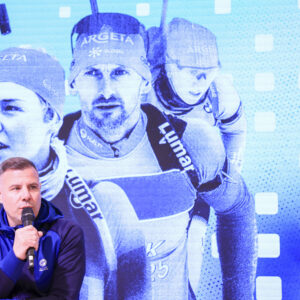
Fabian Sieder is a sports scientist who has been working as an assistant coach in the Austrian national cross-country team since the summer of 2023. In an interview with ProXCskiing, Sieder discusses his path to the team, modern training approaches, and the small details that make the difference for him.
From a spontaneous application to the World Cup team
Sieder’s entry into the Austrian Ski Federation was anything but a carefully planned career move. After three years as a coach with the Tyrolean Ski Association, where he mainly worked on the cross-country skiing part in Nordic Combined, he submitted a spontaneous application to the Federation. His goal was clear: to gain more experience in elite-level sport.
“At that time, it was completely open where the journey would go – Continental Cup or maybe World Cup,” Sieder recalls. When Falk Göpfert took over as head coach, the opportunity arose for Sieder to join the staff as an assistant coach. Initially, his tasks were very hands-on: “Lactate testing, filming sessions, even driving the bus,” he says with a laugh, describing what he calls the classic “apprentice duties.”
At the same time, Sieder quickly began to introduce new ideas. One of his main focuses was performance diagnostics. Instead of relying solely on traditional lactate step tests, he implemented additional methods, including VO₂max step tests adopted from the Norwegian system and treadmill critical power tests. “This allows us to understand the athletes’ physiology much better in relation to actual performance,” he explains.
From assistant to full responsibility
Already in his second year, Sieder’s role changed significantly. While Göpfert was attending altitude training camps with athlete Theresa Stadlober, Sieder took over full responsibility for the training planning of sprinter Michael Föttinger and, shortly afterwards, also for Benjamin Moser. Suddenly, he was no longer just supporting the process; he was now fully responsible for structure, planning, testing, and execution.
During this phase, the natural division into sprint and distance groups emerged, enabling a more targeted, individualized approach.
A holistic approach to sprinting
Sieder’s training philosophy follows a clear structure: from unspecific to specific. The initial focus lies on developing the physiological foundation, especially maximal oxygen uptake. “We first aim to increase five-minute performance and then, as the season approaches, shift toward shorter, sprint-specific intensity ranges,” he explains. “From there, we try to optimize maximal performance over three and two minutes.”
Technique plays a central role throughout the entire process. Almost every training session is filmed and analyzed afterward. This is complemented by dedicated technique sessions focusing on weight transfer and many drills without poles. For the past two years, the team has also been using GPS systems to analyze how factors such as frequency, stride or push length, and pacing affect overall performance – both in training and competition.
Mental routines are primarily tested during preparation camps, for example, in Muonio. Different warm-up routines, rituals, and race-preparation strategies are deliberately tried and evaluated. Smaller competitions such as the Finnish Cup serve as a “dress rehearsal,” with all procedures documented just like at a World Cup. The goal is to have everything perfected before the World Cup season starts, so athletes do not need to think about these processes during the winter.
Early intensity as a key factor
One of the most decisive steps in the athletes’ development, according to Sieder, is the early integration of VO₂max training. After roughly three weeks of basic training in May, higher-intensity sessions are introduced in a controlled manner. “This allows us to establish intensity early and then maintain it consistently,” he explains.
More understanding and responsibility from the athletes
Since his arrival, Sieder has observed a major improvement in his athletes’ understanding of both technique and training. Through intensive video analysis and open discussions, the athletes often recognize necessary adjustments themselves. Mistakes are not corrected by command but reflected on together.
Sieder describes his approach to dealing with errors as follows: “Decisions are always made together. That means the athlete also shares responsibility for any mistakes we make. In the end, the athlete is responsible for himself.”
The Olympics are just bigger – Not different
Whether it is a World Cup race or the Olympic Games, Sieder does not change his approach. “You have to prepare every World Cup like the Olympics – and exactly the opposite,” he says. Making changes shortly before major events, in his view, is counterproductive. Communication between coaches, athletes, and service staff is crucial, especially during stressful periods like the Olympics, where media obligations increase significantly.
How to notice when the work is paying off?
Asked about a moment when theory and practice clearly came together, Sieder points to Moser’s podium finish at the Blinkfestival, combined with strong test results and qualification for the sprint finals in Ruka. Beyond results, however, he measures success by the athletes’ feelings during training, their appreciation, and the positive feedback from those around them.
The biggest mistakes a coach can make
Sieder’s most important lessons as a coach? Never take anything for granted. Celebrate success consciously, because “you won’t experience many of these moments unless your name is Johannes Klaebo. There will be plenty of difficult times as well,” he says thoughtfully. Above all, he believes the biggest mistake a coach can make is not listening to the athlete. “The athlete is the best sensor – better than any lactate device. He is the ultimate benchmark for everything.”
An approach that strongly shapes Sieder’s work – and one that could help bring Austrian cross-country skiing a step closer to the international elite once again. Tomorrow morning, the team sprint in freestyle is on the schedule, and his athletes, Michael Föttinger and Benjamin Moser, will have another opportunity to confirm their positive performance trend.
FACTS 2026 Milano-Cortina Winter Olympic Games – Cross-Country Skiing
- When: Saturday 7, to Sunday, February 22, 2026
- Who: Elite national skiers – women and men
- Where: Val di Fiemme, Italy
- What: Milano-Cortina 2026
Saturday, February 7: 20km Skiathlon C/F Women (More information can be found HERE)
- 13:00 CET: 20km Skiathlon C/F, Women
Sunday, February 8: 20km Skiathlon C/F Men (More information can be found HERE)
- 12:30 CET: 20km Skiathlon C/F, Men
Tuesday, February 10: Sprint C Women and Men (More information can be found HERE)
- 9:15 CET: Sprint Quali C, Women
- 9:55 CET: Sprint Quali C, Men
- 11:45 CET: Sprint Final C, Women
- 12:15 CET: Sprint Final C, Men
Thursday, February 12: 10km Interval Start F Women (More information can be found HERE)
- 13:00 CET: 10km Interval F, Women
Friday, February 13: 10km Interval Start F Men (More information can be found HERE)
- 11:45 CET: 10km Interval F, Men
Saturday, February 14: 4×7.5km Relay C/F Women (More information can be found HERE)
- 12:00 CET: 4×7.5km Relay C/F, Women
Sunday, February 15: 4×7.5km Relay C/F Men (More information can be found HERE)
- 12:00 CET: 4×7.5km Relay C/F, Men
Wednesday, February 18: Team Sprint Women and Men (More information can be found HERE)
- 9:45 CET: Team Sprint F Quali, Women
- 9:45 CET: Team Sprint F Quali, Men
- 11:45 CET: Team Sprint F, Women
- 11:45 CET: Team Sprint F, Men
Saturday, February 21: 50km Mass Start C Men (More information can be found HERE)
- 11:00 CET: 50km Mass Start C, Men
Sunday, February 22: 50km Mass Start C Women (More information can be found HERE)
- 10:00 CET: 50km Mass Start C, Women
The complete program for the Winter Olympic Games can be found HERE
Val di Fiemme, a classic Nordic skiing venue, promises thrilling racing on courses steeped in Olympic history. Fans around the World will have the chance to cheer on athletes across all distances, from explosive sprints to grueling marathons.
Are you interested in traditional cross-country skiing? Click HERE and read more about it.

Subscribe to our newsletter
Most read
-
21.02.2026
-
03.12.2021
-
22.02.2026
-
30.08.2026
-
18.02.2026


More Articles
-
Latvia and Sweden claim Val di Fiemme team sprint wins
The Roller Ski World Cup in Val di Fiemme concluded this Sunday, featuring a freestyle team sprint event in Italy. Check out the senior results.20.09.2026