Rising German athlete: “Second place has boosted my confidence”
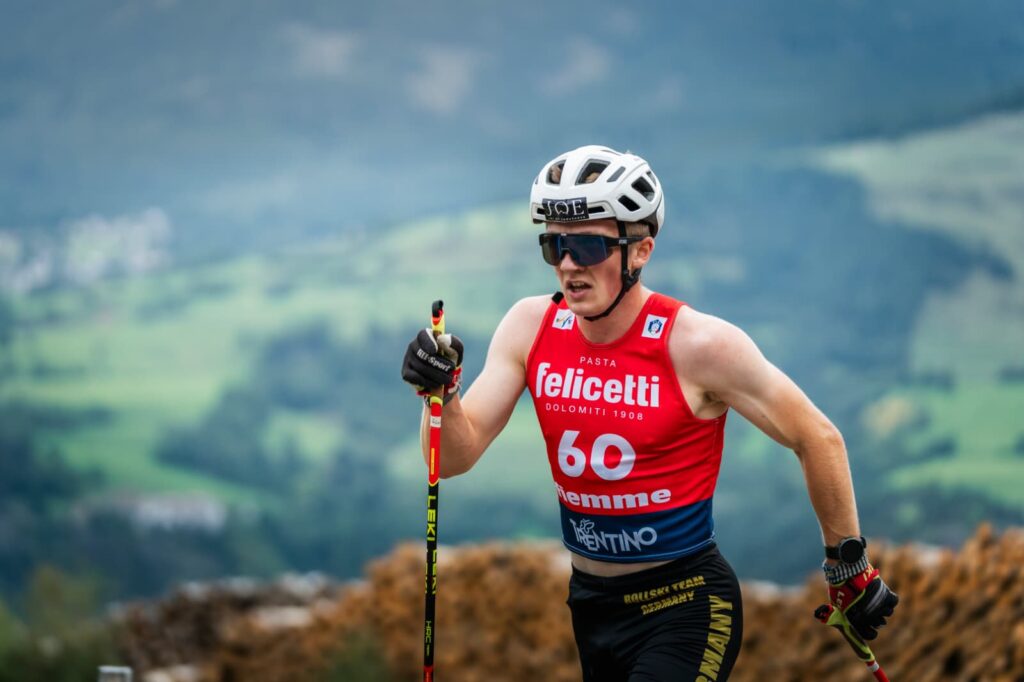
Second place in the Roller Ski World Cup in Val di Fiemme on the Alpe Cermis, and still not a full-time Pro athlete.
Jonathan Göppert of the Ski Classics Pro Team Cibes Lift Ski-Willy Marathon Team from Germany on highlights, self-doubt, and the next step on the long-distance scene.
A podium that came as a surprise
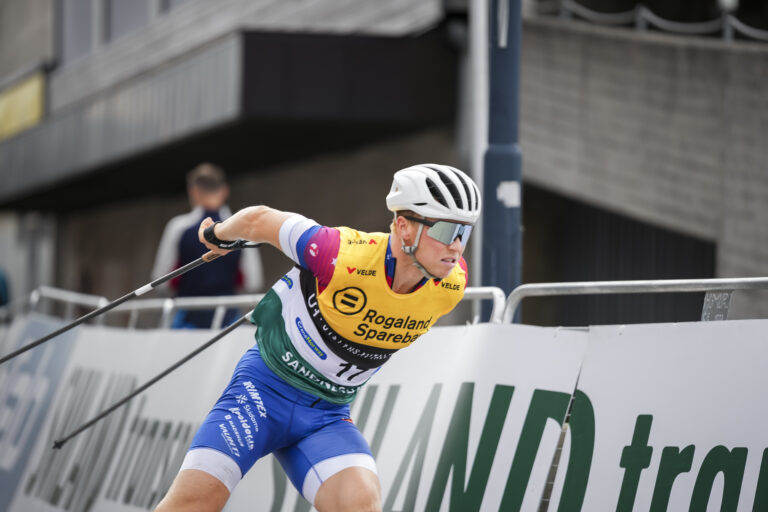
At the Roller Ski World Cup in Val di Fiemme, Jonathan Göppert finished second, just behind the Norwegian Andreas Bergsland, and became the best German athlete within the strong DSV Rollski Team Germany. For him, the result came unexpectedly, and it left a lasting impression.
“Since this success came as quite a surprise for me, it boosted my self-confidence. I knew I had trained well, but I had still rated myself somewhere else,” says Göppert to ProXCskiing.com.
The podium is more than a snapshot. With it, Göppert describes a pattern that has accompanied him in the past: not always being able to fully deliver his performance in a race.
“Beyond that, I sometimes struggle to fully call up my performance in a race, and that worked there, which now gives me confidence for future races,” says Göppert.
Also Read: Aarekol and Bergsland conquer the Cermis Final Climb in Val di Fiemme
Career in review: highlights, hurdles, lessons
Asked about his highlights so far, Göppert puts the recent podium first, ahead of his podium finishes at the Ganghoferlauf (Ski Classics Challengers event) and at Summit 2 Senja with position 47. He names the downsides just as clearly: financial and time problems as a non-full-time Pro, plus sometimes a lack of know-how because of different resources.
But he also draws a positive balance from these things and knows that success can be achieved another way too:
“With continuous work and enjoyment of the sport, you can get far, even if not everything runs ‘perfectly.’ Train a lot with team/training colleagues, exchange ideas, and push each other forward,” says Göppert.
Read More – Roller Ski World Cup 2026: Final standings after Val di Fiemme
Studies, job, and 20 hours of training
Göppert submitted his Master’s thesis shortly before the Roller Ski World Cup and will soon complete his sports science degree in Innsbruck, Austria. In the autumn he will start working, a turning point that will challenge his athletic career. He has financed his sport mainly through side jobs so far. His training volume is usually 20 hours plus per week, and he wants to stick with that as far as work allows.
“I usually train 20h+ and hope that I can more or less maintain that despite work. If not, I’ll have to adjust my training content accordingly,” says Göppert.
Doubts and what keeps him going
He knows moments of doubt – for him, they are mainly tied to races that go badly.
“When the races went badly, especially when it came about through external disruptions, such as equipment problems or similar,” reflects Göppert.
Something else kept him going: the enjoyment of the sport and of racing – and the successes he has been able to work for again and again.
“The joy of cross-country skiing and of competitions kept me going, plus athletic successes and reaching the goals I set myself, which fortunately I was able to achieve time and again,” says Göppert.
The team as a support system
Göppert describes his Ski Classics squad as support on several levels: financially, materially, and logistically. But he names the most important aspect as a different one.
“The most important aspect of it is that I feel extremely comfortable and have therefore gained even more enjoyment,” says Göppert.
He sees the team’s level as a good match for his own, and both sides as committed to becoming ever more professional.
Everyday life between training plan and obligations
From the combination of studies, job, and a demanding training plan, Göppert has learned one thing above all: structure and discipline are the foundation, but making compromises in places is part of it.
“But also that you sometimes have to make compromises in certain areas, since time, money, whatever, are limited. Nevertheless, ‘sticking with it’ and hard work always pay off at some point,” describes Göppert.
Favorite session: long uphill roller skis
In summer training, he most likes to reach for a session that demands both strength and endurance.
“I really enjoy long uphill roller ski sessions, both as base training and with intervals. Best in beautiful surroundings, like the Tyrolean mountains,” says Göppert.
What made the leap forward possible
Physically, he attributes the progress to the training work of recent weeks.
“Continuous training with good training quality in recent weeks for the physical progress,” says Göppert.
Mentally, it was his environment:
“On the mental side, above all great people in my personal environment who support and motivate me,” says Göppert.
Season goals: top 40, top 10, top 15
Göppert has set his goals clearly for the winter. After his previous best of 47th in Ski Classics, the next step is reaching the top 40, with a focus on hillier races like Jizerská or Summit 2 Senja. Added to that are the Youth standings and the Pro Team standings.
“Beyond that, I want to finish in the top 10 in the Youth standings and in the top 15 with the team,” says Göppert.
Above all, though, he wants to show what has come out of his summer work.
“I’m looking forward to translating the summer’s training work into racing and being able to show what progress I’ve made,” concludes Göppert.
Ski Classics World Championship Season XVIII (2026/2027)
• Event 1: December 11, 2026 – Bad Gastein Prologue – Austria – 1km
• Event 2: December 13, 2026 – Sportgastein Criterium – Austria – 30km
• Event 3: December 19, 2026 – Bad Gastein ITT – Austria – 7km
• Event 4: December 20, 2026 – Bad Gastein Criterium – Austria – 36km
Bad Gastein Tour (Events 1–4 of Ski Classics World Championship Season XVIII)
• Event 5: January 16, 2027 – Engadin La Diagonela – Switzerland – 55km
• Event 6: January 17, 2027 – Zuoz–St. Moritz Sprint – Switzerland – 30km
• Event 7: January 31, 2027 – Marcialonga – Italy – 70km
• Event 8: February 12, 2027 – Bedřichov Heat Sprint – Czech Republic – 1.5km
• Event 9: February 14, 2027 – Jizerská 50 – Czech Republic – 50km
• Event 10: February 27, 2027 – Oxberg–Mora Sprint Women – Sweden – 30km
• Event 11: February 28, 2027 – Oxberg–Mora Sprint Men – Sweden – 30km
• Event 12: March 7, 2027 – Vasaloppet – Sweden – 90km
• Event 13: March 20, 2027 – Birkebeinerrennet – Norway – 53km
• Event 14: April 3, 2027 – Reistadløpet – Norway – 35km
• Event 15: April 4, 2027 – Grand Finale Summit 2 Senja – Norway – 60km
For more updates and detailed information about the Ski Classics World Championship, visit skiclassics.com.
Are you interested in Ski Classics and long-distance skiing? Click HERE and read more about it.
Subscribe to our newsletter
Most read
-
11.05.2026
-
19.09.2026
-
23.08.2022
-
03.08.2026
-
05.08.2026

More Articles
-
Without a team all summer – now Buskqvist aims for the podium in new team colors
Alfred Buskqvist has been without a team since Team Ramudden disbanded last spring. He has now signed with a Finnish Pro Team.26.09.2026