How to stay hydrated during races and training?
“This has changed a lot since I started long-distance racing,” says Ski Classics star and Vasaloppet winner Emil Persson, reflecting on how one stays hydrated during a long race and in training. The equipment has also changed, and this is something we often test out.” We figure out what is new and how it works.
Today, you can get a 15-minute penalty for littering the environment if you throw away used gels or other waste. Some have already been penalized for this, which is why the development of equipment has also advanced.
“We have waste zones that are often located just after food stations or water points,” says Bosse Ybe from the company Coxa, which is a leader in the products that skiers drink from. Long-distance skiing has adopted practices from cycling, where there are now dedicated litter zones and penalties are issued for breaking these rules.
Adapted During the Race
“Normally, I take 6-8 gels in a long race like Vasaloppet. But this is adapted during the race; sometimes it’s less, sometimes more,” says Emil Persson, who won both Vasaloppet and the overall Ski Classics after his outstanding season in 2023.
“It’s important to start taking gels early, preferably during the first 30 minutes of the race. Afterwards, I refill when it’s convenient and when there’s an opportunity to take them,” says Persson to Langrenn.com.
Also Read – Vasaloppet: Nutrition strategy for before, during, and after the event
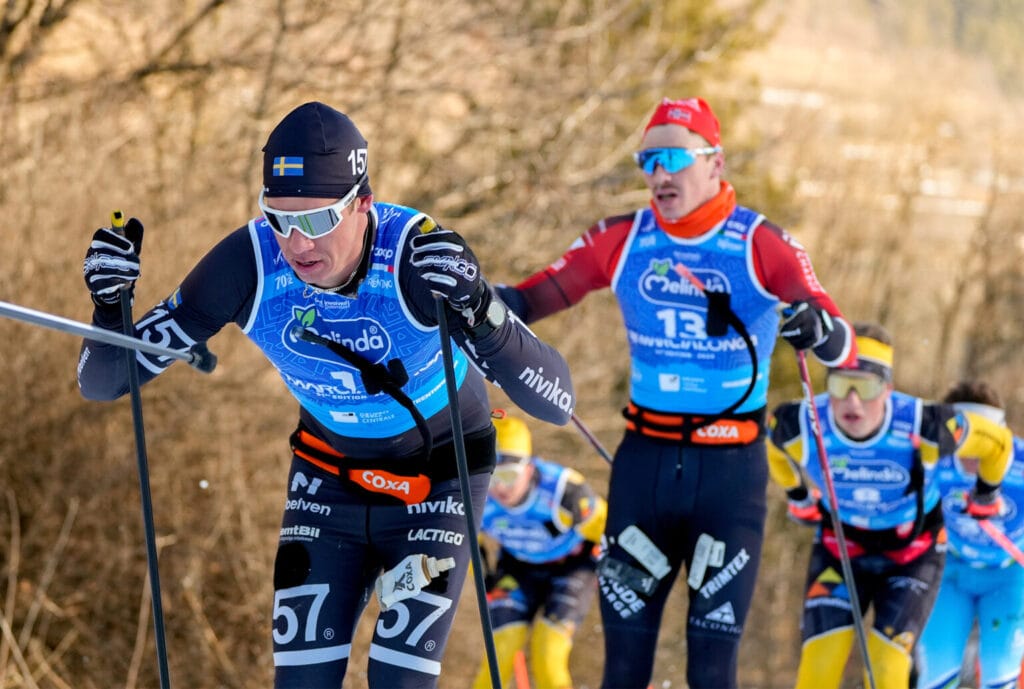
Most elite racers today use a waist belt with a tube and mouthpiece. Most belts hold about 1.2 liters of liquid, but Emil Persson rarely fills it completely.
“No, we usually start with 700 milliliters and switch belts at least once during the race. The belt sits better if it’s not completely full. Normally, I drink about 1.5-2 liters from the belt during such a long race.”
The Stomach Must Adapt
“We absorb about 120 grams of carbohydrates per hour. To manage all the sugar in a gel, we need to train our stomachs. To do this, we use sports drinks and gels during our training. On our long Vasapass training sessions with Lager 157, we also practice drinking as we would in a competition. We do this about once a month before the season starts,” says Emil Persson.
When he started long-distance racing, most used a waist belt with a bottle. Now, almost all elite racers use tube belts where the tube is attached to the front for easy access to the mouthpiece. There have also been several innovations regarding how to transport gels during the race.
Soft Flask for Gels
“These small soft flasks for gels are the latest news and have become very popular,” says Bosse Ybe from Coxa, showing off two smaller bottles that attach with Velcro to the body, preferably on the thigh.
“If you’re unfortunate and lose one of these, it’s not considered littering but rather a loss of equipment. Furthermore, you usually only need two bottles to carry the number of gels you need during the race.”
Each soft flask can hold three gels, each typically containing 30-35 milliliters. The bottles come in different colors so that runners won’t forget which one they have already taken from, and which one is still full.
Are you interested in equipment for traditional cross-country and long-distance skiing? Click HERE and read more about it.
Subscribe to our newsletter
Most read
-
03.08.2026
-
26.07.2026
-
28.01.2026
-
27.02.2026
-
25.08.2026



More Articles
-
Hanna Fine: “It would be cool to make it into the top 15 in the overall standings”
The Pro Team athlete is one of the few French women who have been competing on the Ski Classics World Championship circuit for several years now. Since her debut on the circuit at the 2024 Engadin La Diagonela, Hanna Fine has continued to improve.20.09.2026