Just two training sessions a week? Is that enough for a solid result?
Short on time but eager to improve? With limited preparation time, it’s crucial to plan your training week for maximum efficiency and real performance gains.
Creating a training plan for a professional athlete is a true science. An improvement of just one percent can make a significant difference, requiring meticulous attention to every detail. On the other hand, professionals have a considerable advantage; they can dedicate themselves fully to training, recovery, proper nutrition, and all related aspects, seven days a week, twenty-four hours a day.
For recreational athletes, the situation is considerably more complex. They have jobs, and sitting at a computer or daily commuting cannot be counted as rest. Add family, household responsibilities, and other obligations into the mix. It’s not uncommon to see fathers skiing or roller skiing in the dark while their children are already asleep. The idea of a post-lunch nap or a daytime rest is merely a dream. Nevertheless, they have high ambitions, and some are willing to push themselves to the limit just to fit in their training. However, such an approach without proper planning can lead to a decline in performance. Therefore, planning training for amateur competitors is just as much a science as it is for professionals.
Your background matters
If you are among those athletes aiming for competitive results and want to maintain or even improve your fitness, you should aim for at least three to four training sessions a week. Five is a solid number, and six is excellent. The simple rule applies: the fewer training sessions you can manage, the more you should focus on their quality, always considering your background. If you have been training for several years, a higher intensity will not be a problem. However, if you are just starting, a solid endurance base should clearly take precedence.
Two training sessions a week
If you can only manage two training sessions a week, don’t expect dramatic improvements. You will likely experience stagnation, but that’s still better than losing form. In this case, include one long endurance session, ideally lasting two to three hours, or even four if you can manage it. During various segments of the route, you can incorporate a few short sprints at maximum effort lasting ten to twenty seconds to wake your body up and avoid monotony.
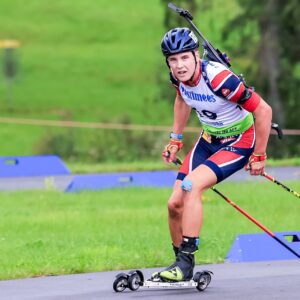
Roller skiing is an excellent choice in this regard, as it engages nearly all muscle groups and serves as great preparation for the winter racing season on skis. Therefore, I would recommend doing this long training session on roller skis.
What about the second training session?
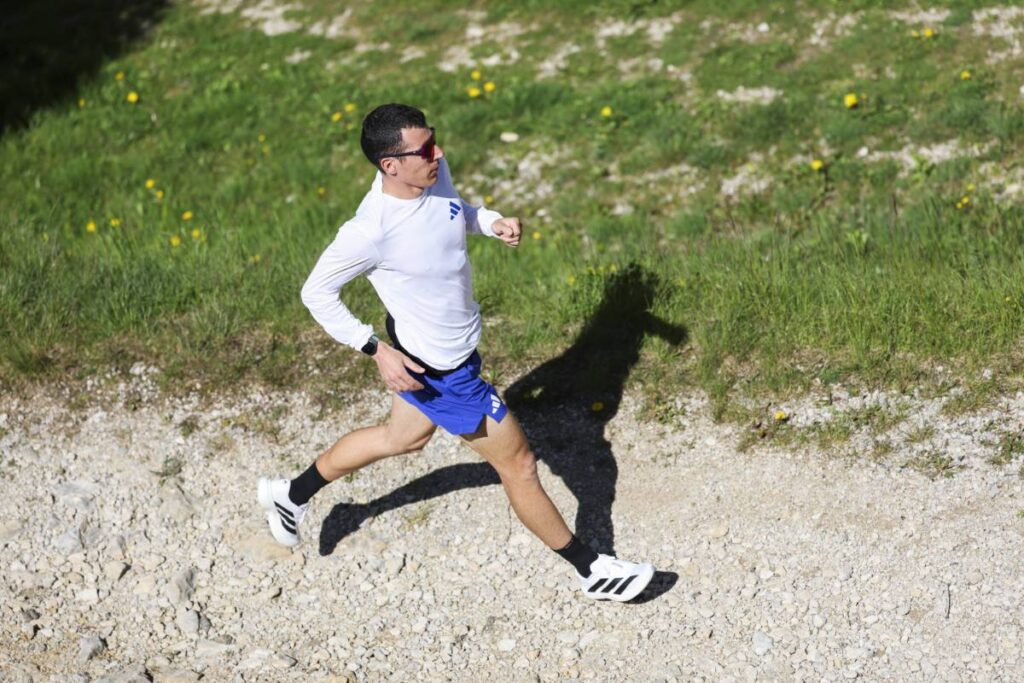
Focus the second training session on speed. Put on your running shoes and head outside; feel free to use poles, which should be at least five centimeters shorter than your winter classic poles.
Plan an interval training session and choose the length of the intervals based on how much you want to challenge yourself. They typically range from three to eight minutes, but can be longer; just don’t exceed your anaerobic threshold. Combinations like 6x 4 minutes, 4x 6 minutes, or 5x 5 minutes can serve as inspiration. It’s important to start a bit conservatively and gradually increase the speed based on how you feel or your heart rate, ideally until you reach maximum exhaustion. You don’t want to exhaust yourself in the first interval and then just coast through the rest.
The rest between intervals should last about half the duration of the effort; so for a four-minute interval, approximately one and a half to two minutes, and for a six-minute interval, two to three minutes. Monitor how quickly your heart rate drops after the interval ends; the faster it decreases, the better your conditioning. By the way, sleep quality also affects heart rate, so you can use this to gauge how well you slept the previous night. If you have poles, several minutes of uphill running are an excellent choice to really push yourself.
Morning or evening?
Try to find time at least twice a week to do some strength training in the evening or early morning. Basic exercises for your core and back are sufficient.
Read More:
Strength training for endurance athletes – part 1
Strength training for endurance athletes – part 2
Next week
It’s good to vary your training methods. In the following week, try switching the order; start with a longer run, ideally lasting at least an hour, or even two. To avoid overloading your joints, you can again use poles. Alternatively, go for a three-hour bike ride.
Your second session should then be a roller skiing workout lasting one and a half to two hours, incorporating intervals similar to those in the previous week’s run. Choose your technique based on your mood: classic, skating, or double poling. When you only have room for two training sessions a week, it’s crucial that you enjoy it. Without motivation, it simply won’t work.
If you can train more frequently, stay tuned for the next installment, where we’ll explore how to make the most of three or more training sessions a week.
Also Read: The secret to faster recovery: What and when to eat for effective training
Are you interested in training for long-distance, traditional cross-country skiing, and biathlon? Click HERE and read more about it.
Subscribe to our newsletter
Most read
-
16.05.2025
-
02.06.2026
-
05.07.2026
-
24.06.2026
-
04.06.2026




More Articles
-
Run, but don’t forget about your feet
For every athlete incorporating running into their training plan, healthy feet are essential. Feet are undoubtedly the most stressed part of the body, yet most of us treat them as if our legs end at the ankles.25.07.2026