Step-by-step training plan: How to prepare for a long-distance ski race
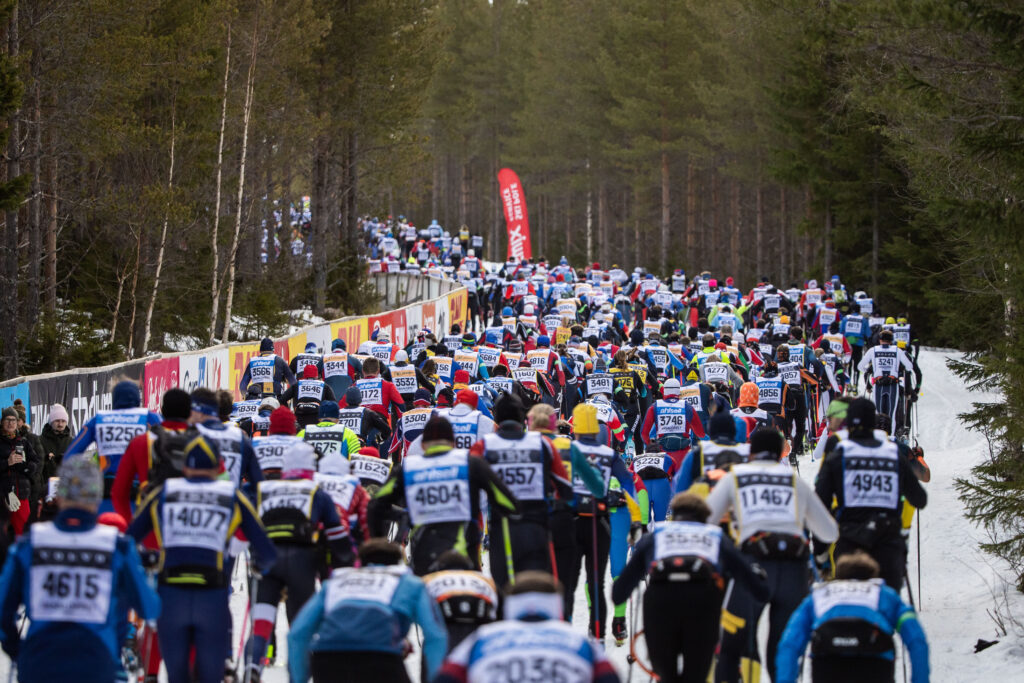
Are you getting ready for Jizerská50, Marcialonga, Vasaloppet, or another primary goal of the season? Race day is approaching, and you want to be as well prepared as possible. We have put together several tips to help you get there.
You may be considering taking on a long-distance skiing challenge, but you are unsure how to prepare. Or you have already completed one but felt it did not quite go to plan, and now want to improve.
If you choose an event like Jizerská50 or any other long-distance race, it is not something you can “show up” and complete without preparation. The difficulty of long-distance cross-country ski races also depends heavily on current conditions, weather, and the resulting snow quality.
How to prepare for a race
Preparation should be comprehensive. That would be beyond the scope of this article, so today we will focus on physical training. Training should be continuous, regular, and long-term. It is certainly not ideal to suddenly realize ten days before the start of a 50km race that you should “cram” all your training at the last minute.
A certain level of physical capacity is essential for a successful endurance race. Winter is a short season, which is why preparation for cross-country skiing includes not only roller skiing but also cycling, running, swimming, mountain hiking or climbing, and, of course, strength training. Many self-coached skiers train simply by going out to ski or for a run.
However, it is crucial to vary intensity, training types, and terrain. Remember: the human body adapts quickly and gets used to almost anything.
Also Read – Build your personalized training plan – Part 1: Train smart with limited time
Four weeks to go
If you decide to race at least a month in advance and do not yet have much training in your legs, the fourth week before the start should focus on general endurance, accumulating hours at low intensity (below or around the aerobic threshold). Training sessions should last 1.5 to 2 hours, and on weekends, include a longer outing.
Do not forget strength training, both general strength (for example, 30 minutes of simple exercises at home after skiing: push-ups, pull-ups, sit-ups, squats, lunges, etc.) and specific strength, such as double poling and skiing without poles. These can be integrated directly into your ski sessions. Start double poling in an alternating format, for example: 5 minutes double poling, 5 minutes without poles, 5 minutes regular skiing. Gradually increases the length of the double-poling and no-pole intervals.
Do not do strength training every day. Train strength every other day so your muscles have time to recover.
Three weeks to go
By now, low-intensity training has helped your body adapt to skiing movement and given you more confidence in your technique. It is time to “wake the body up.” Liven up your sessions with fartlek and alternating intensity, adding faster sections into otherwise steady skiing.
Start with short bursts of 10, 20, or 30 seconds and gradually extend them to one minute or longer.
Speed-oriented sessions should again not be done every day, but around two to three times per week. Include shorter efforts and fewer longer ones. Keep overall training duration at 1.5 to 2 hours. A more extended weekend session remains an excellent training opportunity.
Also Read – Build your personalized training plan – Part 2: How to train when you have more time
Two weeks to go
Shorten your sessions and increase the intensity. What does this mean? Introducing interval or repeated-effort training. Choose a loop of about 2 to 3 kilometers and ski it 2 to 3 times (stronger athletes can do more). Ski at maximum effort. It is helpful to monitor lap times and compare them. Are you slowing down? If you have not trained speed endurance, you probably will. Everyone must start somewhere.
How often should you do these sessions? For example, one midweek and one on the weekend. You do not have to use a 3km loop every time. Do one session with a longer loop (3km) and one with a shorter loop (1–2km). For shorter loops, complete more repetitions, for example, 6 × 1km or 4 × 2km.
How long should the recovery between loops be? In repeated-effort sessions, wait until your heart rate drops to around 120 beats per minute before starting the next effort. This works particularly well for shorter loops. For interval sessions with longer loops, set a fixed recovery time, usually about half the duration of the effort (for example, skiing 10 minutes, rest 5 minutes).
For this type of training, a proper warm-up is essential: around 20 minutes of easy skiing and dynamic movements. After the intense part, finish with a thorough cool-down of 15 to 20 minutes. There is no need to overcomplicate things.
The final week before the race
Rest! Train only two to three times during the week, skiing at low intensity. More experienced skiers may include a short “activation” session midweek, a brief interval workout to prevent the body from becoming sluggish. The day before the race, do not be afraid to include a few short, fast efforts as part of your warm-up, for example, 2–3 efforts of 1.5 to 2 minutes at around anaerobic threshold.
Do not forget strength training
Strength training complements endurance training and adds variety to your program. High-intensity sessions must be balanced with low-intensity training. If an intense workout leaves you exhausted, go for an easy ski or jog the next day. If you feel reasonably fresh, complete a steady endurance session.
Also, remember that while training is essential, more is not always better. Each week should include one to two rest days dedicated to recovery, such as sauna, swimming, or massage. Stretching should be a natural part of your routine, especially after intense or very long training sessions.
Also Read: Training plan for working cross-country skiers
This article was originally published on Bezky.net.
Are you interested in training for long-distance, traditional cross-country skiing and biathlon? Click HERE and read more about it.
Subscribe to our newsletter
Most read
-
09.12.2025
-
09.01.2026
-
21.12.2025
-
28.11.2024
-
22.01.2026



More Articles
-
Angelsiöö and Hansson winners of Wadköpingsloppet 2026
The Ski Classics Challengers event, Wadköpingsloppet, took place this Sunday with a 40km long-distance classic technique race in Örebro, Sweden. Check out the results.01.02.2026