Is the era of national teams in skiing over?

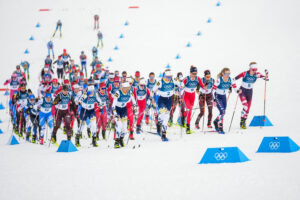
Is the time of national teams in skiing coming to an end? Should the World Cup shift to international teams instead of the current nation-based squads? These questions have been circulating, especially as Nordic skiing federations face tough negotiations with their elite skiers, and funds are running low.
The importance of national teams in the future of skiing might diminish over time, with the team model seen in cycling and Ski Classics potentially becoming the norm in traditional distance skiing as well. This shift is especially relevant now, as the Finnish Ski Federation struggles with financial difficulties, forcing national team skiers to cover their own expenses, leading to a grim financial outlook for cross-country skiing. Many in the skiing community are questioning whether the traditional national team model is the only viable path to success in the sport. In the Ski Classics series, all teams are more or less commercial professional teams, and this trend may also extend to distance skiing in the future.
A Call for Change
One athlete strongly in favor of ending the national team model is Anders Aukland, a well-known advocate for significant changes to the national team structure and the organization of cross-country skiing as a whole.
“The reason for all the conflicts is that skiing hasn’t evolved. The world is different now than it was in the 80s. The national team model is good, but outdated. It needed to evolve long ago,” Aukland told Adresseavisen last year.
Aukland was involved in founding and developing the Ski Classics series, which was modeled after professional cycling teams. The series and its concept have grown significantly in recent years, while traditional distance skiing and the World Cup struggle with declining interest and revenues.
Read more: Aukland wants changes to the national team model
Another legend who shares concerns about the future of the World Cup is Petter Northug. He strongly believes that the FIS must wake up and change the structure of the World Cup if they want the concept to last long-term.
“It doesn’t matter what is done, but the fact is we need to generate interest in Central Europe. We need to involve more countries. Just look at the results these days. The dominance of Norwegian men is killing the interest in the sport over time,” Northug states.
Ski Classics: A Blueprint for Skiing’s Future?
The current Pro Team athlete is, however, a strong believer in long-distance skiing and the Ski Classics concept. He believes long-distance skiing could revitalize the World Cup on several levels. He points to 36-year-old Astrid Øyre Slind, who has risen to prominence in traditional distance races, both in the World Cup and World Championships, thanks to Ski Classics.
“Astrid is a great example. What she has done in the past few winters shows that you can achieve big dreams by combining long-distance and traditional distance skiing,” Northug says.
The comments from these two legends are likely to raise important questions for both the skiing community and decision-makers. Many athletes would likely welcome private teams, as they would offer better opportunities to make a living through their sport. Ski Classics and cycling have proven that the system works. Major championships would still be competed in by national teams, where representing one’s country would still make sense.
This idea is also supported by Simo-Viljami Ojanen, the founder and team leader of Finland’s commercial ski team, Team Electrofit.
“We are creating something new and changing the structure of the ski system in Finland — what training and team operations are. Our focus is directly on the core — the athlete’s training and preparation. We’re not competing with club activities in any way. Competitive skiers represent their clubs, and the clubs get the visibility they need. Of course, in Norway, the team name is mentioned alongside the club in competitions. Maybe one day, our name could also appear next to the club’s. The athletes train with this team, and we support them in every way. Our model is also very cost-effective for the federations, as it doesn’t cost them anything. We have 17 athletes on the team who would otherwise belong to some federation group, and we can offer them a commercial alternative.”
A Solution for Smaller Nations?
Ojanen also highlights that the team model offers smaller countries a better chance to participate, for example, by purchasing a spot on a team. This would give their athletes the necessary support and care they couldn’t otherwise get from their home country. Ojanen believes this model could be tested after the next Olympics.
His team has also participated in the Ski Classics, and the enthusiastic innovator doesn’t rule out a return to the series in the future.
This article is a translation from Maastohiito.com
Subscribe to our newsletter
Most read
-
21.02.2026
-
03.12.2021
-
22.02.2026
-
30.08.2026
-
18.02.2026


More Articles
-
Biathlon Summer Tour opener in France also crowns French sprint champions
This past weekend, September 19 and 20, in La Féclaz, France, the first stage of the Biathlon Summer Tour took place, with some of the races serving as part of the French Sprint Championships.21.09.2026